
What Is a Holistic Fragrance Approach? A Wellness Guide
A holistic fragrance approach is an intentional method that unites sensory design, therapeutic purpose, and ecological responsibility to support wellbeing. It is sometimes called “functional fragrance” in industry circles, though the holistic framing goes further by including supply-chain ethics and lifecycle thinking alongside the mood-state aims. Where conventional perfumery asks how does this smell?, a holistic approach asks what does this do, where did it come from, and what does it leave behind?
The limbic system sits at the center of this method. Scent molecules travel from the olfactory nerves directly to the amygdala, the brain’s emotional processing hub, which is why a single inhale can shift mood faster than almost any other sensory input. IFRA (the International Fragrance Association) provides the industry’s primary safety and compliance framework. Maisonvoyageurparfum, the Madrid-based artisanal perfumerie, is one example of a maker that puts these principles into daily practice.
Core components at a glance:
- Purpose-led scent design (every formula has a stated emotional or cognitive aim)
- Ingredient integrity (natural extracts, transparent origins, minimal toxic burden)
- Mindful application (intentional ritual rather than passive ambient diffusion)
- Supply-chain ethics (regenerative sourcing, fair trade, traceability)
Table of Contents
- How does a holistic fragrance approach differ from conventional perfumery?
- What core principles guide holistic fragrance design?
- What materials and sourcing practices define a holistic fragrance?
- How are holistic fragrances composed and produced?
- Why does fragrance change your mood and cognitive state?
- How do you make and apply a holistic fragrance at home?
- What safety and regulatory considerations apply in the U.S.?
- How do you evaluate and buy a genuinely holistic fragrance?
- How Maisonvoyageurparfum practices a holistic approach
- Key Takeaways
- Fragrance as a practice, not a product
- Maison Voyageur: slowly made, for those who want to explore within
- Useful sources for deeper study
How does a holistic fragrance approach differ from conventional perfumery?
The word “holistic” is used loosely in beauty marketing, so it helps to draw a clear boundary. A holistic fragrance approach considers the full arc of a product: the person using it, the communities that grew the raw materials, and the environmental cost of extraction and disposal. Conventional commercial perfumery, by contrast, optimizes primarily for olfactory appeal, brand story, and shelf longevity.
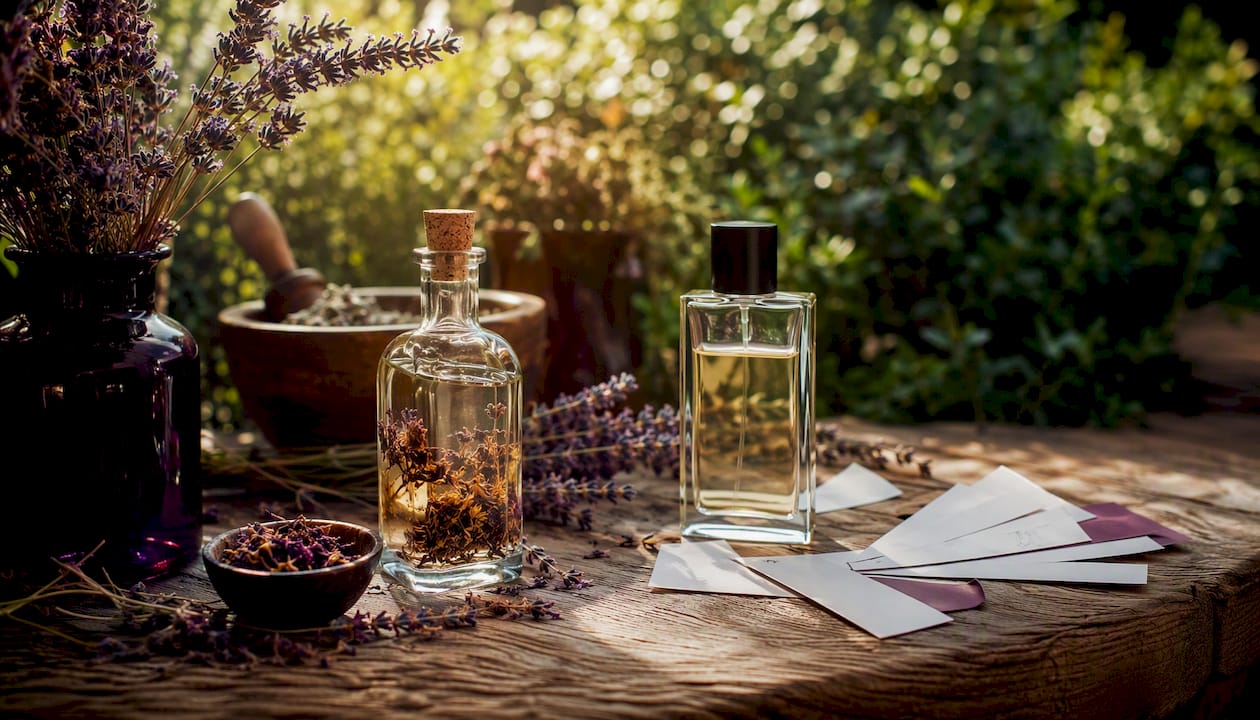
Sustainability-focused frameworks make this explicit: a genuinely holistic product pairs therapeutic aims with regenerative sourcing, fair trade, and transparent supply chains. The personal benefit and the ecological origin are treated as inseparable.
| Axis | Conventional perfumery | Holistic fragrance approach |
|---|---|---|
| Primary intent | Aesthetic pleasure, brand identity | Therapeutic outcome + sensory experience |
| Ingredient sourcing | Performance and cost-driven | Ethical, traceable, often regenerative |
| Transparency | Proprietary formulas, vague “fragrance” label | Declared natural %, supplier trace notes |
| Application context | Anytime, ambient or on-body | Intentional ritual, paired with practice |
| Wellbeing aim | Incidental | Explicit and measurable where possible |
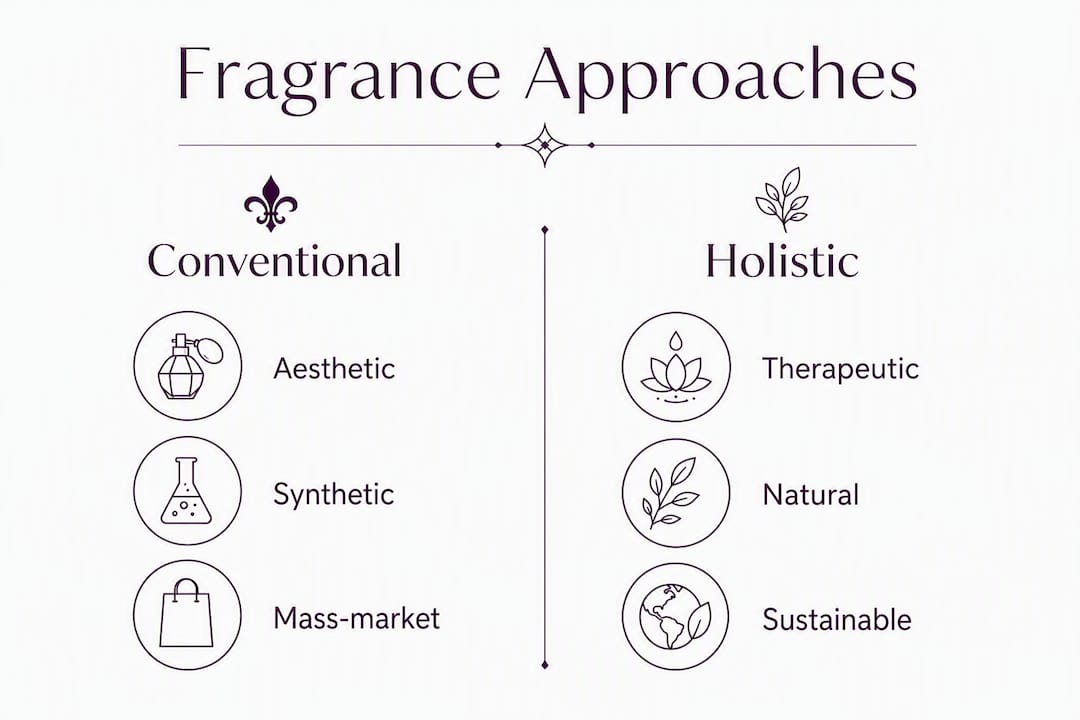
The distinction matters most when you are reading a label or evaluating a brand’s claims. “Natural” and “clean” are marketing terms with no legal definition in the United States. A holistic approach requires more: stated sourcing, declared ingredient percentages, and a clear rationale for why a formula was built the way it was.
What core principles guide holistic fragrance design?
The industry shift toward functional fragrance reflects a deeper set of design principles that separate intentional makers from trend-followers. These five principles form the working framework.
-
Design for intention. Every formula begins with a brief that names the desired state: calm, focus, grounding, or restoration. The scent is built to serve that state, not the other way around.
-
Select molecules for state change. Certain aromatic compounds, such as linalool (lavender-derived) and beta-caryophyllene (found in black pepper and copaiba), have documented interactions with the nervous system. Makers choose materials partly for their functional profile, not only their aesthetic contribution.
-
Ensure traceability and regenerative sourcing. Knowing the harvest region, distillation method, and supplier relationship is a practical trust signal. Seed-to-still narratives, where a brand can trace an ingredient from its origin to the bottle, are the gold standard here.
-
Minimize toxic burden. Ingredient purity reduces cumulative exposure to unwanted compounds. IFRA compliance sets a baseline, but holistic makers often go further by avoiding petrochemical carriers and undisclosed synthetic musks.
-
Plan for end-of-life. Packaging, bottle weight, and refill options are part of the holistic brief. A formula that supports wellbeing but ships in single-use plastic contradicts its own premise.
Pro Tip: To lock a scent to a specific state or behavior, use associative conditioning: apply the fragrance only during the target activity (a morning meditation, a pre-sleep wind-down) for two to three weeks. The scent becomes a conditioned cue, and eventually the smell alone begins to trigger the associated state before the activity even starts.
IFRA compliance and third-party traceability statements are the two most reliable external trust markers when evaluating whether a brand’s holistic claims hold up.
What materials and sourcing practices define a holistic fragrance?
Natural extracts form the backbone of most holistic formulas, though a small number of carefully chosen synthetics are sometimes used to replace ingredients that would otherwise require ecologically damaging extraction.
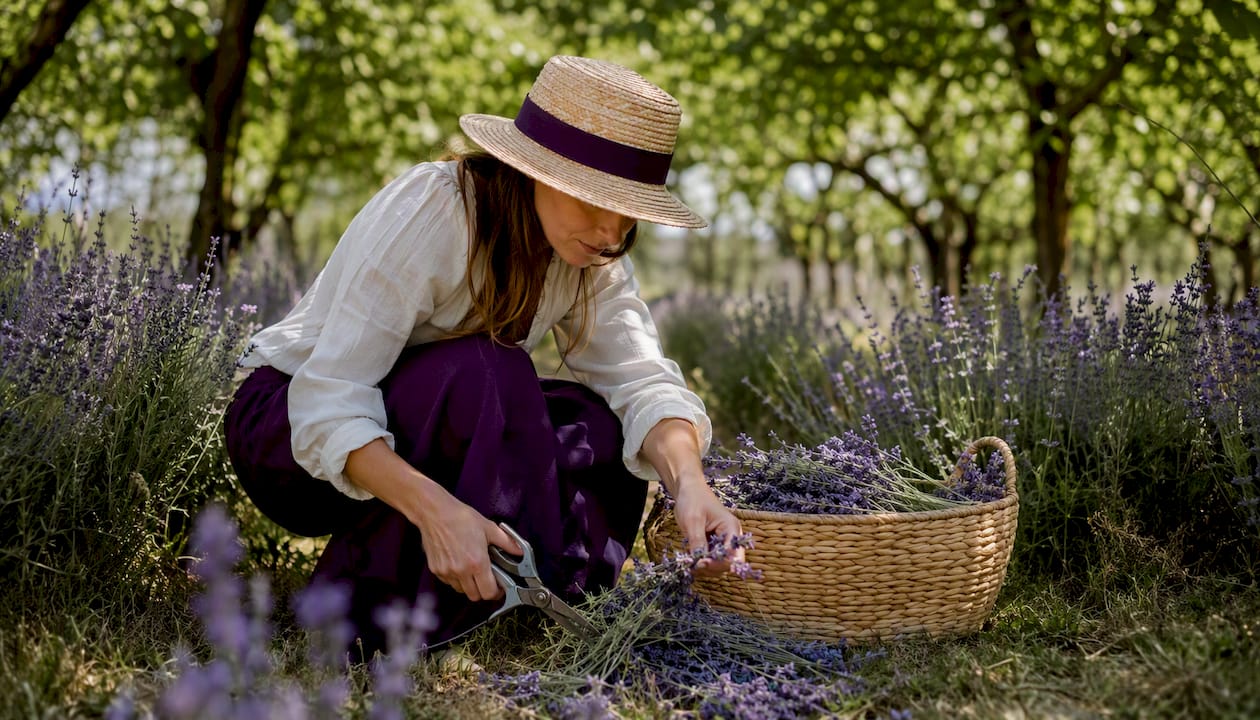
Core ingredient categories:
| Extract type | Typical extraction method | Sustainability considerations |
|---|---|---|
| Essential oils | Steam distillation | High yield crops (lavender) are lower risk; sandalwood and rose require careful sourcing |
| Absolutes | Solvent extraction (hexane) | Solvent residues are a concern; CO₂ extraction is a cleaner alternative |
| Concretes | Solvent extraction | Similar to absolutes; used as intermediary before absolute production |
| Oleoresins | Solvent or resin tapping | Tapping can be sustainable if managed; over-harvesting is a documented risk |
| Isolates | Fractional distillation | Derived from naturals; lower ecological footprint than full synthetics |
| Selected synthetics | Chemical synthesis | Useful when the natural equivalent is endangered or extraction is destructive (e.g., musk, ambergris) |
Ethical sourcing signals worth looking for include organic certification, fair-trade partnerships with small producers, and regenerative agriculture practices. These are not interchangeable: organic addresses chemical inputs, fair trade addresses labor equity, and regenerative addresses soil and ecosystem health. A truly holistic supply chain addresses all three.
Red flags on a label or supplier page:
- “Fragrance” or “parfum” listed as a single ingredient with no further breakdown
- No declared percentage of natural content
- Vague origin claims (“sourced from nature”) with no named region or supplier
- Synthetic musks or UV filters without disclosure
Green flags:
- Declared natural percentage (e.g., 98% natural origin)
- Named harvest regions and distillation partners
- Third-party certifications (COSMOS, Ecocert, Fair for Life)
- Refillable or recyclable packaging
For a deeper look at what fair-trade ingredient sourcing actually means in practice, the distinction between certification tiers matters more than most buyers realize.
How are holistic fragrances composed and produced?
Slow formulation is the operative phrase. Where mass-market perfumery compresses development cycles to meet trend calendars, holistic makers treat composition as a deliberate, iterative process.
-
Write the brief. Name the target state, the intended user, the application context (on-body vs. ambient), and any sourcing constraints before selecting a single material.
-
Select materials. Choose ingredients that serve both the olfactory brief and the functional aim. Cross-reference IFRA usage limits and check traceability documentation for each raw material.
-
Design the accord. Build the formula in layers: top notes (the first impression, typically 5–15% of the formula), heart notes (the emotional core, typically 30–50%), and base notes (the lasting impression and fixative layer, typically 30–50%). For a calming accord, the heart might center on lavender absolute and Roman chamomile; for a focus accord, rosemary and cardamom.
-
Macerate and evaluate. Allow the blended formula to rest for at least two weeks before final evaluation. Aromatic compounds interact and evolve; a blend assessed at day one will smell different at day fourteen.
-
Safety and stability testing. Conduct a patch test on a small panel, check for discoloration or separation, and confirm IFRA compliance for the intended application type (leave-on skin vs. rinse-off vs. ambient).
-
Final batching. Produce in small quantities to preserve freshness and allow for formula adjustments based on seasonal variation in natural raw materials.
Sample blend profile (relative parts, adaptable):
| Layer | Notes | Relative parts |
|---|---|---|
| Top | Bergamot, pink pepper | 10 parts |
| Heart | Lavender, geranium, Roman chamomile | 30 parts |
| Base | Cedarwood, vetiver, benzoin | 30 parts |
| Carrier | Organic cane alcohol (or jojoba for a roll-on) | 20 parts |
These proportions are a starting point. Adjust based on the intensity of individual raw materials and the desired sillage.
Why does fragrance change your mood and cognitive state?
The mechanism is anatomical. Scent molecules travel from the olfactory epithelium along the olfactory nerve directly to the amygdala and hippocampus, bypassing the thalamic relay that filters most other sensory input. This direct limbic access explains why scent can trigger memory and mood responses faster and more viscerally than sound or sight.
Systematic reviews report reductions in anxiety, stress markers, and improvements in sleep or mood for some aromatherapy interventions, though evidence quality varies and the field still lacks large-scale randomized trials. The honest framing is adjunctive: scent supports wellbeing practices; it does not replace clinical care.
Aromatherapy is best used as a complement to mainstream treatments. Pairing scent with behavioral techniques like diaphragmatic breathing and mindfulness strengthens its effect through associative learning, so the scent itself becomes a conditioned cue for the relaxation response.
— GoodTherapy, “The Power of Scent: Aromatherapy and Psychotherapy”
This conditioning principle is the most underused insight in consumer fragrance. Most people wear a scent passively. Pairing it deliberately with a repeated practice, breath work, a body scan, a journaling session, builds a neurological association that makes the scent itself a trigger for that state over time.
Pro Tip: Design your scent-based intervention in three phases: (1) choose one scent and one practice; (2) apply the scent only during that practice for 21 days; (3) test the cue by applying the scent before a stressful moment. The conditioned response, if built consistently, begins to activate the calm state before the practice even begins.
The fragrance and wellness connection deepens considerably when application is intentional rather than ambient. Passive diffusion delivers lower concentrations and weaker associative signals than near-field, on-body application.
How do you make and apply a holistic fragrance at home?
A simple roll-on formula is the most accessible entry point. It keeps dilution rates conservative, requires no specialized equipment, and produces a near-field application that supports conditioning.
Sample roll-on formula (10 ml):
- 9 ml jojoba oil (carrier)
- 6 drops lavender essential oil (heart)
- 3 drops cedarwood essential oil (base)
- 2 drops bergamot essential oil (top)
- 1 drop Roman chamomile (heart accent)
Total essential oil concentration: approximately 2%, which sits within conservative safe-use guidelines for leave-on skin products.
Steps:
- Measure the jojoba oil into a clean 10 ml glass roll-on bottle.
- Add essential oils one at a time, counting drops carefully.
- Cap the bottle and roll gently between your palms to blend. Do not shake vigorously.
- Allow the blend to macerate for 48 hours before first use.
- Patch test: apply a small amount to the inner forearm, wait 24 hours, and check for redness or irritation before full use.
- Adjust the formula after two weeks of use if any note feels too dominant.
The most effective application points for conditioning are pulse points (inner wrists, base of throat) applied immediately before a chosen practice. Consistency of placement reinforces the sensory cue.
— Cleveland Clinic, Aromatherapy overview and safety
Safety notes: Pregnant individuals, those with asthma, and anyone on photosensitizing medications should consult a healthcare provider before using essential oils on skin. Citrus oils (bergamot, lemon) are phototoxic; avoid sun exposure on treated skin for at least 12 hours. Keep all formulas away from children under three.
Pairing your roll-on with a perfume and meditation practice produces the strongest conditioning results, particularly when the practice is consistent in time of day and duration.
What safety and regulatory considerations apply in the U.S.?
The U.S. regulatory environment for fragrance is less prescriptive than the EU’s, which places more responsibility on makers and buyers to self-educate.
IFRA (the International Fragrance Association) publishes usage guidelines that set maximum concentration limits for fragrance ingredients by application category. IFRA compliance is a voluntary industry standard in the U.S., not a legal requirement, but it is the most widely used safety benchmark in professional formulation.
The Federal Trade Commission (FTC) governs labeling claims. “Natural,” “organic,” and “clean” carry no legal definition in the fragrance category under current FTC rules, which means a brand can use these terms without meeting any specific standard. The exception is USDA Certified Organic, which applies to agricultural ingredients and requires third-party verification.
Practical safety actions for buyers and makers:
- Review IFRA amendment summaries before finalizing a formula or purchasing a product
- List EU-recognized allergens on labels even when selling in the U.S., as this practice signals transparency and is increasingly expected by conscious consumers
- Conduct patch testing before full use, especially with absolutes and high-concentration natural extracts
- Use conservative dilution rates: 1–2% for leave-on products, up to 3–4% for eau de parfum concentrations
- Seek third-party safety assessment (a qualified cosmetic chemist or toxicologist) before scaling production or selling commercially
PMC research on aromatherapy and complementary medicine classifies aromatherapy within the NIH’s integrative therapy framework, which reinforces the adjunctive framing: these are supportive practices, not medical treatments.
This article provides general information, not professional medical, legal, or formulation advice. Confirm current IFRA guidelines and applicable U.S. regulations with a qualified professional before producing or selling fragrance products.
How do you evaluate and buy a genuinely holistic fragrance?
The gap between marketing language and actual practice is widest in the fragrance category. These questions and signals cut through it quickly.
Buying checklist:
- Is the percentage of natural-origin ingredients declared on the label or product page?
- Can the brand name at least one supplier or harvest region for a key ingredient?
- Does the brand hold a recognized third-party certification (COSMOS, Ecocert, Fair for Life, USDA Organic)?
- Are allergens listed, even voluntarily?
- Does the brand provide suggested rituals or application guidance, signaling intentional use?
- Is refill or recycling available for the packaging?
Questions to ask a maker or brand:
- What percentage of your formula is natural-origin?
- Where is your most expensive or rare ingredient sourced, and from whom?
- Are you IFRA compliant, and do you have a safety assessment on file?
- What certifications does your supply chain carry?
- How do you handle ingredients from endangered or at-risk plant species?
- Can I see your allergen disclosure?
- Do you offer refills or a take-back program for bottles?
A brand that deflects or gives vague answers to questions 1, 3, and 6 is a red flag regardless of how beautiful the packaging is. Genuine transparency is not a marketing choice for holistic makers; it is a structural commitment. For a practical framework on conscious fragrance shopping, the questions above map directly onto what separates credible artisanal brands from greenwashing.
How Maisonvoyageurparfum practices a holistic approach
Maisonvoyageurparfum, the artisanal Mediterranean perfumerie behind Maison Voyageur, offers a concrete illustration of these principles in practice. Each fragrance is composed slowly in Madrid using 98% natural ingredients, with formulas built around emotional briefs rather than trend forecasts. The brand’s stated aim is personal introspection: scents designed to prompt self-exploration rather than simply to project an image.
The sourcing philosophy aligns with the holistic framework described throughout this article. Natural origin percentages are declared, and the brand’s editorial content consistently pairs scent with mindfulness and introspective practice, reinforcing the conditioning principle rather than treating fragrance as a passive accessory.
Fragrance, when made slowly and with intention, becomes more than a scent. It becomes a way of returning to yourself.
— Maison Voyageur, How Fragrance Promotes Introspection: A Science Guide
For a reader who wants to experience the approach rather than just study it, the suggested ritual is simple: choose one Maison Voyageur scent, apply it to your inner wrists before a ten-minute morning stillness practice, and repeat daily for three weeks. The scent becomes the anchor. The practice deepens. Over time, the two become inseparable.
Key Takeaways
A holistic fragrance approach works because it combines limbic-targeted scent design, traceable natural ingredients, and intentional application rituals into a single, coherent practice.
| Point | Details |
|---|---|
| Definition | A holistic fragrance approach unites therapeutic intent, ingredient integrity, and ecological responsibility in one formula. |
| Limbic mechanism | Scent reaches the amygdala directly, enabling faster mood and state shifts than most other sensory inputs. |
| Sourcing signals | Declared natural percentage, named suppliers, and third-party certifications (COSMOS, Fair for Life) separate genuine products from marketing claims. |
| Safety baseline | IFRA compliance and conservative dilution (1–2% for leave-on products) are the minimum safety standards for holistic formulas. |
| Maisonvoyageurparfum | Maison Voyageur’s 98% natural, Madrid-crafted fragrances are built around introspective briefs and intentional pairing with mindfulness practice. |
Fragrance as a practice, not a product
There is a version of this conversation that stays entirely in the realm of ingredients and certifications. That version is useful, but it misses the deeper point. Scent is one of the few sensory inputs that bypasses the analytical mind almost entirely. You smell something and you are already somewhere else, already feeling something, before you have had a chance to decide whether you want to.
That is not a reason to be credulous about fragrance claims. The evidence for aromatherapy is real but modest, and anyone who tells you a particular oil will cure anxiety is overstating what the science supports. The honest position is this: intention and sourcing change outcomes. A formula built with a clear emotional brief, from traceable ingredients, applied with a consistent ritual, does something that a randomly chosen synthetic spray cannot. Not because of magic, but because of conditioning, purity, and the simple fact that you are paying attention.
The ethical dimension matters too. Choosing ingredients that support small producers and regenerative land practices is not separate from the wellbeing aim. It is part of it. A scent that costs the earth something irreplaceable carries that cost into every application, whether or not you can smell it.
Pair your chosen scent with breath. With stillness. With a moment that belongs only to you. That is where the practice lives.
Maison Voyageur: slowly made, for those who want to explore within
For readers who want to experience a holistic fragrance approach rather than build one from scratch, Maison Voyageur offers a ready entry point. Each scent in the collection is composed in Madrid with 98% natural ingredients, designed not to impress a room but to accompany a moment of quiet self-discovery. The formulas are built slowly, with emotional briefs at their center, and the brand’s guided scent discovery tools help you find the right accord for your own inner landscape.

Individual bottles, travel sizes, and curated sets are available for those who want to explore one scent at a time or gift the experience to someone they care about. The travel size is a particularly good starting point: small enough to carry into a daily ritual, substantial enough to build a real conditioning practice over several weeks.
Visit the Inner Trip collection to find your scent and begin.
Useful sources for deeper study
| Source | What it offers |
|---|---|
| PMC — Aromatherapy and Essential Oils in Complementary Medicine | Peer-reviewed review of aromatherapy within the NIH integrative therapy framework; strong academic grounding |
| Johns Hopkins Medicine — Aromatherapy: Do Essential Oils Really Work? | Accessible clinical overview of the limbic pathway and evidence for essential oil use |
| GoodTherapy — The Power of Scent: Aromatherapy and Psychotherapy | Practitioner guidance on pairing scent with behavioral techniques and associative conditioning |
| The Good Trade — The Science of Scent and Wellbeing | Consumer-facing explainer on functional fragrance and limbic-system connections |
| Country & Townhouse — Ask the Expert: Functional Fragrance | Industry perspective on the shift from aesthetic to purpose-led perfumery |
| PTSD Recovery — Scent Therapy: A Holistic Pathway to Wellness | Clinical summary of aromatherapy evidence, including stress-marker reductions and adjunctive framing |
| Sustainability Directory — Holistic Fragrance | Framework connecting therapeutic aims with regenerative sourcing and supply-chain ethics |
| Cleveland Clinic — Aromatherapy Overview and Safety | Safety guidance on dilution, application methods, and contraindications |
| School of Natural Skincare — How to Make a Natural Perfume | Practical DIY formulation guidance with stepwise templates and safe-use notes |