
How Scent Creates Shared Memory: The Science Behind It
Scent creates shared memory by engaging the olfactory-limbic system, a direct neural pathway that connects smell to the brain’s emotional and memory centers without the filtering step other senses require. This makes smell the strongest memory sense we have. Studies show about 77% recognition of familiar odors, yet only 55% of those recognitions successfully retrieve the full associated memory. That gap is where the psychology gets interesting. Understanding how scent triggers memory, and how to use that knowledge intentionally, opens a quiet door into some of the most powerful shared experiences two people can have.
How scent creates shared memory through the brain’s limbic system
The olfactory bulb sends scent signals directly to the amygdala and hippocampus, bypassing the thalamus entirely. Every other sense, sight, sound, touch, and taste, routes through the thalamus first. That detour adds processing time and emotional distance. Scent skips it. The result is a faster, more visceral emotional response than any other sensory input can produce.
This direct olfactory-limbic connection is why a single breath of cedar or jasmine can drop you back into a specific afternoon from fifteen years ago, complete with the feeling of that moment, not just the image. The amygdala tags the experience with emotional weight. The hippocampus encodes the context. Together, they create a memory that feels lived rather than recalled.
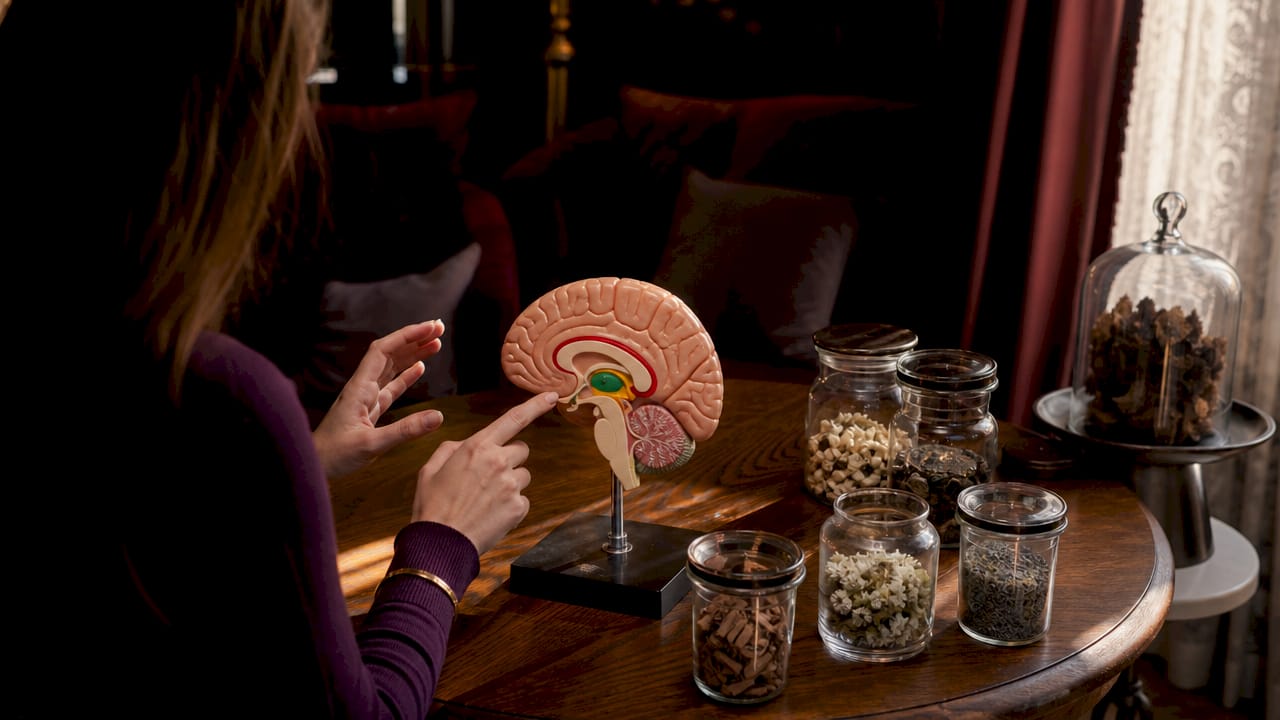
Two additional brain regions shape how we perceive and evaluate scent. The piriform cortex handles initial odor identification. The orbitofrontal cortex assigns meaning and pleasantness to what we smell. These regions work together to build the full sensory and emotional picture of a scent experience.
Evolutionary biology explains why this system is so powerful. Scent tags experiences as important for survival, which is why emotionally charged odors are remembered more vividly than neutral ones. The brain treats a meaningful smell the way it treats a threat or a reward. It pays close attention.
- The amygdala encodes emotional intensity alongside the scent signal
- The hippocampus stores the spatial and contextual details of the memory
- The piriform cortex identifies the odor itself
- The orbitofrontal cortex evaluates whether the scent is pleasant or aversive
- Bypassing the thalamus means emotional tagging happens before conscious thought
Pro Tip: When you want a scent to anchor a specific memory, pair it with a moment of genuine emotional presence. The amygdala encodes intensity, so the stronger the feeling at the moment of exposure, the more durable the memory.
What is the dual-step process of scent memory psychology?
Scent memory psychology describes memory retrieval as a two-step cognitive process. The first step is recognition: identifying a familiar odor. The second is associative retrieval: connecting that odor to a specific episode, place, or person. These two steps are not guaranteed to happen together.
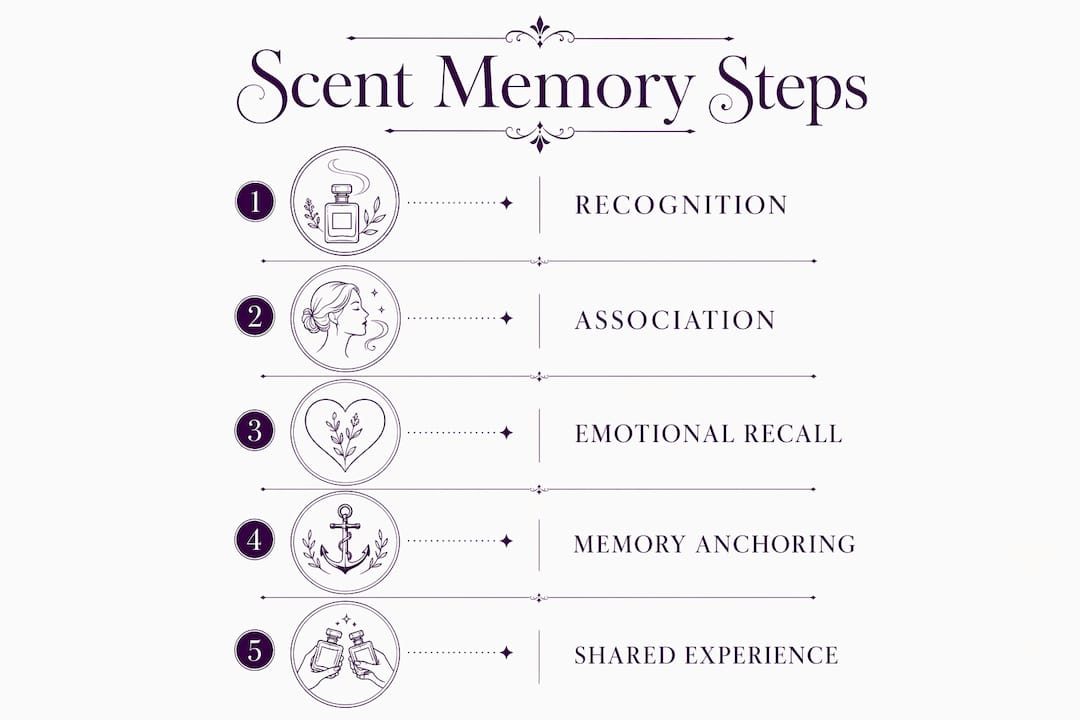
Recognition rates sit around 77% for familiar odors. That means most people can identify a smell they have encountered before. But associative retrieval, the step that actually brings back the memory, succeeds only about 55% of the time. The gap between those two numbers reveals how fragile scent memory can be without the right conditions.
Several factors determine whether associative retrieval succeeds.
- Emotional salience. Odors tied to strong emotions, especially unpleasant or emotionally charged ones, are recognized and retrieved more reliably. The brain prioritizes what felt significant.
- Distinctiveness. A scent that stands apart from everyday smells is easier to retrieve. Generic or ambient odors blend into the background of memory.
- Semantic richness. Odors with unique descriptions trigger stronger episodic memories. When you can name or describe a scent precisely, you build a richer memory trace around it.
- Familiarity curve. Associative retrieval follows a U-shaped relationship with familiarity. Very unfamiliar and very familiar odors both retrieve memories more successfully than moderately familiar ones.
| Factor | Effect on memory retrieval |
|---|---|
| High emotional salience | Increases both recognition and associative retrieval |
| Distinctive odor profile | Reduces interference from similar scents |
| Rich verbal description | Strengthens the episodic memory trace |
| Extreme familiarity or novelty | Improves retrieval over moderate familiarity |
Pro Tip: When you want to journal about scent-triggered memories, write down the specific words that come to mind when you first smell something. That verbal encoding deepens the memory trace and makes future retrieval more reliable.
Why does scent strengthen social bonds and shared experiences?
Scent functions as what researchers call social architecture. It creates a shared perceptual field without requiring words. Two people in the same scented space are processing the same emotional signal simultaneously. That synchronized experience builds connection at a level that conversation rarely reaches.
“Scent creates a non-verbal shared sensory field that lowers social barriers and fosters authentic connection through instinctive emotional memory.” — Scent as Social Architecture
This matters because scent bypasses the intellectualized layer of communication. When you explain something to someone, they interpret it through their own framework. When you share a scent, both of you respond to the same raw emotional input. The experience is closer to feeling together than thinking together.
Shared scent environments generate what psychologists describe as relational presence. A couple who always lights the same candle before dinner, a family whose home carries a signature smell, a group of friends who associate a particular perfume with a specific summer: these are not accidents. They are memory anchors formed through consistent pairing of scent with emotionally significant moments.
- Shared scent exposure synchronizes emotional states across individuals
- Consistent scent rituals build group identity over time
- Scent-triggered mutual memories reinforce relational bonds without explicit discussion
- A signature scent tied to a place or person becomes a portable emotional reference point
The social power of scent also explains why certain spaces feel immediately familiar or safe. A scent that carries collective emotional weight, a grandmother’s kitchen, a childhood home, a place of worship, does not just remind you of a memory. It re-experiences the original emotional intensity of that moment. That is not nostalgia. That is the olfactory-limbic system doing exactly what it was built to do.
How to intentionally create and preserve shared scent memories
Creating a scent memory archive is a deliberate practice, not a passive one. The brain forms stronger scent memories when the pairing between smell and experience is consistent, emotionally present, and distinct. You can design that pairing.
- Choose a signature scent for meaningful occasions. Use the same fragrance for recurring rituals, a weekly dinner, a morning routine shared with a partner, a seasonal gathering. Repetition builds the associative link.
- Practice intentional scent awareness. Regular, conscious sniffing, sometimes called concerted sniffing in olfactory research, strengthens the olfactory bulb and hippocampus. This is not metaphorical. The physical structures involved in scent memory can grow with practice.
- Create a scent memory archive. Keep a written record of scents that carry emotional weight. Note the smell, the memory it surfaces, the people involved, and the feeling it carries. This practice deepens the semantic richness of each scent, which improves future retrieval.
- Use novel, distinctive fragrances for new experiences. A scent that stands apart from your everyday environment will encode more cleanly. When you want a new shared experience to become a lasting memory, introduce a fragrance you do not use at any other time.
- Layer scent into shared rituals. A curated fragrance wardrobe allows you to assign different scents to different relationships or occasions, creating a sensory map of your emotional life.
Pro Tip: To explore personal identity through scent, start with three fragrances that already carry strong memories. Wear each one deliberately in a new context. You will begin to see how scent shapes not just what you remember, but who you feel yourself to be.
Key Takeaways
Scent creates shared memory by directly engaging the brain’s amygdala and hippocampus, producing emotional memories that are faster, more vivid, and more socially binding than those formed by any other sense.
| Point | Details |
|---|---|
| Direct brain pathway | Scent bypasses the thalamus, reaching emotional centers faster than sight or sound. |
| Two-step memory process | Recognition succeeds about 77% of the time; associative retrieval succeeds about 55% of the time. |
| Emotional salience matters | Distinctive, emotionally charged scents are retrieved more reliably than neutral ones. |
| Scent as social architecture | Shared scent environments synchronize emotional states and build relational bonds without words. |
| Practice strengthens memory | Regular conscious sniffing physically enlarges the olfactory bulb and hippocampus over time. |
Scent, memory, and what we carry together
I have spent years thinking about why certain fragrances stop people mid-sentence. Not because the smell is beautiful, though it may be. Because it pulls them somewhere specific. A person, a room, a feeling they had not thought about in years. That is not coincidence. That is the olfactory-limbic system working exactly as it should.
What I find most underappreciated is the social dimension of this. We talk about scent memory as a private experience, something that happens inside one person. But the most powerful scent memories I have observed are shared ones. The fragrance a couple associates with the first apartment they shared. The smell of a particular wood smoke that an entire family connects to the same winter. These are not individual memories that happen to overlap. They are genuinely collective ones, formed through synchronized emotional experience.
The research on scent as social architecture confirms what I have felt intuitively. Scent lowers the guard. It reaches people before their thinking mind has a chance to interpret or filter. That is rare. Most forms of communication, even the most intimate ones, pass through a layer of interpretation first. Scent does not.
My honest recommendation is this: stop treating fragrance as decoration. Treat it as a tool for presence. Choose scents with intention. Pair them with moments that matter. Write them down. The practice of building a scent memory archive is not precious or elaborate. It is simply paying attention to one of the most direct lines the brain has to feeling.
The neuroscience is still catching up to what people who love fragrance have always known. Smell is not a minor sense. It is the oldest one we have, and the one most tightly wound around who we are and who we love.
— Celeste
Maisonvoyageurparfum and the art of scent as shared experience
Fragrance built slowly, from natural ingredients, carries a different kind of weight than mass-market perfume. Maisonvoyageurparfum, a Mediterranean perfumerie based in Madrid, crafts each scent with that weight in mind.

The Personalized Soy Candle 9oz Manifesting line is designed precisely for this: creating a signature scent experience that belongs to a moment, a relationship, or a ritual you want to remember. Made with 98% natural ingredients, each candle becomes a memory anchor you can return to. The slow luxury philosophy behind Maisonvoyageurparfum treats fragrance not as a product but as a form of inner exploration. For those who want to build a scent life with intention, that distinction matters.
FAQ
Why is smell the strongest memory sense?
Smell is the strongest memory sense because the olfactory bulb connects directly to the amygdala and hippocampus, bypassing the thalamus that filters all other sensory input. This direct pathway produces faster, more emotionally vivid memory responses than sight, sound, or touch.
What are the types of memories triggered by smell?
Smell triggers episodic memories, which are tied to specific events, places, and people, as well as emotional memories, which carry the feeling tone of the original experience. Both types are encoded simultaneously through the olfactory-limbic pathway.
How does scent memory psychology explain the 77% vs. 55% gap?
Odor recognition, identifying a familiar smell, succeeds about 77% of the time. Associative retrieval, connecting that smell to a specific memory, succeeds only about 55% of the time. The gap exists because retrieval requires additional cognitive links that recognition alone does not guarantee.
How can I create a scent memory archive?
Keep a written record of scents that carry emotional weight, noting the smell, the memory it surfaces, the people involved, and the feeling it carries. This semantic encoding deepens the memory trace and makes future retrieval more reliable.
Why does scent unlock subconscious emotions?
Scent reaches the amygdala before conscious thought processes the signal, which means emotional responses to smell arise before the thinking mind can interpret or suppress them. This is why a familiar fragrance can produce an emotional reaction that feels involuntary.
Recommended
- Why Certain Smells Feel Like Home – Maison Voyageur
- How Fragrance Promotes Introspection: A Science Guide – Maison Voyageur
- Nature’s Role in Scent Therapy: A Science-Backed Guide – Maison Voyageur
- How to Explore Personal Identity Through Scent – Maison Voyageur
Les sept fragrances Maison Voyageur
- Manifesting · unisexe (69,99 €)
- Intuition · femme (69,99 €)
- Certainty · femme (69,99 €)
- Expansion · femme (69,99 €)
- Release · homme (69,99 €)
- Presence · homme (69,99 €)
- Inner Fire · homme (69,99 €)
Nouvelle ici ? Commence par le Discovery Set · les 7 fragrances en format voyage (40 €).