
Por qué ciertos olores nos recuerdan a casa
Ciertos olores se sienten como en casa porque las señales olfativas evitan el relé sensorial estándar del cerebro y se conectan directamente con la amígdala y el hipocampo, las regiones responsables de la emoción y la memoria. Ningún otro sentido funciona de esta manera. La vista, el oído y el tacto pasan primero por el tálamo. El olfato no. Esa conexión directa es la razón por la cual una sola bocanada de cedro, pan horneado o aire salado puede transportarte a una habitación específica, a una persona específica, a un sentimiento específico, antes de que tu mente consciente siquiera registre lo que sucedió. La neurocientífica Dra. Rachel Herz ha estudiado esta vía durante décadas, y la ciencia ahora es clara.
Por qué ciertos olores se sienten como en casa: la ruta directa del cerebro
La vía olfativa es el único sistema sensorial que evita el tálamo y se conecta directamente con la amígdala y el hipocampo. Eso es importante porque la amígdala procesa el significado emocional y el hipocampo codifica la memoria autobiográfica. Cuando un aroma llega, impacta ambas estructuras casi simultáneamente. El resultado es una respuesta emocional que se siente inmediata e involuntaria, no razonada.
Otros sentidos toman una ruta más larga. Las señales visuales o auditivas llegan a los centros emocionales solo después de pasar por el relevo talámico, lo que añade un paso de procesamiento. El olfato se salta ese paso por completo. Por eso los aromas que evocan nostalgia se sienten mucho más viscerales que una fotografía del mismo recuerdo.
El hipocampo no solo almacena hechos. Almacena el contexto: la temperatura de una habitación, la hora del día, el estado emocional en el que te encontrabas. Cuando un aroma coincide con una firma de contexto almacenada, el hipocampo recupera el paquete completo de una vez. Por eso los olores asociados con la comodidad se sienten tan completos, no como un solo detalle, sino como un mundo entero que regresa.
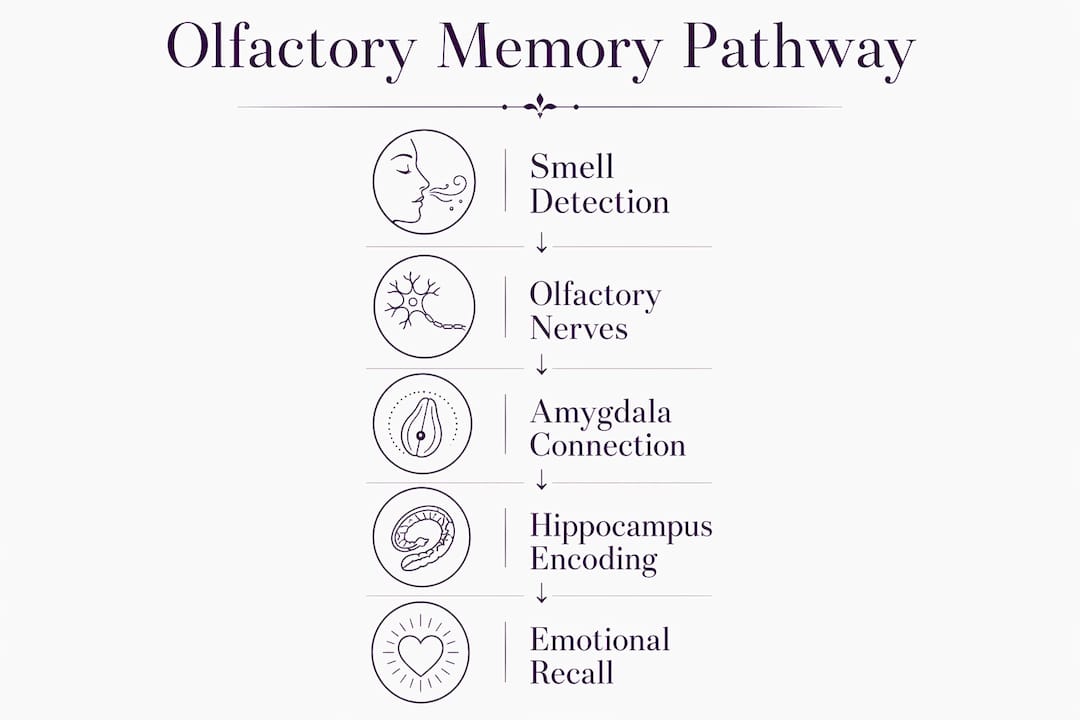
Consejo profesional: Si quieres entender tus propias respuestas olfativas, prueba esto: la próxima vez que un olor te detenga, haz una pausa y nombra la emoción antes de nombrar el recuerdo. La emoción llega primero. Esa secuencia es la vía olfativa funcionando exactamente como debe.
Los mecanismos clave en funcionamiento:
- La activación de la amígdala produce la carga emocional inmediata, comodidad, anhelo o malestar, antes del reconocimiento consciente.
- La recuperación del hipocampo reconstruye la memoria autobiográfica adjunta al aroma.
- La neuroplasticidad permite que estos circuitos de memoria-olfato se fortalezcan con la exposición repetida, haciendo que las asociaciones sean más duraderas con el tiempo.
- La participación del sistema límbico explica por qué la memoria olfativa y las emociones están tan estrechamente fusionadas en comparación con otras memorias sensoriales.
¿Qué es el efecto Proust y por qué es importante?
El efecto Proust es el término técnico para lo que la mayoría de la gente experimenta como un recuerdo involuntario y emocionalmente cargado provocado por el olor. El nombre proviene del famoso pasaje de Marcel Proust en En busca del tiempo perdido, donde el olor y el sabor de una magdalena mojada en té inundan al narrador con un recuerdo de infancia completo y vívido. Los investigadores ahora utilizan los recuerdos proustianos como una categoría formal para describir este fenómeno.
Lo que hace que estos recuerdos sean distintos es su intensidad emocional. Los recuerdos desencadenados por el olfato tienden a sentirse más cargados emocionalmente que los recuerdos recuperados a través de otros sentidos. También tienden a ser más antiguos. Muchas personas informan que sus recuerdos olfativos más poderosos se originan en la infancia, no en años recientes.
Varias cualidades definen un recuerdo proustiano:
- El recuerdo es involuntario. No eliges recordar. El aroma inicia el proceso sin tu permiso.
- El recuerdo está emocionalmente saturado. El sentimiento llega con el recuerdo, no después.
- El detalle puede ser sorprendentemente específico. Las personas a menudo recuerdan texturas, sonidos y calidad de la luz junto con el recuerdo principal.
- El desencadenante a menudo es no reconocido al principio. Puedes sentir una ola de emoción antes de identificar lo que estás oliendo.
La intensidad emocional de estos recuerdos no es aleatoria. Refleja cómo el cerebro los codificó originalmente. Las experiencias que tuvieron un fuerte peso emocional durante la codificación se almacenan con conexiones límbicas más fuertes. Cuando un aroma reactiva esas conexiones, la carga emocional viene con él.
¿La historia personal influye en qué aromas se sienten familiares?
La historia personal es el factor más importante para determinar qué hace que un aroma se sienta familiar y seguro. El mismo aroma puede traer comodidad o pena dependiendo completamente del contexto emocional en el que se encontró por primera vez. La lavanda calma a una persona e inquieta a otra. La química es idéntica. Las asociaciones no lo son.
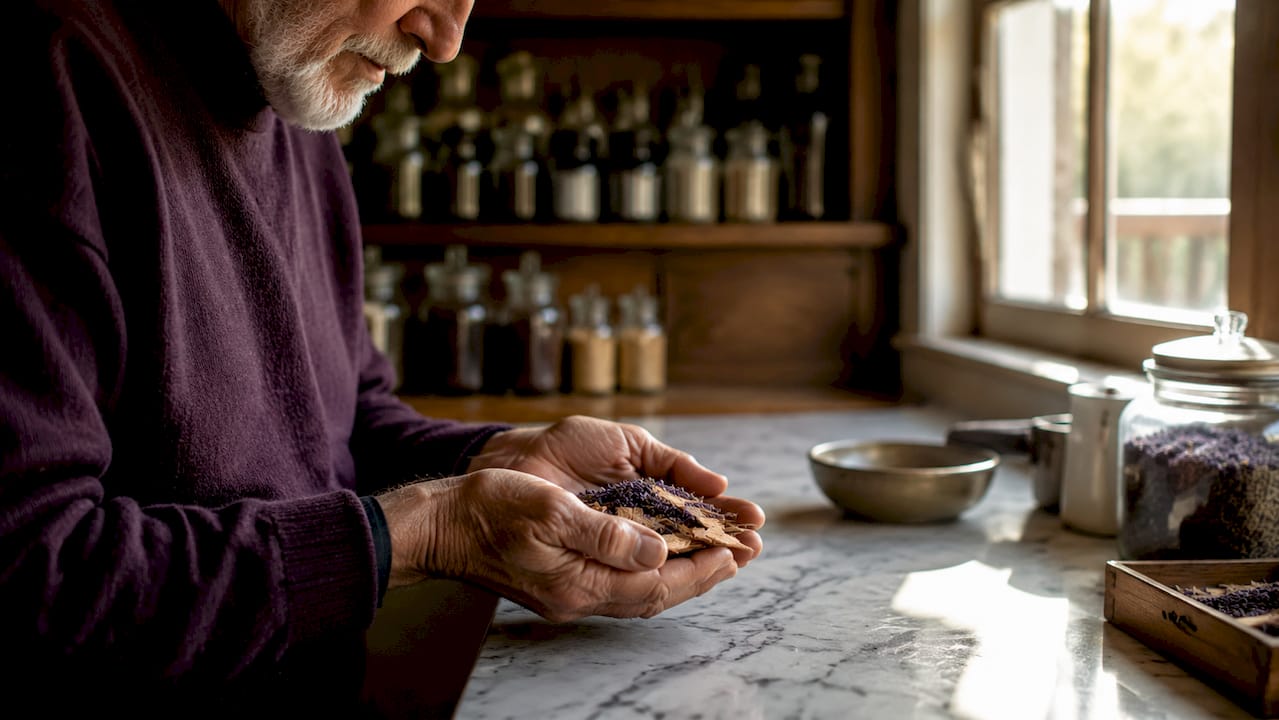
La primera etapa de la vida es particularmente formativa. La investigación sobre los circuitos olfativos de la amígdala muestra un período crítico para la plasticidad sináptica en el desarrollo temprano, durante el cual las conexiones olor-emoción se forman con una durabilidad inusual. Esto explica por qué el olor de la cocina de tu abuela o de la casa de tu infancia puede sentirse emocionalmente más potente que cualquier olor que hayas encontrado de adulto.
El contexto también da forma a la respuesta en tiempo real. Los estudios demuestran que aprender en entornos con olores conduce a una mayor recuperación de la memoria cuando el mismo olor está presente más tarde. El olor se convierte en parte de la firma del contexto de la memoria, no solo en un detalle de fondo.
Así es como puedes usar este conocimiento de forma práctica:
- Identifica tus aromas ancla. Piensa en los olores que asocias con la seguridad y la tranquilidad. Estas son tus señales de comodidad existentes, ya codificadas.
- Introduce un nuevo aroma intencionalmente. Elige una fragancia que te resulte agradable pero que aún no asocies con nada específico.
- Combínalo con un estado deseado. Úsalo constantemente durante momentos de calma, descanso o concentración. La combinación repetida crea una nueva asociación.
- Dale tiempo. El condicionamiento olfativo requiere múltiples exposiciones antes de que la asociación se vuelva automática.
Consejo profesional: Los expertos recomiendan usar un aroma novedoso, uno sin asociaciones previas, al construir una nueva señal de confort. Un aroma ya vinculado a un recuerdo complicado llevará ese peso al nuevo contexto.
La idea más profunda aquí es que las asociaciones de aromas no son fijas. Se aprenden. Y lo que se aprende puede, con paciencia, volver a aprenderse.
¿Puede el olor realmente cambiar la forma en que te sientes de cálido o seguro?
El aroma no solo influye en la emoción. Puede alterar la percepción física de formas medibles. Un estudio multisensorial de 2026 encontró que la vainilla aumentaba la calidez percibida en los participantes, mientras que el aroma a higo retrasaba la sensación de enfriamiento después de 15 minutos de exposición. Estas no son metáforas. Son cambios documentados en cómo el cuerpo interpreta las señales de temperatura.
Esta dimensión física añade una capa a la cuestión de por qué ciertos olores se sienten como en casa. La sensación no es puramente psicológica. También es sensorial. La vainilla, una nota que se encuentra en muchas fragancias asociadas con el confort, literalmente hace que un espacio se sienta más cálido. Esa calidez refuerza el recuerdo emocional de seguridad y pertenencia.
| Aroma | Efecto Sensorial | Asociación Emocional |
|---|---|---|
| Vainilla | Aumenta la calidez percibida | Confort, seguridad, dulzura |
| Higo | Retrasa la sensación de enfriamiento | Calma, conexión a tierra, terrenal |
| Cedro | Profundidad terrosa, amaderada | Estabilidad, hogar, protección |
| Aire salado | Apertura, frescura | Libertad, recuerdo de un lugar |
| Pan horneado | Calidez, plenitud | Nutrición, pertenencia |
La combinación de memoria emocional y sensación física es lo que hace que los sentimientos de hogar basados en el aroma sean tan inmersivos. No solo estás recordando la calidez. Estás, en un sentido medible, sintiéndola de nuevo.
Un matiz importante: la sensación de hogar depende de la firma de contexto completa almacenada en la memoria, no solo de una sola nota reconocible. Una vela que huele "casi como" tu hogar de la infancia puede sentirse ligeramente diferente porque el tiempo de evaporación, la mezcla o el contexto ambiental difieren de lo que se codificó originalmente. Pequeñas diferencias en la formulación pueden cambiar completamente la respuesta emocional.
Puntos clave
Ciertos olores se sienten como en casa porque la vía olfativa se conecta directamente con los centros de emoción y memoria del cerebro, creando respuestas involuntarias y físicamente sentidas, moldeadas por la historia personal.
| Punto | Detalles |
|---|---|
| Vía cerebral directa | El olfato bypassa el tálamo y llega a la amígdala y al hipocampo más rápido que cualquier otro sentido. |
| El efecto Proust | Los recuerdos desencadenados por el olor son involuntarios, emocionalmente intensos y a menudo tienen sus raíces en experiencias de la primera infancia. |
| Las asociaciones personales varían | El mismo olor evoca consuelo o angustia dependiendo del contexto emocional de la primera exposición. |
| El olor altera la sensación física | La vainilla aumenta mediblemente la calidez percibida, añadiendo una capa física al sentimiento emocional de hogar. |
| Las asociaciones se pueden construir | Emparejar un aroma nuevo con un estado emocional deseado repetidamente crea una nueva y duradera señal de confort. |
Lo que el aroma me ha enseñado sobre la pertenencia
Por Celeste
Crecí entre ciudades. Ninguna casa individual mantuvo mi infancia por mucho tiempo. Durante años, pensé que eso significaba que no tenía un verdadero aroma de hogar. Luego me di cuenta de que tenía varios, y ninguno de ellos pertenecía a un edificio.
El olor a piedra cálida después de la lluvia. Azahar por la mañana temprano. Una nota de cedro particular que no puedo nombrar pero que reconocería en cualquier lugar. Estos no son lugares. Son estados emocionales a los que ciertos aromas me devuelven instantáneamente. Eso es lo que la mayoría de la gente pierde cuando piensa en el aroma y la memoria. El hogar no siempre es un lugar. A veces es una sensación que tu sistema nervioso aprendió a reconocer antes de que tuvieras palabras para ello.
Lo que he descubierto, tanto personalmente como en el trabajo que hacemos en Maisonvoyageurparfum, es que la gente subestima la agencia que tiene aquí. No elegiste los aromas que marcaron tu primera infancia. Pero puedes elegir los que marcarán el próximo capítulo. El proceso lento de la fragancia no se trata solo de artesanía. Se trata de darle a un aroma suficiente tiempo e intención para que se convierta en tuyo.
Mi consejo honesto: no te apresures. Usa una fragancia durante una semana antes de decidir cómo te sientes al respecto. Deja que te acompañe en tus mañanas, en tus tardes tranquilas, en tus momentos de quietud. Es entonces cuando se forma la asociación. Es entonces cuando un aroma deja de ser algo que usas y empieza a ser un lugar donde vives.
— Celeste
Encuentra un aroma que se sienta tuyo

La ciencia es clara: el aroma se convierte en hogar a través de la repetición, la emoción y el tiempo. Maisonvoyageurparfum se fundó precisamente en ese entendimiento. Cada fragancia de la colección mediterránea se elabora lentamente, utilizando un 98 % de ingredientes naturales, para transmitir el tipo de profundidad emocional que los perfumes de mercado masivo no pueden replicar. Si buscas un punto de partida, la vela de soja personalizada está diseñada para anclar una intención específica a un aroma específico, que es exactamente cómo se construyen las asociaciones de comodidad. No rápidamente. Deliberadamente.
Preguntas frecuentes
¿Por qué ciertos olores desencadenan emociones tan fuertes?
Las señales olfativas se conectan directamente con la amígdala y el hipocampo, los centros emocionales y de memoria del cerebro, sin pasar por el relé talámico que procesa otros sentidos. Esta ruta directa produce respuestas emocionales inmediatas e involuntarias.
¿Qué es el efecto Proust en el aroma y la memoria?
El efecto Proust describe recuerdos autobiográficos involuntarios y emocionalmente cargados, desencadenados por el aroma. Estos recuerdos tienden a ser más antiguos, más intensos emocionalmente y más detallados que los recuerdos evocados a través de otras señales sensoriales.
¿Por qué los olores de la infancia son los más potentes?
La primera infancia crea un período crítico para la plasticidad sináptica en los circuitos olfatorios de la amígdala, formando conexiones olor-emoción con una durabilidad inusual. Los olores encontrados durante experiencias infantiles emocionalmente significativas llevan asociaciones límbicas más fuertes a la edad adulta.
¿Puedes crear un nuevo aroma que se sienta como en casa?
Sí. Emparejar un aroma nuevo con un estado emocional deseado, como la calma o la seguridad, a través de la exposición repetida, condiciona al cerebro a asociar ese aroma con ese estado. Los expertos recomiendan usar un aroma sin asociaciones previas para evitar recuerdos conflictivos.
¿La vainilla realmente te hace sentir más cálido?
Un estudio multisensorial de 2026 confirmó que el aroma a vainilla aumenta de manera medible la calidez percibida en los participantes. Este efecto físico se combina con la memoria emocional para hacer que las fragancias a base de vainilla se sientan especialmente reconfortantes y hogareñas.