
Cómo la fragancia promueve la introspección: una guía científica
La fragancia promueve la introspección al activar los centros emocionales y de memoria del cerebro a través de vías olfativas directas, lo que convierte al aroma en una de las herramientas de autorreflexión más inmediatas a su disposición. A diferencia de los estímulos visuales o auditivos, las señales de aroma llegan a la amígdala y el hipocampo sin pasar primero por el tálamo. Esa ruta directa produce recuerdos que se sienten vívidos, cargados de emoción y profundamente personales. La práctica de usar el aroma intencionalmente para el trabajo interior a veces se llama introspección aromática, y la neurociencia ahora le da una base creíble. Esta guía explica los mecanismos cerebrales detrás de esto, cómo construir un ritual de aroma y qué familias de fragancias sirven para la curación emocional de manera más efectiva.
Cómo la fragancia promueve la introspección a través del cerebro
La olfacción es el único sentido con una conexión directa al sistema límbico. Todos los demás sentidos pasan por el tálamo antes de llegar a los centros de procesamiento emocional. El aroma no lo hace. Este atajo anatómico explica por qué una sola respiración de una fragancia familiar puede evocar un recuerdo con más peso emocional que una fotografía.
La amígdala procesa el significado emocional y el hipocampo codifica y recupera recuerdos. Ambas estructuras reciben la entrada olfativa casi simultáneamente. Los recuerdos activados por el aroma son vívidos y emocionalmente cargados precisamente debido a estas conexiones olfativo-límbicas directas. Esa vividez no es nostalgia. Es neurobiología.
“Las señales de olor llegan directamente a la amígdala y al hipocampo, lo que hace que los olores sean integrales para la codificación de la memoria emocional”. — Influencia de las fragancias en la actividad psicofisiológica humana, MDPI Life
Lo que hace esto especialmente relevante para el desarrollo personal es el papel de la intensidad percibida. Las oscilaciones neuronales codifican la intensidad que se siente un aroma, no solo su concentración química. Esto significa que dos personas que huelen el mismo perfume pueden tener experiencias introspectivas completamente diferentes según su estado interno. Su experiencia subjetiva de una fragancia da forma a su atención y saliencia emocional en tiempo real. Por eso, la selección de aromas para la autorreflexión es personal, no prescriptiva.
Las áreas corticales frontales también se activan durante la exposición a aromas vinculada a la escritura reflexiva. Una mayor actividad del IFG durante la codificación de aromas apoya el procesamiento semántico, lo que ayuda a formar recuerdos duraderos y significativos. Combinar la fragancia con el diario o la meditación no solo se siente significativo. Crea cambios estructurales en la forma en que se codifican los recuerdos.
¿Repetir un aroma construye un ritual de reflexión?
Sí. La exposición repetida a un aroma crea representaciones neuronales cada vez más selectivas vinculadas a un significado interno aprendido. El uso constante de un aroma construye una señal estable para la introspección al dar forma al significado a nivel de población neuronal en la vía cortico-hipocampal. En términos sencillos: cuanto más uses la misma fragancia durante la reflexión, más fiable asociará tu cerebro ese aroma con un estado reflexivo.
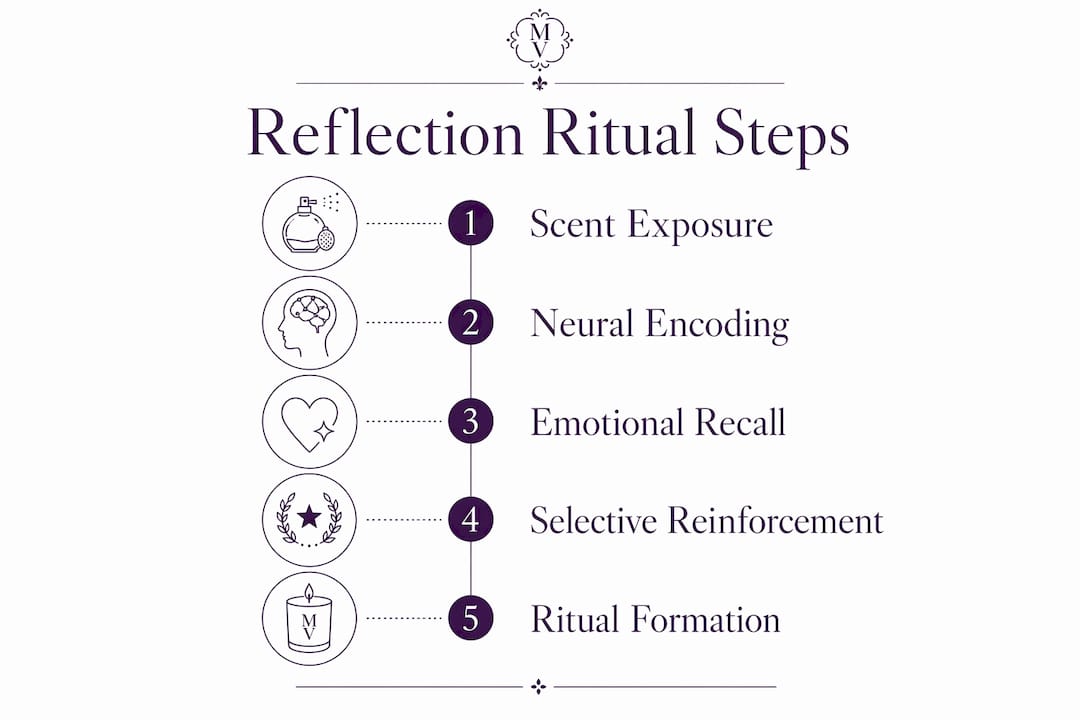
Este es el mismo mecanismo detrás de cualquier señal condicionada. Una silla específica, una lista de reproducción particular, una taza de té antes de escribir un diario. El aroma funciona de la misma manera, pero más rápido y más directamente emocional. La clave es la consistencia. Rotar las fragancias debilita la asociación. El uso a largo plazo de un solo tema aromático conduce a una mejor recuperación introspectiva que alternar entre fragancias.
La neurociencia también sugiere seleccionar una fragancia por tema de introspección. Un aroma para la calma. Uno para la claridad. Uno para procesar el dolor. Cada uno se convierte en un ancla neuronal dedicada con el tiempo.
Aquí hay un sencillo ritual de cuatro pasos para construir tu propia práctica de reflexión basada en aromas:
- Elige una fragancia para una intención emocional específica, como calma, claridad o liberación emocional.
- Crea una secuencia física consistente antes de empezar. Siéntate en el mismo lugar, respira lenta y profundamente tres veces, luego aplica o difunde tu aroma elegido.
- Dedica dos o tres minutos a prestar atención activa al aroma antes de escribir o meditar. Observa sus notas de salida, su calidez, cómo cambia en tu piel.
- Escribe en tu diario o medita inmediatamente después de ese período de atención inicial, mientras el aroma continúa difundiéndose a tu alrededor.
Consejo profesional: Realiza un chequeo emocional intencional dentro de los primeros dos minutos de exposición al aroma. Esto prepara las regiones de codificación frontales del cerebro para una reflexión más profunda, haciendo que tu sesión sea más productiva desde el principio.
¿Qué notas de fragancia funcionan mejor para la curación emocional?
No todos los aromas producen la misma cualidad introspectiva. Las familias de fragancias tienen perfiles emocionales distintos, y elegir la adecuada para su práctica es importante. Las fragancias con significado personal mejoran la percepción introspectiva al vincular el aroma a los estados emocionales existentes. Esto significa que una fragancia con asociaciones personales nombradas superará a un aroma genéricamente "calmante" en todo momento.
Dicho esto, ciertas familias de fragancias tienen efectos bien documentados en la aromaterapia para la introspección:
- La lavanda y los florales suaves reducen la ansiedad y el cortisol, creando las condiciones fisiológicas para una autorreflexión abierta y no defensiva.
- El almizcle y las maderas (sándalo, cedro, vetiver) centran la atención en el cuerpo, lo que favorece la presencia y reduce la dispersión mental durante la meditación.
- Los cítricos y las notas verdes (bergamota, yuzu, hoja de higuera) agudizan la atención sin agitación, útiles para sesiones de diario enfocadas en la claridad.
- Las notas marinas y acuáticas evocan apertura y amplitud, lo que puede ser útil al procesar emociones complejas o difíciles.
- Las resinas y el incienso (incienso, mirra, benjuí) se han utilizado en tradiciones contemplativas de diversas culturas durante siglos, y su efecto en la ralentización de la respiración y la profundización de la concentración está bien documentado.
| Familia de Fragancias | Efecto Emocional | Mejor Uso |
|---|---|---|
| Lavanda / Floral Suave | Calmante, reductor de la ansiedad | Reflexión nocturna, liberación emocional |
| Almizcle / Amaderado | Arraigo, centrado | Meditación, ejercicios de respiración |
| Cítrico / Verde | Clarificante, energizante | Diario matutino, percepción creativa |
| Marino / Acuático | Expansivo, emocionalmente abierto | Procesamiento del duelo o el cambio |
| Resina / Incienso | Contemplativo, ralentizante | Meditación profunda, práctica espiritual |
La intensidad percibida de la fragancia elegida también es importante. Ajustar la aplicación de la fragancia influye en la eficacia del aroma como objeto de atención introspectiva. Demasiado tenue, y el cerebro deja de registrarlo. Demasiado fuerte, y se convierte en una distracción. El objetivo es una presencia que se mantenga al borde de la conciencia, perceptible pero no exigente.
Cómo usar la fragancia en la atención plena y el diario
El aroma no es pasivo en la práctica de la atención plena. La aromaterapia combinada con la conciencia de la respiración mejora la comodidad, el enfoque y la observación sin juicios. El aroma debe ser atendido activamente. Difundir lavanda mientras navegas por tu teléfono no produce ninguno de los beneficios introspectivos que produce la atención deliberada al aroma.
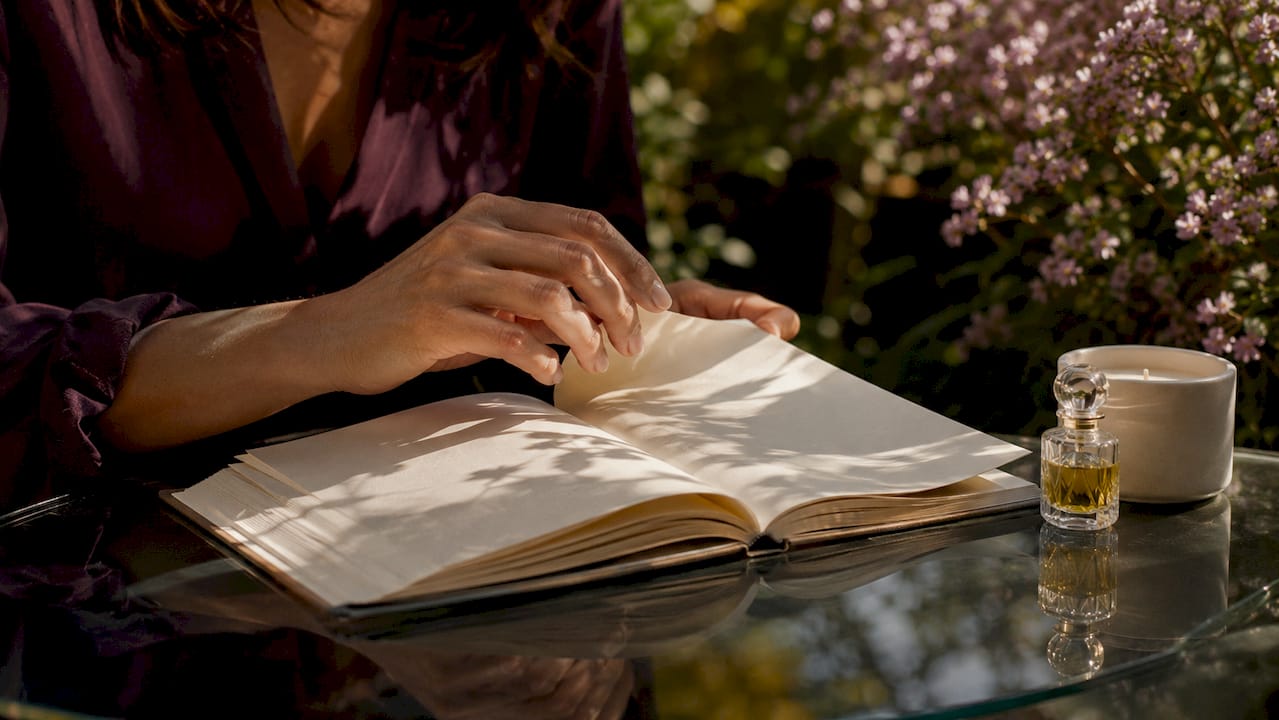
Establecer un espacio consciente es el primer paso. Un difusor de cerámica con dos o tres gotas de aceite esencial, una sola vela encendida o un ligero rocío de fragancia en una tela cercana, todo funciona. El método de entrega importa menos que la consistencia del espacio. Tu cerebro aprende el ambiente como parte del ritual.
Aquí tienes un ejercicio de atención plena basado en el aroma que puedes usar hoy:
- Acomódate en tu espacio y aplica o activa tu fragancia elegida. Siéntate cómodamente con la espalda recta.
- Cierra los ojos y respira lentamente durante un minuto. Deja que el aroma llegue sin analizarlo.
- Nombra tres cualidades emocionales que notes en la fragancia. Cálida. Tranquila. Familiar. Esto activa el procesamiento semántico en la corteza frontal.
- Hazte una pregunta abierta, como: “¿Qué estoy cargando ahora mismo?” o “¿Qué necesito soltar?” Escribe la primera respuesta que surja.
- Continúa escribiendo durante diez minutos sin levantar el bolígrafo. Deja que el aroma permanezca presente en segundo plano.
Combinar esta práctica con indicaciones de diario basadas en el aroma profundiza la conexión emocional con el tiempo. La fragancia se convierte en una señal confiable para el cerebro de que el trabajo introspectivo está comenzando. Con el paso de las semanas, la transición a un estado reflexivo se vuelve más rápida y natural.
Consejo profesional: Si notas que el aroma se desvanece después de quince minutos, eso es adaptación olfativa, no que la fragancia desaparezca. Sal brevemente, luego regresa. El aroma se registrará nuevamente con toda su intensidad, refrescando tu ancla de atención.
La integración de rituales de cuidado de la piel de lujo junto con tu práctica de aromas también puede reforzar el ambiente sensorial, creando una señal más completa para el cuerpo de que ha comenzado un período de autocuidado intencional.
Puntos clave
La fragancia promueve la introspección al involucrar directamente el sistema límbico del cerebro, y el uso ritual consistente transforma un solo aroma en una señal confiable y repetible para una profunda autorreflexión.
| Punto | Detalles |
|---|---|
| Vía neural directa | El aroma llega a la amígdala y al hipocampo sin filtrado talámico, produciendo respuestas emocionalmente vívidas. |
| La intensidad percibida importa | Calibra la intensidad de la fragancia para que esté presente pero no distraiga, manteniendo la atención durante toda la sesión. |
| La consistencia construye la señal | Usar una fragancia por tema emocional repetidamente fortalece su asociación neural con un estado reflexivo. |
| Se requiere atención activa | La aromaterapia consciente solo funciona cuando se presta atención al aroma deliberadamente, no pasivamente. |
| La familia de fragancias modela el efecto | Las notas amaderadas y de almizcle arraigan; los cítricos aclaran; la lavanda calma. Combina la nota con tu intención introspectiva. |
Lo que el aroma me ha enseñado sobre el trabajo interior
Lo que el aroma me ha enseñado sobre escucharse a uno mismo
Pasé años tratando la fragancia como decoración. Algo que usas para los demás. El cambio llegó cuando empecé a notar que ciertos aromas me detenían a mitad de un pensamiento, no porque fueran hermosos, sino porque sacaban algo de mi interior que no había estado buscando.
Esa es la parte que la mayoría de la gente pasa por alto. La fragancia no crea emoción. La recupera. El recuerdo, el estado de ánimo, el sentimiento no resuelto ya estaban ahí. El aroma simplemente le abrió una puerta. Una vez que entendí eso, dejé de elegir fragancias basándome en cómo olían en la botella y empecé a elegirlas basándome en lo que abrían en mí.
Lo más útil que he encontrado es asignar un aroma a un tipo específico de trabajo interior. Una fragancia para las mañanas en las que necesito claridad. Otra diferente para las noches en las que necesito procesar algo difícil. Con el tiempo, el cerebro aprende la asignación. Dejas de tener que forzar la transición a la reflexión. El aroma lo hace por ti.
Lo que le diría a cualquiera que comience esta práctica: no apresure la selección. Siéntese con una fragancia durante una semana antes de decidir si pertenece a su ritual. La colección Siete Arquetipos de Maisonvoyageurparfum fue la primera vez que encontré fragancias diseñadas explícitamente en torno a temas internos, y ese enfoque cambió la forma en que abordé toda la práctica.
El aroma es un lenguaje emocional no verbal. Ya lo hablas. Puede que simplemente no hayas estado escuchando.
— Celeste
Explore aromas diseñados para el trabajo interior
Maisonvoyageurparfum elabora cada fragancia lentamente, con un 98% de ingredientes naturales, específicamente para evocar emociones y apoyar la exploración personal. Estos no son perfumes de mercado masivo. Son herramientas para el tipo de trabajo interior que describe este artículo.

La vela de soja personalizada de Maisonvoyageurparfum está diseñada en torno a la manifestación y la introspección, lo que la convierte en un ancla natural para los rituales aquí descritos. Para aquellos listos para explorar una colección completa de fragancias construidas alrededor de temas emocionales, el catálogo completo de perfumes ofrece un punto de partida curado. El verdadero lujo, en el sentido de Maisonvoyageurparfum, es el tiempo para explorarse a uno mismo.
Preguntas Frecuentes
¿Cómo desencadena la fragancia recuerdos emocionales?
Las señales de aroma viajan directamente a la amígdala y al hipocampo, evitando el tálamo. Esta conexión olfativo-límbica directa hace que los recuerdos activados por el aroma sean más vívidos y emocionalmente cargados que los recuerdos activados por otros sentidos.
¿Qué aromas son los mejores para la atención plena y la meditación?
Las notas amaderadas y de almizcle como el sándalo y el vetiver arraigan la atención en el cuerpo, mientras que la lavanda reduce la ansiedad y apoya la reflexión abierta. El aroma más efectivo es aquel con un significado emocional personal, ya que las fragancias personalmente significativas producen respuestas introspectivas más fuertes.
¿Con qué frecuencia debo usar la misma fragancia en mi práctica de reflexión?
Usa la misma fragancia de forma consistente durante cada sesión dedicada a un tema emocional específico. La exposición repetida a un aroma construye asociaciones neuronales estables, lo que hace que la transición a un estado reflexivo sea más rápida y fiable con el tiempo.
¿Puede la fragancia reemplazar las técnicas de meditación tradicionales?
La fragancia funciona mejor como complemento de la respiración, el diario o la meditación sentada, no como un reemplazo. La aromaterapia combinada con la conciencia de la respiración mejora el enfoque y la regulación emocional, pero para que se produzcan esos beneficios, el aroma debe ser atendido activamente.
¿Qué es la adaptación olfativa y cómo afecta a la introspección?
La adaptación olfativa ocurre cuando tu cerebro deja de registrar un aroma después de una exposición prolongada. Puede reducir la eficacia del aroma como ancla de atención. Salir brevemente y regresar refresca la percepción, restaurando la señal introspectiva completa de la fragancia.