
Why Fragrance Fades on Skin: Keep Your Scent Present
Fragrance fades on skin for three reasons: volatile top notes evaporate within minutes, your skin’s chemistry and hydration level change how molecules bind, and olfactory fatigue quietly convinces you the scent has vanished when others can still detect it. The fastest fixes are simple. Moisturize pulse points before you spray, apply to your chest or inner elbows rather than only your wrists, and carry a small decant for a midday refresh. Concentration matters too: an Eau de Parfum has a higher fragrance oil content and generally lasts longer than Eau de Toilette or body mist, which contain less oil and tend to fade sooner.
- Moisturize first. Unscented lotion on pulse points before spraying creates a surface that slows evaporation.
- Rethink placement. Chest, inner elbows, and the back of the neck project more consistently than wrists.
- Reapply lightly. A single small spritz midday beats three heavy sprays in the morning.
- Test perception. Ask someone nearby whether they can still smell your scent before assuming it has faded.
Pro Tip: Apply your perfume immediately after a shower, while skin is still slightly warm and damp. That brief moisture window helps fragrance molecules settle rather than lift straight off.
Table of Contents
- Why does fragrance fade on skin in the first place?
- What actually causes a scent to disappear?
- Simple daily habits that help your scent last longer
- How to choose formulations that tend to last longer
- Common application mistakes and what perfumers actually advise
- How to store your perfume so it keeps its strength
- Why natural Mediterranean perfumes fade differently, and how to adapt
- Key Takeaways
- The quiet case for wearing scent with intention
- Artisanal scents built for presence, not performance
Why does fragrance fade on skin in the first place?
Every perfume unfolds in three layers. Top notes, the first impression, are the most volatile. Bergamot, neroli, lemon, and aquatic accords typically project for 20–90 minutes before giving way to the heart. Heart notes carry the character of the scent. Base notes, the resins, woods, vanilla, and musks, are the heaviest molecules and the ones that linger for hours.
Projection and longevity are not the same thing. Projection, sometimes called sillage, is how far a scent travels from your skin. Longevity is how long it remains detectable at all. A fragrance can stop projecting loudly yet stay present at skin level for hours afterward. Mistaking a quieter phase for disappearance is one of the most common misreadings in fragrance.
Body temperature and humidity directly shape how quickly molecules evaporate. Warm skin amplifies projection early but can burn through lighter accords faster. Cool, dry air slows evaporation and keeps heavier materials closer to the skin longer.
| Concentration | Oil Content | Typical Wear |
|---|---|---|
| Parfum / Extrait | 20% | — |
| Eau de Parfum (EDP) | 15–20% | 6–12+ hours |
| Eau de Toilette (EDT) | 5–15% | 3–6 hours |
| Body Mist | 1–3% | <2 hours |
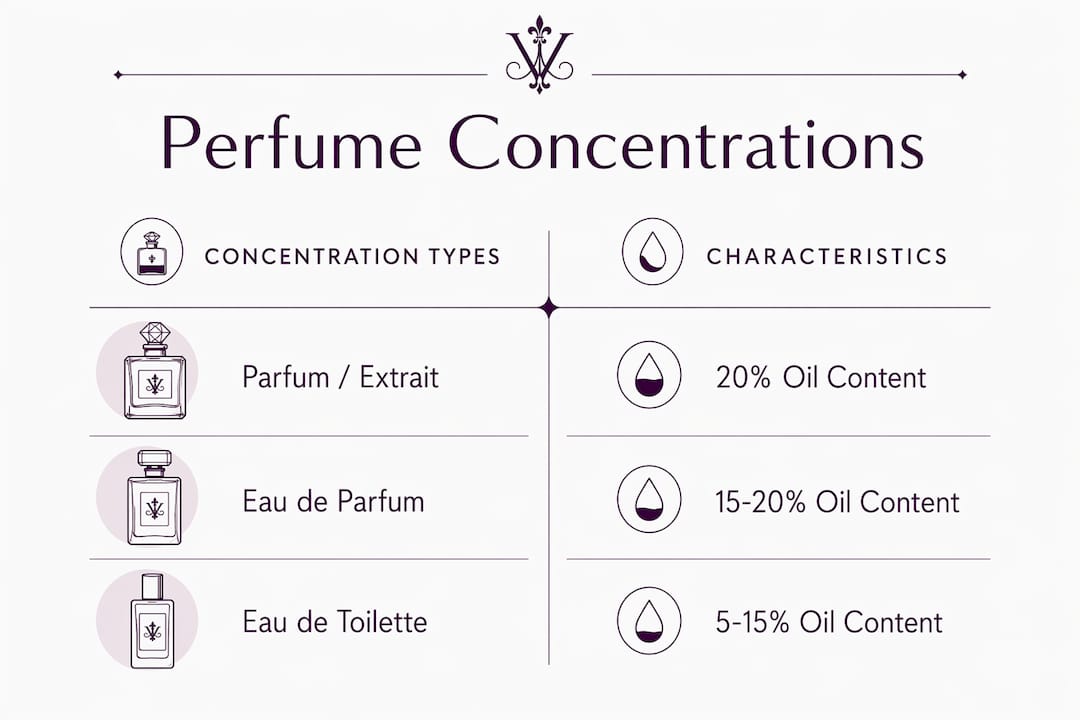
For a deeper look at concentration differences, the format you choose matters as much as the formula inside it.
What actually causes a scent to disappear?
Several forces work together, and isolating them helps you fix the right one.
- Volatility. Citrus, watery florals, and light musks evaporate fastest. They are built for freshness, not endurance.
- Skin chemistry. Oily skin anchors fragrance molecules and slows evaporation. Dry skin offers little to hold them. Skin pH, hormonal shifts, and sebum levels all change day to day, which explains why the same perfume can feel shorter-lived on a stressful afternoon.
- Environment. Heat speeds evaporation and amplifies early projection. Wind and air conditioning flatten a scent faster than most people expect.
- Application habits. Rubbing wrists together, washing hands shortly after spraying, or applying to heavily clothed areas all shorten wear.
- Nose blindness. Olfactory fatigue is physiological. Your brain filters out a constant odor after repeated exposure. The scent may still be there; you have simply stopped registering it.
Simple daily habits that help your scent last longer
Managing a small set of variables reliably improves longevity more than any single trick. These habits compound.
- Skin prep. Apply an unscented moisturizer or light body oil to pulse points right after a shower. Slightly damp, hydrated skin creates a moisture-rich surface that slows evaporation and helps fragrance molecules adhere.
- Placement. Chest, inner elbows, and the back of the knees project steadily throughout the day. Hair and scarves hold scent even longer, though high-alcohol formulas can dry hair with repeated use.
- Spray count. Two or three well-placed sprays outperform six rushed ones. Citrus and aquatic fragrances need more frequent, lighter reapplication; resinous and woody scents need fewer sprays and benefit more from an oil carrier.
- Fabric strategy. A light spritz on a scarf or collar extends wear significantly. Test on an inconspicuous area first to avoid staining delicate fabrics.
- Lifestyle. Limit competing fragranced products, manage heat exposure when you can, and rotate your scents to reduce olfactory fatigue over time.
Pro Tip: Carry a small travel decant rather than a full bottle. A single spritz at midday on your chest or inner elbow refreshes the scent without overwhelming your nose or those around you.
How to choose formulations that tend to last longer
Concentration is a starting point, not a guarantee. A bright EDP built around citrus and sheer musks can fade faster than a well-structured EDT anchored in woods and resins. The note families matter as much as the label.
- Long-lasting note families: resins, ambers, sandalwood, vetiver, vanilla, balsams, and animalic musks. These molecules are heavier and evaporate slowly.
- Shorter-lived families: citrus, green notes, aquatic accords, and light florals. Beautiful, but built for freshness rather than endurance.
- Natural extracts often behave differently from synthetic counterparts. Plant isolates and true citrus oils can be more ephemeral, which is part of their character. Pairing them with an unscented oil companion or a moisturizing base helps preserve their presence without masking them.
- Oil-based formats are worth considering for natural-fragrance lovers. Oil carriers slow evaporation and keep accords closer to the skin, which suits introspective, intimate wearing.
When longevity is the priority, look for strong base notes in the formula. When a scent is built around a sheer, luminous opening, accepting ritual reapplication as part of the experience is often the more honest path.
Common application mistakes and what perfumers actually advise
The single most widespread habit that shortens wear is rubbing wrists together after spraying. Friction and heat break down top notes and compress the scent’s natural development, pushing the opening phase to finish before it has had time to breathe. Let the fragrance settle on its own.
Applying to slightly damp, moisturized skin and using a companion unscented hydrator when appropriate gives natural formulas the best chance to develop fully and stay present through the base.
Hair holds scent beautifully, but spraying directly with a high-alcohol formula can be drying over time. A light mist on a brush or comb, drawn through the ends, is gentler. Clothing, particularly scarves and collars, can carry a scent for an entire day with no skin chemistry involved at all.
More sprays do not always mean more longevity. Beyond a certain point, additional application only accelerates nose fatigue. The goal is presence, not saturation.
Pro Tip: Apply to two spots: one you will sniff throughout the day, one you leave alone. After a few hours, smell the untouched spot. If the scent is still there, your nose adapted, not the perfume.
How to store your perfume so it keeps its strength
Heat, direct sunlight, and large temperature swings are the primary causes of fragrance degradation. A bottle left on a sunny windowsill or near a radiator can lose its character within months.
- Store bottles upright, in their original boxes, away from light and heat.
- A cool, dark drawer or cabinet is better than a bathroom shelf, where steam and temperature fluctuations are constant.
- Keep caps tight to limit oxidation and alcohol evaporation.
- Decanting into a small travel atomizer is practical for daily use, but minimize air exposure in the decant vessel.
Natural and artisanal perfumes, particularly those with high plant-extract content, can be more sensitive to oxidation than synthetic-heavy formulas. A well-stored natural perfume typically remains stable for two to four years. Signs it has turned: a sharp, vinegary edge, a flat or muted opening, or a color shift in the liquid.
Why natural Mediterranean perfumes fade differently, and how to adapt
High-natural-content formulas, built from plant isolates, true citrus, and resin extracts, often show a more ephemeral opening and a subtler skin phase than their synthetic counterparts. This is not a flaw. It is the nature of living materials.
- Pair your natural scent with an unscented moisturizer or a light body oil at pulse points. This recreates the sebum layer that anchors fragrance molecules on naturally oily skin.
- Accept ritual reapplication. For lovers of natural perfume complexity, a midday refresh is part of the practice, not a sign that something is wrong.
- Prefer intimate placement over loud projection. The chest and inner elbows create a close, personal scent cloud rather than a room-filling sillage, which suits the introspective wearing that Mediterranean artisanal scents are designed for.
Maisonvoyageurparfum’s slow-crafted, 98% natural approach intentionally prioritizes nuance over projection. The scents are composed in Madrid to evoke memory and emotion at close range, not to announce themselves across a room. Understanding that distinction changes how you wear them and what you expect.
Key Takeaways
Natural fragrance fades on skin primarily because of volatile top notes, skin dryness, and olfactory fatigue, and all three respond to simple, repeatable habits.
| Point | Details |
|---|---|
| Moisturize before spraying | Hydrated skin slows evaporation and anchors fragrance molecules more effectively. |
| Placement over quantity | Chest and inner elbows project longer than wrists; two sprays beat six rushed ones. |
| Projection vs. longevity | A scent can stop projecting loudly yet remain on skin for hours; test before assuming it’s gone. |
| Note families predict wear | Resins, woods, and vanilla last; citrus and aquatics need more frequent, lighter reapplication. |
| Maisonvoyageurparfum’s approach | 98% natural, Madrid-composed scents are built for intimate presence, not loud sillage; pair with an unscented hydrator for best wear. |
The quiet case for wearing scent with intention
Most conversations about fragrance longevity treat fading as a failure. I’d argue the opposite is often true. A scent that pulls close to the skin after its opening hour is not disappearing. It is settling into something more personal, more yours.
The obsession with projection and all-day sillage comes from a mass-market logic that equates loudness with quality. Natural, artisanal perfumery operates on a different premise entirely. The materials are alive. They shift with your body temperature, your mood, the warmth of an afternoon. That variability is the point.
What I find most overlooked is the role of intentional fragrance wearing in how we perceive longevity. When you apply a scent mindfully, at a chosen moment, on prepared skin, you notice its full arc. The opening, the heart, the quiet base. You stop chasing the loudest phase and start appreciating the whole. That shift in attention changes the experience more than any application trick.
Reapplication, when it comes from a place of ritual rather than frustration, becomes part of the practice. A small spritz at midday is not a correction. It is a pause. A moment to return to yourself.
Artisanal scents built for presence, not performance
If you’ve been searching for a perfume that rewards this kind of attention, Maisonvoyageurparfum offers something genuinely different from the mainstream. Each fragrance is composed slowly in Madrid, using 98% natural ingredients, and designed not to fill a room but to accompany you through it.

The formulas are built for introspection. They open with honesty, settle with warmth, and stay close to the skin in a way that feels personal rather than performative. Paired with an unscented moisturizer at pulse points, they wear longer and reveal more of their character over time.
For those ready to explore, the Seven Archetypes method at Maisonvoyageurparfum offers a guided way to find the scent that fits where you are right now, not just how you want to smell, but how you want to feel.
Recommended
- How Perfume Longevity Works Naturally on Your Skin – Maison Voyageur
- Fragrance Layering Techniques for Enthusiasts: Expert Guide – Maison Voyageur
- Why Natural Perfume Smells Complex: The Real Science – Maison Voyageur
- Notas base en fragancias longevas: ejemplos clave – Maison Voyageur
Les sept fragrances Maison Voyageur
- Manifesting · unisexe (69,99 €)
- Intuition · femme (69,99 €)
- Certainty · femme (69,99 €)
- Expansion · femme (69,99 €)
- Release · homme (69,99 €)
- Presence · homme (69,99 €)
- Inner Fire · homme (69,99 €)
Nouvelle ici ? Commence par le Discovery Set · les 7 fragrances en format voyage (40 €).