
A Morning Perfume Ritual That Anchors Mood and Presence
A short, deliberate perfume ritual, sprayed onto pulse points and followed by three slow inhales, can shift your mood and sharpen focus before the day pulls you elsewhere. Start there. Choose a light citrus or herbal scent, apply it to your wrists or neck, and breathe it in on purpose. Everything else, timing, layering, longevity, is refinement you add later.
TL;DR:
- Fragrance choices should focus on citrus or herbal scents for energy and clarity, with lighter compositions preferred over heavy, opulent notes.
- Layering with lotion and applying at pulse points enhances scent longevity and creates a more intentional morning routine.
- Testing scents on skin, considering climate, and starting with travel sizes help you find the right fragrance without commitment.
- A quick, intentional spray and mindful inhale, even for 15 seconds, can effectively mark the transition from sleep to readiness.
- Using artisanal, natural fragrances that evolve over time supports a more personal and meaningful ritual experience.
Table of Contents
- What a Morning Fragrance Ritual Actually Does for You
- Choosing Scent Families That Match Your Morning Intent
- How to Choose a Morning Fragrance: A Quick Checklist
- A Step-by-Step Ritual You Can Copy Tomorrow
- Layering Techniques: Building Depth Without Noise
- Making a Morning Scent Last: Skin Prep and Placement
- Weaving Fragrance Into Other Mindful Morning Habits
- Why an Artisanal Fragrance Suits a Ritual Practice
- What I’ve Learned From Building This Habit Myself
- Start Your Ritual With a Maison Voyageur Travel Set
- Sources
What a Morning Fragrance Ritual Actually Does for You
Scent reaches the brain differently than any other sense. Olfactory signals route through the limbic system, the same region that governs emotion and memory, before conscious thought even catches up. That is why one spray of bergamot can feel like a decision, not just a habit.
Research on daily rituals backs this up. Brief, intentional practices, repeated at the same moment each day, are tied to better focus and emotional regulation, according to Harvard Business Review’s review of workplace and personal ritual studies. The mechanism is not mystical. A repeated action, done with attention rather than autopilot, gives your nervous system a cue: this is the transition point, the moment work mode begins or the noise of the morning quiets down.
Pair that with what’s known about attention and stress. The American Psychological Association points to mindfulness practices, including guided breath and sensory attention cues, as genuinely effective tools for lowering stress and improving attention control. A perfume ritual borrows the same structure: a physical sensation, a few breaths, a moment of noticing. It costs you almost nothing and asks for less than a minute.
What readers actually notice once they build the habit:
- A faster, calmer transition from waking up to feeling capable of the day.
- A subtle mood lift that outlasts the initial spray, since scent memory reactivates the feeling each time you catch a trace of it.
- Fewer scattered mornings, because the ritual marks a clear boundary between rest and readiness.
- A built-in stress check-in. Cleveland Clinic notes that small, repeatable self-care actions support emotional health over time, and a scent ritual is about as low-effort as that gets.
None of this requires forty-five minutes at a vanity. It requires attention, applied for the length of three breaths.
Choosing Scent Families That Match Your Morning Intent
Not every note belongs at 7 a.m. Mornings favor clarity. Heavy, opaque compositions, thick amber, dense oud, syrupy gourmands, tend to compete with the mental sharpness you’re trying to build, not support it. Match the family to what you actually need that day.
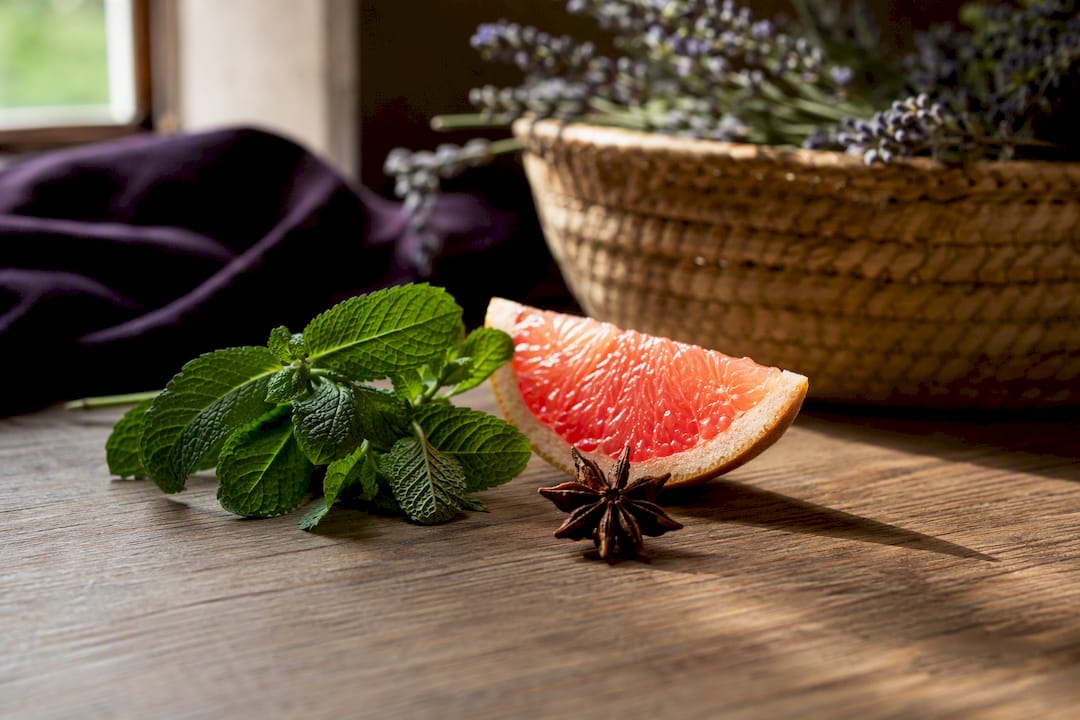
- Citrus (bergamot, mandarin, grapefruit): sharp, immediate, best for energy and a quick mental reset.
- Herbal and green (rosemary, basil, fig leaf): clean and slightly sharp, well suited to focus-heavy mornings like presentations or deep work.
- Light florals (neroli, orange blossom, muguet): soft and calming, a good match for slower mornings where the goal is ease rather than urgency.
- Light woods and amber (sandalwood, cedar, a touch of soft amber): grounding without heaviness, useful when you want steadiness more than a jolt.
Notes also behave differently depending on when in the morning you catch them. Top notes, citrus and light green accords, appear in the first few minutes and fade fast, which is exactly why they suit the initial ritual moment. Middle and base notes, sandalwood, soft musks, gentler ambers, settle in over the following hour and carry the scent into your first meetings or tasks without shouting.
A reasonable rule of thumb: fewer accords, more clarity. A composition built around two or three honest notes reads as more intentional in the morning than a fragrance with a dozen competing layers. Save the complex, evening compositions for evening.
How to Choose a Morning Fragrance: A Quick Checklist
Testing a new scent for morning use is different from testing one for a night out. Run through this before committing to a full bottle.
- Name your intent first. Decide whether you need energy, focus, calm, or grounding today, then pick the family that matches (citrus, herbal, floral, or woods) rather than choosing on scent alone.
- Check the concentration. An eau de toilette or eau de cologne tends to sit lighter on the skin than an eau de parfum, which matters if your mornings involve close conversation or shared indoor space.
- Consider the format. A spray gives you precision on pulse points; a scented lotion builds a soft base layer; a hair mist adds a light trail without touching skin at all.
- Test on skin, not on paper. Fragrance reacts to your own skin chemistry. Apply a small amount, let it dry down for fifteen to twenty minutes, and notice how it settles before judging it.
- Start small. Travel sizes or decants let you live with a scent across several real mornings before you invest in a full bottle.
- Factor in climate. Hot, humid mornings amplify projection, so a lighter hand and a brighter family often work better than they would on a cool day, when richer notes can carry further without becoming overwhelming.
Skipping the dry-down step is the most common mistake. A fragrance that smells sharp and citrus-forward straight from the bottle can soften into something entirely different fifteen minutes later, once your skin’s warmth pulls out the middle notes.
A Step-by-Step Ritual You Can Copy Tomorrow
Two versions exist here: one for the mornings that give you a minute to breathe, one for the mornings that don’t.
The 15-second micro-ritual, for rushed days:
- Spray once, directly to a pulse point (wrist or the side of your neck).
- Rub wrists together gently, or simply let the scent settle.
- Take one slow inhale, eyes open or closed, before you move on.
The full ritual, when you have 30 to 60 seconds:
- Hydrate the skin lightly. A damp wrist or a thin layer of unscented lotion gives the fragrance something to hold onto.
- Layer a lotion first, if you’re building depth, letting it absorb for a few seconds before the next step.
- Spray pulse points, wrists and neck being the most reliable, two sprays maximum for morning wear.
- Take three mindful inhales, and name one intention for the day. The APA’s guidance on mindfulness points to exactly this kind of brief, attention-focused breathing as a genuine tool for lowering stress and sharpening attention, not just a nice add-on.
Habit-stacking makes this stick. Tie the ritual to something you already do without thinking: right after brushing your teeth, while the coffee brews, or in the last few seconds before you put on your coat. Research on daily rituals suggests that short, repeatable actions tied to an existing habit have far higher adherence than rituals that float untethered in your schedule.
Keep a travel decant in your bag or your desk drawer. A ritual that only lives at your bathroom sink is a ritual that dies the first morning you’re running late or sleeping somewhere else.
Layering Techniques: Building Depth Without Noise
Scent layering rewards a light hand and a clear plan more than it rewards buying more products. The foundational rule, echoed across fragrance journalism, is to start with a moisturized base and build from long-lasting base notes toward lighter top notes, never the reverse. The Independent’s guide to scent layering frames this as the single most important sequencing rule for anyone layering at home.
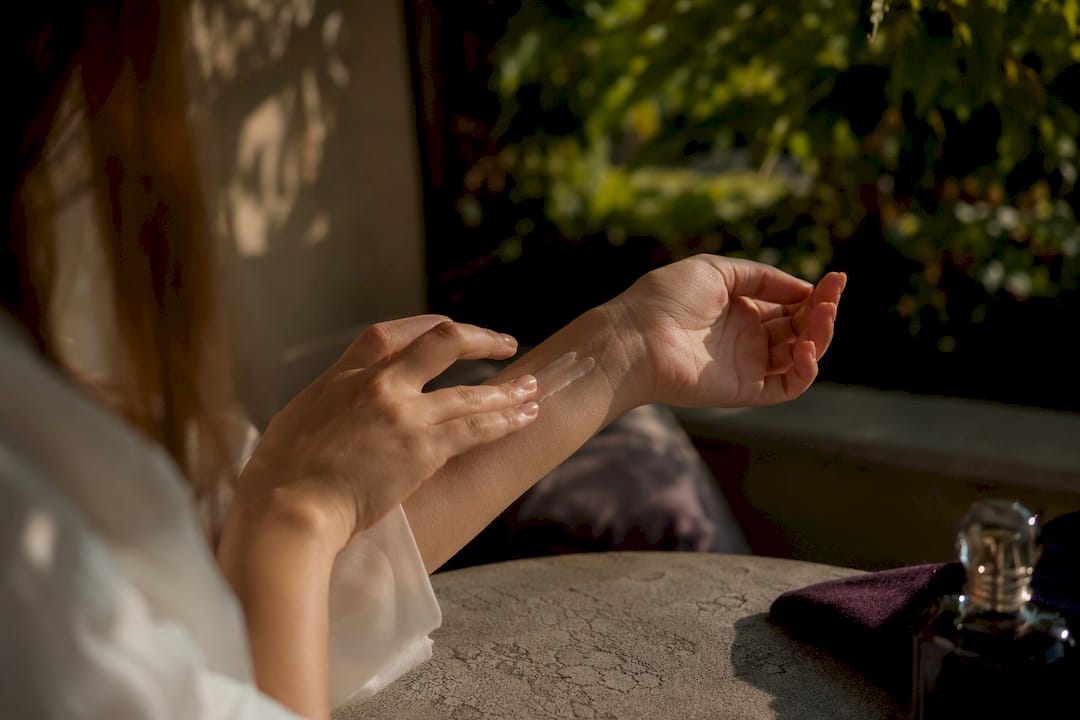
A workable ratio: two sprays of your base or richer layer, followed by one to three sprays of a lighter top note in the same family. If you’re combining formats, apply the scented lotion first and let it settle, then spray your perfume to the same general area so the two blend rather than sit in separate zones on your skin.
Format combinations worth trying:
- Lotion, then spray, for the longest wear and the softest transition between layers.
- Hair mist alone, on mornings when you want a light trail without direct skin contact.
- Spray on pulse points, hair mist as a finishing touch, for slightly more presence without more intensity.
Vogue Philippines’ guidance on layering keeps it simple: start with a fragranced body cream, then add perfume, adjusting toward lighter, seasonal notes when the weather runs warm. That sequencing logic works whether you’re combining two products from the same collection or building your own.
Pro Tip: Never pair two heavy, opaque scents in the same layer, thick oud with dense amber, for instance. Think of it the way you’d think about fabric: one rich, structured layer needs a sheer, lighter counterpart to let both notes breathe rather than compete.
Making a Morning Scent Last: Skin Prep and Placement
Longevity starts before the spray, not after it. Hydrated skin holds fragrance meaningfully longer than dry skin does, which is why layering a scented body cream underneath perfume is such a widely repeated recommendation among fragrance writers. Gentle exfoliation a few times a week also helps, since it clears the dead skin that would otherwise block absorption. Skip alcohol-heavy lotions right before applying scent, since they dry the skin faster than they hydrate it.
Placement matters as much as product. A few tactics worth adopting:
- Apply to pulse points, wrists, the side of the neck, behind the ears, where body heat naturally diffuses the scent throughout the day.
- Avoid spraying directly onto fabric if the fragrance contains heavier base notes, since some can leave a faint mark over time.
- Keep a travel decant on hand for a midday touch-up rather than reapplying a full dose, which can tip into overwhelming by afternoon.
- Store bottles away from heat and direct light. A bathroom windowsill will break down a fragrance’s structure far faster than a closed drawer.
Small habits, repeated daily, do more for how long a scent lasts than any single expensive bottle.
Weaving Fragrance Into Other Mindful Morning Habits
A perfume ritual works even better paired with other small anchors already in your morning. The stacking is what makes it stick.
- Apply your scent right after three deep breaths, letting the breath settle you before the fragrance arrives.
- If you use a diffuser at home, start it about ten minutes before you wake, so the space feels composed before you even sit up. Cold-air diffusers in particular preserve a fragrance’s structure better than heat-based ones, making the ambient scent feel closer to the bottle itself.
- Reserve personal perfume for the moments you want scent to travel with you, and let home diffusion handle the background atmosphere, so the two don’t compete or cancel each other out.
- Rotate your scent every few weeks. Wearing the same fragrance daily invites olfactory fatigue, where your nose simply stops registering it, and a rotation keeps the ritual’s emotional cue fresh.
Even a five-second pause to notice a scent mid-morning, between meetings or during a commute, can function as a small reset. The point was never the perfume alone. It’s the noticing.
Why an Artisanal Fragrance Suits a Ritual Practice
A ritual asks for intention. Mass-produced fragrance, built for shelf appeal and broad familiarity, rarely offers much to notice beyond the first ten seconds. Maison Voyageur takes a different approach: each scent is composed slowly, using 98% natural ingredients, with Mediterranean materials chosen for how they evolve on skin rather than how they perform in a bottle on a shelf.
That slowness matters for ritual practice specifically. A composition built from real botanicals shifts across the morning, sharp at first application, softer an hour later, rather than reading identically from spray to fade. That evolution gives your three mindful inhales something genuine to notice each time.
Real luxury isn’t the price of a bottle. It’s the time given to explore within yourself, one honest note at a time.
Consider these before choosing a scent to build a ritual around:
- Small-batch composition means less repetition on the street, which keeps the scent’s emotional association tied to you specifically.
- Natural materials tend to layer more transparently than heavily synthetic ones, making them easier to combine with a lotion base.
- A travel size or curated set lets you live with a scent through real mornings before deciding it deserves a full bottle.
If you’re building a ritual from scratch, starting with a travel-size Maison Voyageur composition removes the pressure of committing to a full bottle before you know how a scent actually behaves on your skin.
What I’ve Learned From Building This Habit Myself
The mornings that stick with me most aren’t the ones where I had time to spare. They’re the ones where I paused for ten seconds, sprayed a wrist, breathed in twice, and kept moving. That’s the whole ritual, most days. No candle, no quiet room, just a scent and a breath before the noise starts.
What surprised me, watching people build this habit, is how quickly the resistance disappears once the ritual gets small enough. Nobody keeps a ninety-second routine. Almost everyone keeps a fifteen-second one. Start there, adjust as your mornings change, and let the ritual bend to your actual life rather than an idealized version of it. Ten seconds counts. So does a full minute, when you have it.
— Celeste
Start Your Ritual With a Maison Voyageur Travel Set
Maison Voyageur’s travel-size sets exist for exactly this moment, the mornings when you want to test a mindful scent ritual without committing to a full bottle before you know how it lives on your skin.

Each set gives you room to experiment: try a citrus or herbal note for a few weeks, notice how it settles into your own morning rhythm, and layer it against a scented lotion if you want more depth. If a full-size bottle feels like a bigger decision than your morning needs right now, a travel-size ritual set is the lower-stakes way to find out whether a scent earns a permanent place in your routine.
Sources
- The research-backed benefits of daily rituals — HBR
- Mindfulness and meditation — American Psychological Association
- Stress management and emotional health — Cleveland Clinic
- An expert guide to scent layering — The Independent
- Everything you need to know about fragrance layering — Vogue Philippines
Les sept fragrances Maison Voyageur
- Manifesting · unisexe (69,99 €)
- Intuition · femme (69,99 €)
- Certainty · femme (69,99 €)
- Expansion · femme (69,99 €)
- Release · homme (69,99 €)
- Presence · homme (69,99 €)
- Inner Fire · homme (69,99 €)
Nouvelle ici ? Commence par le Discovery Set · les 7 fragrances en format voyage (40 €).