
Cómo comprar fragancias de lujo de forma consciente
La compra consciente de fragancias de lujo se define como la elección de aromas elaborados con ingredientes naturales éticamente obtenidos y trazables, empaquetados con un impacto ambiental mínimo y respaldados por una historia de marca verificable. El término de la industria para esta práctica es consumo de belleza responsable, y se aplica directamente a cómo compras conscientemente fragancias de lujo. Marcas como Floral Street, Maisonvoyageurparfum, Billie Eilish Fragrances y Ffern han construido su identidad en torno a este estándar. Los principios fundamentales son simples: trazabilidad de los ingredientes, empaques sostenibles y artesanía auténtica. Cuando entiendes qué buscar, cada compra se convierte en una elección deliberada.
¿Qué hace que una fragancia sea ética y sostenible?
Los perfumes de lujo éticos cumplen con un conjunto específico de criterios. Rastrean cada ingrediente desde el origen hasta el frasco, utilizan materiales que minimizan el daño ambiental y operan con transparencia verificable. Sin estos tres elementos, una afirmación de sostenibilidad es marketing, no un hecho.
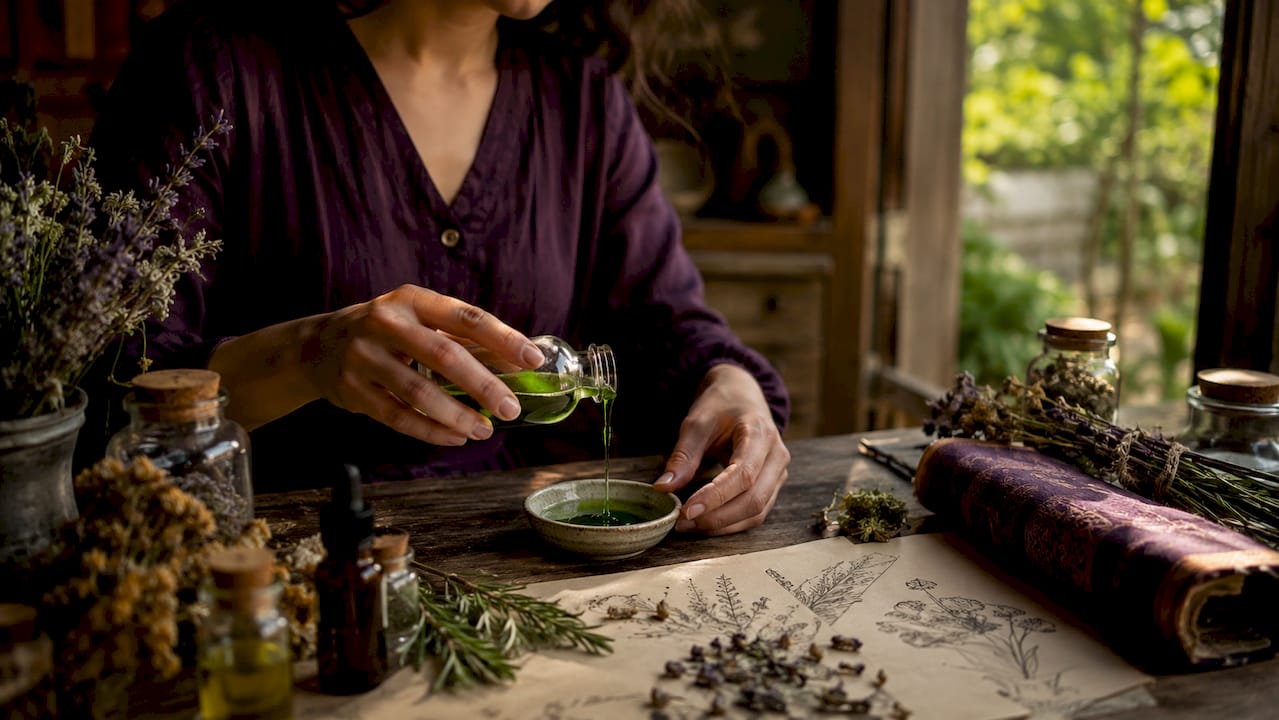
Trazabilidad de los ingredientes: del origen al aroma
La trazabilidad completa del ingrediente "de la semilla al aroma" es el estándar de oro en la fragancia ética. Floral Street lo logra asociándose con Robertet, el líder mundial en materias primas naturales sostenibles. Esa asociación significa que cada botánico en una fórmula de Floral Street tiene un origen documentado. La mayoría de las marcas de mercado masivo no pueden decir lo mismo.
Las formulaciones naturales, veganas y libres de crueldad animal son la base. Más allá de eso, las marcas más innovadoras utilizan ingredientes reciclados obtenidos como subproductos de otras industrias. El polvo de cedro de la fabricación de muebles y las cáscaras de cítricos del procesamiento de alimentos producen perfiles aromáticos complejos y matizados. Estos materiales reducen la extracción de materias primas sin sacrificar la calidad.
Certificaciones y asociaciones que importan
Las certificaciones te dan un punto de referencia objetivo cuando las propias afirmaciones de una marca parecen vagas. Busca específicamente estas:
- La certificación FSC en el embalaje de cartón confirma bosques gestionados de forma responsable.
- El estado PETA cruelty-free confirma que no se realizan pruebas en animales en ninguna etapa de producción.
- Las asociaciones con World Land Trust indican una compensación de carbono verificada, no solo promesas de compensación.
- Certificación orgánica Ecocert o COSMOS en las formulaciones de ingredientes.
- Estado B Corp, que requiere estándares verificados de desempeño social y ambiental.
Consejo profesional: Pregúntale directamente a una marca dónde se obtiene su vetiver o sándalo. Una marca con trazabilidad genuina responderá con un país, el nombre de un proveedor o una certificación. Las respuestas vagas revelan mucho.
La producción artesanal y en pequeños lotes también juega un papel real en la sostenibilidad. Las tiradas de producción más pequeñas significan menos residuos, un control de calidad más estricto y una relación más estrecha entre el perfumista y las materias primas. Esto no es solo una idea romántica. Es una ventaja estructural sobre la fabricación a escala industrial.
¿Cómo afecta el empaque de las fragancias al medio ambiente?
El empaque representa una parte significativa de la huella ambiental total de una fragancia. El frasco, la tapa, la caja y el material de relleno tienen un peso. Elegir bien aquí es una de las formas más claras de reducir tu impacto.
Comparación de innovaciones en empaques de marcas éticas
| Tipo de empaque | Beneficio ambiental | Ejemplo de marca |
|---|---|---|
| Tapas compostables | Se descomponen en 20 semanas, eliminando el plástico | Ffern, casas artesanales seleccionadas |
| Botellas de vidrio reciclado | Reduce el uso de energía en la producción de vidrio | Abel, Maisonvoyageurparfum |
| Cartón certificado FSC | Obtenido de bosques gestionados de forma responsable | Floral Street |
| Pulpa de residuos de sarmientos de vid | Reemplaza completamente el plástico en el empaque secundario | Perfumerías europeas emergentes |
| Sistemas de botellas rellenables | Prolonga la vida útil del producto, reduce el desperdicio total de empaques | Billie Eilish Fragrances |
Las botellas rellenables merecen una atención especial. Billie Eilish Fragrances diseña recargas que ofrecen un 50% más de fragancia que el frasco original de 3.4 oz. Esto significa menos empaque por mililitro de aroma y un frasco que conservas en lugar de desechar. Las cuentas sobre la reducción de residuos son directas y significativas.
El embalaje secundario, la caja exterior, a menudo se pasa por alto. Las marcas que utilizan pulpa de papel reciclado o residuos agrícolas de sarmientos de vid eliminan por completo el plástico de esa capa. Cuando se combina con tapas compostables, el resultado es un producto que casi no deja residuos de embalaje en un vertedero.
Consejo profesional: Antes de comprar, comprueba si una marca ofrece un programa de recarga. Si la botella es hermosa y la recarga está disponible, obtienes lujo y responsabilidad en una sola compra.
Cómo comprar conscientemente: un enfoque paso a paso
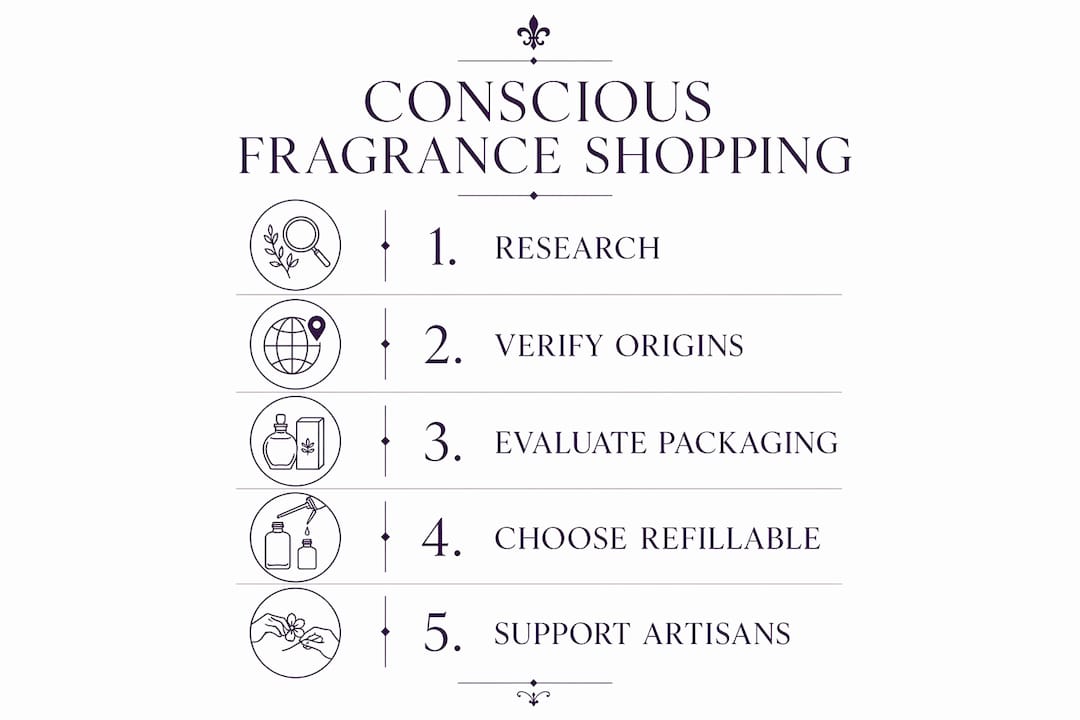
Aplicar criterios éticos a la compra de una fragancia requiere algunos pasos deliberados. El proceso no es complicado, pero sí requiere ir con calma. Esa paciencia es parte de la práctica.
-
Investiga primero la transparencia de la marca. Visita el sitio web de la marca y busca una página dedicada a la sostenibilidad o el abastecimiento. Las marcas con compromisos reales los publican claramente. Maisonvoyageurparfum, por ejemplo, publica su filosofía de lujo lento abiertamente, incluyendo su compromiso con el 98% de ingredientes naturales. Si una marca oculta u omite esta información, tómalo como una señal.
-
Verifica las certificaciones de forma independiente. No te fíes del lenguaje de la propia marca. Coteja las afirmaciones de FSC, PETA o B Corp en el sitio web de la organización certificadora. Esto lleva dos minutos y confirma si la afirmación es actual.
-
Lee la lista de ingredientes con intención. Los ingredientes naturales se enumeran con sus nombres botánicos en latín. Los materiales sintéticos aparecen como nombres de compuestos químicos. Una alta proporción de nombres botánicos indica una formulación genuinamente natural. El estándar de ingredientes 98% naturales de Maisonvoyageurparfum es un punto de referencia útil para la comparación.
-
Considera la concentración y duración del aroma. Las concentraciones de Eau de Parfum (típicamente 15-20% de aceite de fragancia) duran más que el Eau de Toilette (5-15%). Un aroma de mayor duración significa menos aplicaciones y una tasa de consumo más lenta. Esta es una forma silenciosa de reducción de residuos.
-
Explora opciones de recarga y muestras antes de comprometerte. Muchas perfumerías artesanales ofrecen tamaños de descubrimiento. Maisonvoyageurparfum ofrece un formato de descubrimiento de 15 ml para que puedas conectar con un aroma antes de comprar la botella completa. Esto reduce la posibilidad de comprar algo que no usarás.
-
Compra directamente al artesano cuando sea posible. Comprar directamente a una perfumería apoya al creador, reduce el margen minorista y, a menudo, te da acceso a mejor información sobre el producto. Las compras en boutiques y talleres también suelen venir con menos exceso de embalaje que las compras en grandes almacenes.
Cuidado con las señales de alerta. Las marcas que no enumeran información de ingredientes, usan la palabra "natural" sin certificación o no ofrecen transparencia sobre el abastecimiento, son dignas de evitar. El uso excesivo de fragancias sintéticas no es inherentemente poco ético, pero debe divulgarse claramente.
¿Qué marcas de fragancias de lujo éticas destacan?
Varias marcas han construido toda su identidad en torno a opciones de fragancias responsables. Cada una adopta un enfoque diferente, y comprender esas diferencias te ayuda a encontrar la opción adecuada.
-
Floral Street lidera en trazabilidad. Su asociación con Robertet proporciona una trazabilidad completa de los ingredientes, y su embalaje utiliza cartón certificado FSC. La marca también equilibra su huella de carbono a través de World Land Trust. Es una de las operaciones más transparentes en el espacio de las fragancias de lujo.
-
Billie Eilish Fragrances se centra en la innovación de envases. Cada botella es vegana, libre de crueldad animal y diseñada para ser rellenada. El diseño de botella recargable ofrece un 50% más de fragancia por recarga que el tamaño original. Para los consumidores que priorizan la reducción de residuos, este es un modelo práctico y eficaz.
-
Maisonvoyageurparfum adopta el enfoque artesanal mediterráneo. Con sede en Madrid, la marca elabora cada aroma lentamente, utilizando materiales ecológicos e ingredientes naturales con una concentración del 98%. La marca enmarca la fragancia como narración personal, conectando cada aroma con una narrativa emocional en lugar de una tendencia. Su colección Siete Arquetipos se basa en la exploración interior, no en los ciclos de marketing estacionales.
-
Ffern opera con un modelo de pequeños lotes y estacional, utilizando principalmente ingredientes naturales y orgánicos. Las tiradas de producción son limitadas, lo que significa que las listas de espera son comunes. Esa limitación es una característica, no un defecto. Refleja un compromiso genuino de producir solo lo necesario.
-
Sana Jardin integra el impacto social en su cadena de suministro. La marca defiende a las recolectoras en sus regiones de origen y utiliza materiales reciclados en la producción. Su modelo demuestra que la fragancia ética puede abordar tanto las preocupaciones ambientales como las de equidad humana a la vez.
Puntos clave
La forma más responsable de comprar fragancias de lujo es verificar la trazabilidad de los ingredientes, elegir envases recargables o compostables, y apoyar a las marcas con compromisos de sostenibilidad publicados y verificados por terceros.
| Punto | Detalles |
|---|---|
| La trazabilidad es la base | Las marcas éticas rastrean cada ingrediente desde el origen hasta el frasco, a menudo a través de socios como Robertet. |
| Las elecciones de empaque reducen residuos reales | Las tapas compostables, el vidrio reciclado y los sistemas recargables reducen la huella ambiental de una fragancia. |
| Las certificaciones requieren verificación | Verifica las afirmaciones de FSC, PETA y B Corp en el sitio web del organismo certificador, no solo en la página de la marca. |
| El lote pequeño implica concesiones | La producción estacional y limitada reduce el desperdicio, pero requiere paciencia y planificación anticipada. |
| Las compras directas al artesano añaden valor | Comprar directamente a la perfumería apoya al creador y proporciona una mayor transparencia en el abastecimiento que la venta al por menor. |
Por qué creo que la paciencia es la herramienta más infravalorada en la compra consciente de fragancias
La mayoría de las guías sobre este tema se centran en qué comprar. Considero que la pregunta más útil es cómo frenar antes de comprar. La industria de las fragancias se mueve rápido, y esa velocidad va en contra de la toma de decisiones conscientes. Un nuevo lanzamiento cada temporada, una colaboración con celebridades cada trimestre. La presión por mantenerse al día es real, incluso en el segmento de lujo.
Lo que he descubierto es que las marcas que vale la pena apoyar son casi siempre las que no te apresuran. Ffern te pone en lista de espera. Maisonvoyageurparfum te invita a explorar su atelier en Madrid y a sentarte con un aroma antes de comprometerte. Ese enfoque sin prisas no es solo una buena estrategia de marca. Refleja una filosofía de producción genuina.
Sin embargo, el compromiso es real. La producción estacional en pequeños lotes limita la disponibilidad. Es posible que no obtengas el aroma que deseas cuando lo deseas. Creo que vale la pena aceptarlo. La escasez en este contexto es un signo de integridad, no un fallo en la cadena de suministro.
El otro cambio que me gustaría fomentar es pensar en la fragancia como un regalo con intención. Cuando le das a alguien un aroma de origen consciente, le estás dando una historia. El origen de los ingredientes, las manos que lo hicieron, los valores detrás de la marca. Esa narrativa añade profundidad al regalo de una manera que una botella de grandes almacenes simplemente no puede igualar. Convierte una compra en un reflejo de lo que te importa.
— Celeste
Descubre la colección de fragancias artesanales de Maisonvoyageurparfum

Maisonvoyageurparfum es una perfumería mediterránea con sede en Madrid, que elabora cada fragancia lentamente con un 98% de ingredientes naturales y un compromiso con materiales ecológicos. Cada fragancia lleva una historia personal, diseñada para conectar con tu mundo interior en lugar de seguir una tendencia. La colección completa de perfumes de la marca abarca aromas construidos alrededor de arquetipos emocionales, desde la conexión a tierra hasta la expansión, cada uno trazable y cuidadosamente elaborado. Para un regalo significativo, la vela de soja personalizada lleva la misma filosofía artesanal a un formato sostenible y natural. Lujo real, hecho lentamente.
Preguntas frecuentes
¿Qué significa comprar conscientemente fragancias de lujo?
Comprar conscientemente fragancias de lujo significa elegir aromas basándose en la trazabilidad de los ingredientes, el abastecimiento ético, el empaque sostenible y la transparencia verificada de la marca. Prioriza la calidad y los valores sobre la tendencia o el impulso.
¿Cómo sé si una marca de fragancias es realmente sostenible?
Busca certificaciones de terceros como FSC, PETA cruelty-free o el estatus B Corp, y verifícalas directamente en el sitio web de la organización certificadora. Las marcas con compromisos genuinos publican abiertamente información sobre el abastecimiento y la sostenibilidad.
¿Son los ingredientes reciclados en los perfumes de menor calidad?
No. Los ingredientes reciclados como el polvo de cedro o las cáscaras de cítricos ofrecen perfiles aromáticos complejos y matizados, iguales a los materiales vírgenes. También reducen significativamente la extracción de materias primas.
¿Cuál es el beneficio de una botella de perfume rellenable?
Las botellas rellenables reducen el desperdicio de envases y prolongan la vida útil de un producto que ya posee. Las recargas de Billie Eilish Fragrances ofrecen un 50% más de fragancia que el tamaño original de la botella, lo que las hace más económicas y sostenibles.
¿Vale la pena esperar por una fragancia artesanal de lotes pequeños?
Sí, si la sostenibilidad y la artesanía te importan. La producción en pequeños lotes, como el modelo estacional de Ffern, utiliza principalmente ingredientes naturales y orgánicos y genera menos residuos que la fabricación a escala industrial. La lista de espera refleja límites de producción genuinos, no una escasez artificial.