
Perfume as a tool for introspection
Perfume is a tool for introspection defined by its ability to directly activate the brain's limbic system, without rational filters, connecting scent with emotions and memories in milliseconds. This property distinguishes it from any other sensory stimulus and makes it a unique ally for conscious self-reflection. When used with intention, and not just as an adornment, a fragrance can guide mental states, evoke inner clarity, and accompany personal growth processes. The difference between a decorative and a contemplative perfume lies, almost always, in the attention the wearer places on the moment of application.
How does perfume influence introspection at a brain level?
Smell is the only sense with a direct connection to the limbic system, the region of the brain that regulates emotions, memory, and motivation. All other senses first pass through the thalamus, which acts as a rational filter. Scent does not. It arrives before you can think about it.
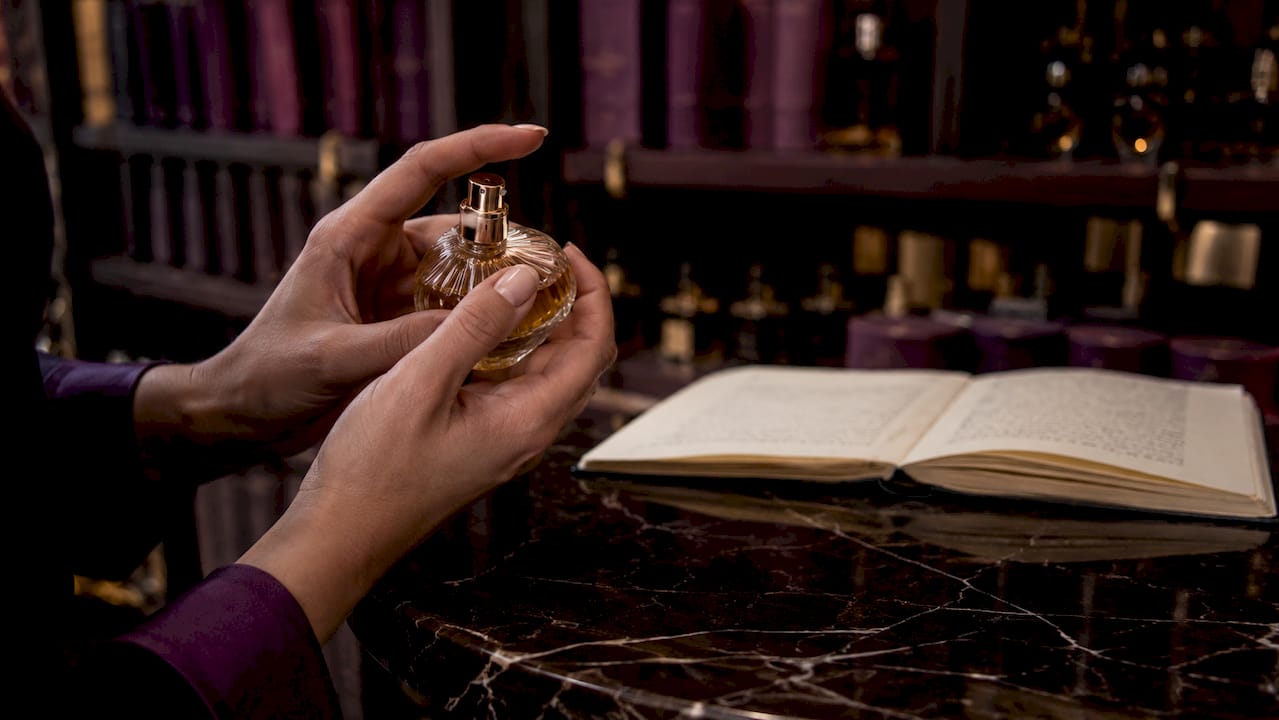
The amygdala and hippocampus, key structures of the limbic system, process scent simultaneously. The amygdala generates the immediate emotional response; the hippocampus anchors it to specific memories. That's why a scent can transport you to a specific moment in your childhood before you are even aware of what is happening. This speed is precisely what makes perfume such an effective tool for self-reflection.
The complexity of this response is greater than it seems. Up to 400 genes participate in each person's olfactory interpretation. That explains why the same sandalwood can evoke serenity in one person and tension in another. The experience with scent is, in part, genetically personal.
"Perfume is a sensory translation of emotions and a tool that strengthens memory when combined with conscious practices." Marina Barcenilla, Perfume Academy.
The distinction between using perfume passively and using it as an active tool for introspection is intentionality. Applying a fragrance while checking your phone has minimal effect. Consciously inhaling it, with mindfulness, for 30 seconds, reduces heart rate and activates the parasympathetic nervous system. The body enters a state conducive to calm and reflection. Neuroscience supports what many contemplative traditions have been practicing for centuries.
What scents to choose according to your intention for self-exploration?
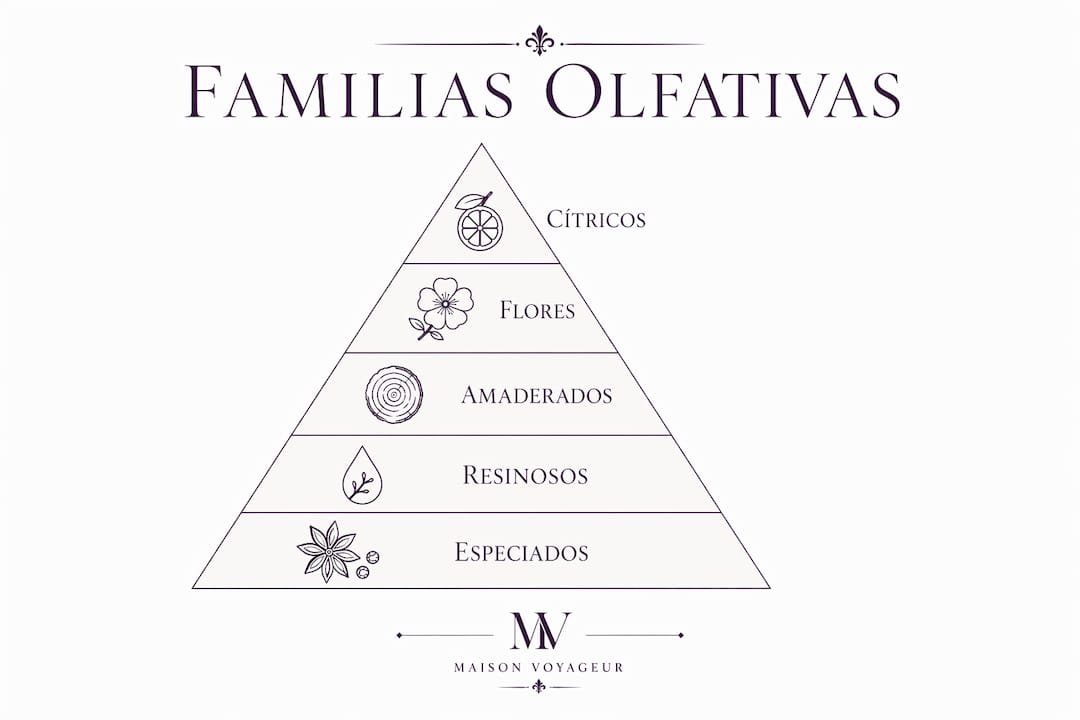
The choice of scent is not arbitrary. Each olfactory family produces distinct psychological effects, and knowing them allows for more precise use of fragrance. According to a sensory guide published in 2026, citrus scents elevate mood and promote socialization, floral scents facilitate calm and emotional openness, and woody and resinous scents promote deep reflection and focus.
| Olfactory Family | Main Effect | Recommended Moment |
|---|---|---|
| Citrus (bergamot, lemon, orange) | Uplifts mood, boosts energy | Morning, moments of fatigue |
| Florals (rose, jasmine, neroli) | Calm, emotional openness | Evening, emotional journaling |
| Woody (sandalwood, cedar, vetiver) | Focus, deep reflection | Meditation, reading, therapy |
| Resinous (frankincense, myrrh, benzoin) | Introspection, inner connection | Night rituals, yoga |
| Spicy (cardamom, black pepper) | Concentration, mental presence | Creative work, contemplation |
The role of natural versus synthetic ingredients makes a real difference. Fragrances with natural ingredients, especially resins and pure oils, stimulate deeper and more authentic emotional responses. Primarily synthetic fragrances tend to produce flatter olfactory responses, which limits their usefulness as a tool for self-exploration.
The choice of perfume reflects changing emotional states rather than fixed personality traits. Rotating fragrances according to the time of day or the task at hand is not indecisiveness. It is emotional precision.
Professional tip: Keep two or three distinct fragrances in your personal space: a citrus one for starting moments, a woody one for reflection, and a resinous one for deeper rituals. Conscious rotation expands your emotional vocabulary.
Practical rituals to integrate perfume into your mindfulness practice
A fragrance ritual does not require complex time or materials. It requires intention. The Perfume Academy describes perfume as a "learning instrument" that connects emotions with memory and consciousness, especially when combined with practices like journaling or yoga. The scent only amplifies what is already in motion.
This is a 10–15 minute ritual you can integrate before any self-reflection practice:
- Choose your fragrance with intention. Before applying it, ask yourself what you need at this moment: energy, calm, or depth. Choose the corresponding olfactory family.
- Apply the scent to wrists or neck. These pulse points amplify the projection of the fragrance with body heat.
- Inhale consciously for 30 seconds. Close your eyes. Bring the scent to your nose slowly. Observe what images, sensations, or emotions emerge without judgment.
- Record your initial state. Before meditating or writing in your journal, jot down in two or three words how you feel at that moment. The scent acts as a temporal marker of that state.
- Repeat the same scent in the same practice. Repetition is key. The brain learns to associate that smell with that mental state, and over time, entering into reflection becomes faster and more natural.
- Close the ritual with a final inhalation. When finished, inhale the fragrance again. This gesture seals the experience and reinforces the emotional anchor.
Daily repetition of this ritual generates a conditioning response that allows quick access to states of concentration or calm without conscious effort. It's the same mechanism that makes certain musicians enter a flow state by always listening to the same piece before performing. Scent becomes a signal that the brain recognizes and responds to.
The complementary use of scented candles or mists in the space enhances the effect. A soy candle with frankincense or cedar essential oils transforms an ordinary room into an environment conducive to introspection. The olfactory ambiance reinforces the signal that the ritual has already initiated.
Professional tip: If you practice journaling, always apply the same fragrance before writing. In a few weeks, that scent will be enough for your mind to enter a reflective mode almost automatically.
Common myths about perfume and self-reflection
Using perfume as a tool for self-knowledge generates some misconceptions that should be clarified before starting:
- "My favorite perfume defines my personality in a fixed way." The choice of scent is a dynamic map, not a closed diagnosis. It shows current needs and emotional states, not permanent traits.
- "If I choose the wrong scent, the practice won't work." The fear of making a mistake in the choice is unfounded. Any fragrance that generates a genuine emotional response serves as a starting point. Perfection does not exist here.
- "Any perfume produces profound effects." This is not the case. Intentionality is the most important variable. A scent applied without attention produces a minimal effect, regardless of its quality.
- "Synthetic fragrances work the same as natural ones." Primarily synthetic fragrances tend to produce flatter olfactory responses. For a serious introspection practice, natural ingredients make a noticeable difference.
- "This is therapy." Perfume as a tool for self-reflection complements practices such as meditation, journaling, or psychological therapy. It does not replace them or constitute clinical treatment.
The key to using this practice with honesty is to interpret olfactory reactions as personal signals, not as universal truths. What a scent tells you at this moment is valuable information about your inner state. Nothing more, nothing less.
Key points
Perfume directly activates the limbic system, and conscious intentionality in using it transforms it into a real tool for self-knowledge and personal growth.
| Point | Details |
|---|---|
| Solid neuroscientific basis | Smell connects directly with the amygdala and hippocampus, without rational filters. |
| Intention changes everything | Conscious inhalation for 30 seconds activates the parasympathetic system and facilitates reflection. |
| Choose scent according to intention | Citrus for energy, florals for calm, woody and resinous for deep reflection. |
| Repetition creates anchoring | Using the same scent in the same ritual generates a conditioned response that accelerates access to reflective states. |
| Natural ingredients, greater depth | Fragrances with pure resins and oils produce more authentic emotional responses than synthetic ones. |
What scent has taught me about listening inward
by Celeste
I have spent years accompanying people in self-exploration processes, and the moment someone discovers that a scent can be an inner mirror always stops me. Not because it is theoretically surprising, but because the reaction is always physical, immediate, and honest. The body does not lie when faced with a smell.
What has been most difficult for me to convey is that this practice does not require any special skill. You don't need an educated nose or to know the difference between a top note and a base note. You just need to pay attention. The scent that stops you, the one that makes you uncomfortable for no apparent reason, the one that opens something in your chest: all are information. Learning to read them is learning to read your own inner state.
I have seen people who had been blocked in their journaling for months get unstuck simply by adding a woody fragrance to their writing ritual. Not because the scent had magic. But because the olfactory signal gave them permission to enter a different space. The brain needs signals. Scent is one of the most direct there is.
My most honest recommendation is this: start without expectations of depth. Choose a scent you like. Always use it at the same time. Observe what happens in three weeks. The practice builds itself, from curiosity and without judgment. The philosophy of slow fragrance advocated by Maisonvoyageurparfum expresses it well: real luxury is not complexity, it is attention.
— Celeste
Discover your fragrance for self-exploration with Maisonvoyageurparfum
Maisonvoyageurparfum is an artisanal Mediterranean perfumery based in Madrid that crafts each fragrance with 98% natural ingredients and a clear intention: to accompany self-exploration and personal growth processes. Its collections are not fast-consumption perfumes. They are sensory instruments created with calm, for those who want to go deeper.

Maisonvoyageurparfum's archetype collection is specifically designed for self-knowledge, with fragrances that represent different emotional states and inner identities. For those looking to create an environment conducive to meditation or journaling, the personalized Manifesting soy candle is the most concrete starting point. Made with natural oils and designed to accompany manifestation and reflection rituals, it transforms any space into an environment conducive to listening to yourself.
Frequently Asked Questions
What is perfume as an object of contemplation?
Perfume as an object of contemplation is a fragrance used with conscious intention to facilitate self-reflection, not just as an adornment. Its effectiveness lies in the direct connection of smell to the limbic system, which regulates emotions and memory.
How long does it take for the scent to produce an effect?
Just 30 seconds of intentional inhalation of a pleasant scent is enough to reduce heart rate and activate the parasympathetic nervous system. The effect is physiological and measurable, not just subjective.
What fragrances are best for meditation?
Woody scents such as sandalwood and cedar, and resinous scents such as frankincense and myrrh, are most recommended for meditation and deep reflection. A 10–15 minute ritual with these scents before a session enhances concentration.
Can I use any perfume for introspection?
Any fragrance that generates a genuine emotional response serves as a starting point. However, fragrances with natural ingredients produce deeper and more authentic responses than primarily synthetic ones, especially in sustained self-exploration practices.
Can perfume replace psychological therapy?
No. Perfume as a tool for self-reflection complements practices such as meditation, journaling, or therapy, but does not replace them. Its value lies in amplifying and accompanying personal growth processes, not in diagnosing or treating emotional or psychological conditions.