
Crea un guardarropa de fragancias artesanales seleccionadas
Un guardarropa de fragancias artesanales curado es una colección intencionada de aromas, cada uno elegido para expresar una faceta distinta de tu personalidad en diferentes estados de ánimo, estaciones y ocasiones. A diferencia de una estantería aleatoria de botellas, este enfoque trata la fragancia como un lenguaje personal. El proceso se mueve a través de cuatro etapas deliberadas: descubrimiento, selección, prueba y curación. Primero aprendes tus preferencias olfativas, luego construyes una biblioteca de aromas en torno a roles claros en lugar de compras impulsivas. Maisonvoyageurparfum, una perfumería mediterránea con sede en Madrid, describe este tipo de coleccionismo como un verdadero lujo: tiempo para explorar dentro de ti mismo, un aroma a la vez.
¿Cómo se construye un guardarropa de fragancias artesanales curado?
La base de cualquier guardarropa de aromas artesanales es saber qué familias olfativas resuenan contigo. Los perfumistas organizan las fragancias en amplias familias olfativas: frescas y cítricas, florales, amaderadas, especiadas, ambarinas y gourmand. Cada familia tiene un registro emocional distinto. Los aromas frescos y cítricos se sienten limpios y energizantes. Los aromas amaderados y especiados se sienten arraigados y cálidos. Los aromas ambarinos y gourmand se sienten ricos, sensuales y envolventes.
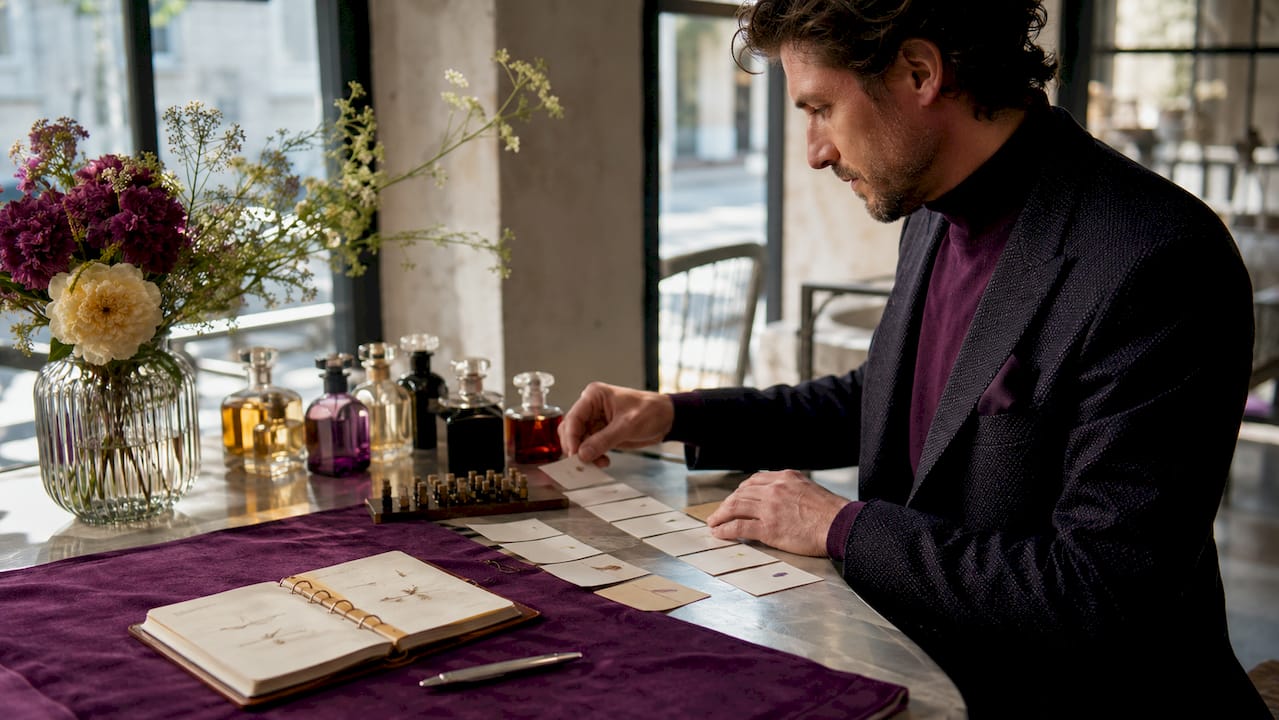
Tu respuesta emocional a un aroma es la guía más fiable que tienes. Ignora el frasco, el nombre de la marca y la descripción de marketing. Concéntrate en lo que sucede dentro de ti cuando lo hueles. ¿Te calma? ¿Te hace sentir seguro? ¿Te trae un recuerdo? Esa reacción es información.
Tres herramientas te ayudan a mapear tus preferencias sin malgastar dinero. Los kits de descubrimiento de aromas de perfumerías artesanales te permiten probar diferentes familias en un solo pedido. Los cuestionarios de fragancias, como el cuestionario de arquetipo de aroma de Maisonvoyageurparfum, conectan tu personalidad con perfiles de aroma. Un simple diario donde anotes tu reacción a cada muestra después de usarla durante todo un día agudiza tu gusto más rápido que cualquier otro método.
Consejo profesional: Escribe tres palabras que describan cómo te hace sentir un aroma, no cómo huele. "Confiado, cálido, arraigado" te dice más sobre el ajuste que "vainilla, sándalo, almizcle".
Una colección curada debe sentirse distintiva, editada e inconfundiblemente personal. Evita coleccionar por lealtad a la marca o por tendencia. Colecciona por resonancia.
¿Qué roles de aromas debe cubrir tu guardarropa de fragancias?
La categorización basada en roles es el método más efectivo para construir un guardarropa de fragancias que realmente uses. Cada botella se gana su lugar al ocupar un nicho específico en tu vida. Sin esta estructura, terminas con cinco aromas amaderados similares y nada lo suficientemente ligero para una mañana de verano.
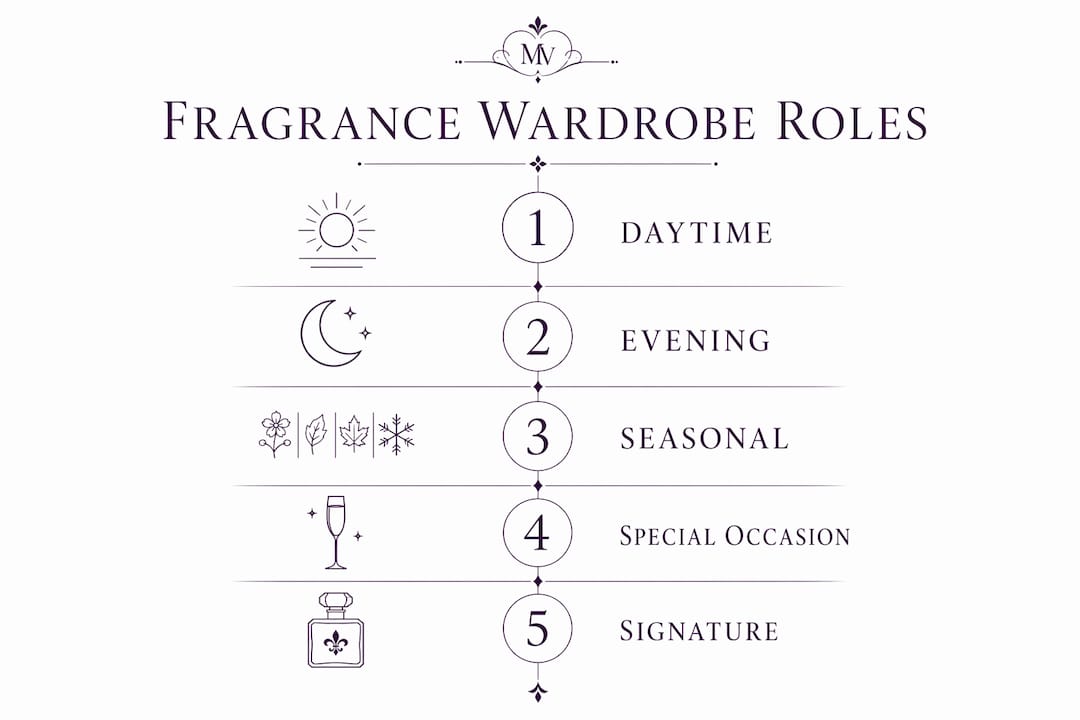
Un guardarropa funcional a menudo cubre de tres a cinco roles principales. Comienza por ahí antes de expandirte.
| Rol | Familia olfativa | Cuándo usar |
|---|---|---|
| Diario y oficina | Fresco, cítrico, floral ligero | Mañanas de lunes a viernes, entornos profesionales |
| Informal y social | Verde, acuático, amaderado suave | Salidas de fin de semana, reuniones relajadas |
| Noche y cita | Ámbar, especiado, floral intenso | Cenas, eventos, ocasiones íntimas |
| Otoño e invierno | Amaderado, especiado, resinoso | Clima frío, ropa en capas |
| Verano y clima cálido | Cítrico, marino, almizcle ligero | Calor, ambientes al aire libre, viajes |
El objetivo es la variedad, no la acumulación. Cada aroma debe cumplir un papel único en lugar de superponerse con otra botella en tu estantería. Un cítrico fresco para las mañanas y un ámbar rico para las noches satisfacen necesidades emocionales y contextuales completamente diferentes. Dos aromas amaderados similares no lo hacen.
Consejo profesional: Antes de comprar una botella nueva, pregúntate: "¿Hace esto algo que ninguno de mis aromas actuales hace?" Si la respuesta es no, sigue probando.
Clasificar por familia olfativa en lugar de por marca también evita un error común: comprar múltiples aromas de la misma casa que huelen casi idénticos. Organizar por familia mantiene tu colección verdaderamente diversa y tu presupuesto enfocado.
¿Por qué deberías probar muestras antes de comprar botellas enteras?
Comprar una botella entera sin probar es el error más común en la colección de fragancias. Las compras prematuras de botellas conducen a un gasto derrochador y a la fatiga de decisiones. Un aroma que huele extraordinario en una tienda puede sentirse mal en tu piel después de dos horas, o en una estación diferente, o simplemente en un día diferente.
El proceso correcto se ve así:
- Pide muestras o decants de cualquier fragancia antes de comprometerte con una botella entera.
- Usa cada muestra durante un día completo, no solo una rápida pulverización en tu muñeca.
- Prueba la misma muestra en al menos dos condiciones climáticas diferentes: una vez con calor, otra vez con aire más fresco.
- Anota tu reacción emocional al final de cada uso, no solo en la primera pulverización.
- Solo compra una botella entera después de que el uso consistente y variado confirme que el aroma se ajusta a tu vida.
Las pruebas en diversas condiciones eliminan el arrepentimiento del comprador y confirman la satisfacción a largo plazo. El calor amplifica la proyección de una fragancia y puede hacer que un ámbar rico se sienta abrumador. El aire frío tensa la presencia de un aroma y puede hacer que un cítrico ligero desaparezca en una hora.
Algunas prácticas adicionales agudizan tu proceso de curación:
- Lleva un diario de aromas con la fecha, el clima, la ocasión y tu reacción emocional a cada muestra.
- Espera al menos una semana entre la prueba de nuevas muestras para evitar la sobrecarga olfativa.
- Vuelve a visitar las muestras que inicialmente descartaste. Tu percepción cambia con el estado de ánimo y el contexto.
- Presta atención a cuánto tiempo dura un aroma en tu piel. La concentración del perfume afecta significativamente la longevidad.
La paciencia aquí no es opcional. Es la práctica en sí misma.
¿Cómo el uso de capas y la rotación mantienen viva tu colección de fragancias?
El uso de capas y la rotación son las dos técnicas que transforman un estante estático de botellas en un guardarropa vivo y expresivo. Ambas requieren un poco de conocimiento y un poco de disciplina.
La superposición de fragancias funciona aplicando primero un aroma más pesado y complejo, y luego añadiendo un aroma más ligero y fresco encima. La base más pesada ancla la mezcla y extiende su longevidad. La nota superior más ligera añade brillo y carácter. Una base amaderada de oud superpuesta con un cítrico limpio crea algo que ninguna de las botellas logra por sí sola. Las familias complementarias se superponen bien: amaderado con fresco, ámbar con floral, especiado con verde.
La superposición es una técnica avanzada. Recompensa a quienes ya entienden cómo sus aromas individuales evolucionan en su piel. Una sólida comprensión de la composición del aroma marca la diferencia entre una mezcla personalizada y un choque.
La rotación resuelve un problema diferente. Usar la misma fragancia a diario conduce a la fatiga olfativa, un filtrado psicológico donde tu cerebro deja de registrar el olor por completo. Dejas de notar el aroma que amas. Rotar entre dos o más opciones mantiene cada una fresca y significativa.
- Guarda todas las fragancias lejos de la luz directa y el calor. Un cajón o un armario cerrado conserva la calidad mucho mejor que un estante de baño.
- Mantén los frascos en posición vertical para minimizar la exposición al aire en la tapa.
- Evita almacenar las fragancias en ambientes húmedos. Los baños aceleran la degradación.
- Rota estacionalmente, además de a diario. Saca tus aromas cálidos de ámbar en octubre y noviembre. Vuelve a guardar tus frascos de cítricos ligeros en abril y mayo.
Consejo profesional: Pulveriza tu aroma base más pesado sobre la piel, luego aplica el aroma más ligero sobre la ropa. La tela retiene las notas de salida por más tiempo y crea una mezcla más equilibrada durante todo el día.
El guardarropa de fragancias no es una identidad estática. Es un accesorio expresivo que refleja una vida multifacética. La superposición y la rotación lo mantienen así.
Puntos clave
Un guardarropa de fragancias artesanales curado requiere una selección basada en roles, un muestreo paciente y una rotación deliberada para expresar tu identidad en cada ocasión.
| Punto | Detalles |
|---|---|
| Comienza con las familias de aromas | Identifica tus respuestas emocionales a las familias frescas, amaderadas, ambarinas y florales antes de comprar cualquier cosa. |
| Construye por rol, no por marca | Asigna a cada botella un rol específico en tu vida: diurno, nocturno, estacional o social. |
| Muestra antes de comprometerte | Usa decants durante varios días y condiciones antes de comprar una botella completa. |
| Rota para mantener la presencia | Alterna entre dos o más aromas diariamente para evitar la fatiga olfativa y mantener cada uno significativo. |
| Capas con intención | Aplica primero los aromas de base más pesados, luego las notas de salida más ligeras, utilizando familias olfativas complementarias. |
Lo que he aprendido al construir mi propia colección de aromas
El consejo que me gustaría que alguien me hubiera dado antes: deja de buscar el perfume signature perfecto. Esa búsqueda te mantiene estancado. Las colecciones más satisfactorias que he encontrado pertenecen a personas que se dieron permiso para ser más de una cosa.
Pasé mucho tiempo creyendo que una persona seria en fragancias poseía un único aroma definitorio. Esa creencia me costó años de usar cosas que se sentían casi bien. El cambio llegó cuando dejé de preguntar "¿cuál es mi aroma?" y comencé a preguntar "¿qué necesito hoy?". Una mañana tranquila en un escritorio requiere algo diferente a una cena a la luz de las velas. Ambas merecen un aroma que encaje.
La otra lección es más difícil de aceptar: la paciencia es la práctica, no el obstáculo. Cada botella que compré demasiado rápido se queda en el fondo de un cajón. Cada muestra que usé durante dos semanas antes de comprometerme se convirtió en algo que realmente amo. La ciencia detrás de la fragancia y la introspección confirma lo que los coleccionistas ya saben intuitivamente: el aroma alcanza algo más profundo que la preferencia. Alcanza la memoria, la emoción y la identidad.
Construye lentamente. Edita sin piedad. Deja que la colección refleje quién eres realmente, no a quién crees que deberías oler.
— Celeste
Descubre tu guardarropa de fragancias artesanales con Maisonvoyageurparfum
Maisonvoyageurparfum elabora cada fragancia lentamente, utilizando un 98% de ingredientes naturales, en su taller de Madrid. La filosofía es simple: un aroma debe ser más que un producto. Debe ser un momento de autoexploración.

Su colección completa de perfumes se organiza en torno al marco de los Siete Arquetipos, que conecta cada aroma con una identidad personal distinta. Si no estás seguro por dónde empezar, el cuestionario de arquetipo de aroma mapea tu personalidad a un perfil de fragancia en minutos. Para aquellos que construyen un ambiente hogareño sensorial junto con su guardarropa, la vela de soja personalizada extiende la experiencia artesanal más allá de la piel. Cada pieza está hecha para ser usada, vivida y recordada.
Preguntas frecuentes
¿Qué es un guardarropa de fragancias?
Un guardarropa de fragancias es una colección curada de aromas elegidos para cubrir diferentes estados de ánimo, ocasiones y estaciones, en lugar de depender de un único aroma distintivo. Cada fragancia cumple un papel específico en tu vida diaria o semanal.
¿Cuántas fragancias necesito para empezar?
De tres a cinco aromas bien elegidos que cubran roles distintos, como diurno, nocturno y estacional, forman un guardarropa inicial completo y funcional. La calidad y la variedad importan más que la cantidad.
¿Cuál es la mejor manera de probar fragancias artesanales?
Pide muestras o decants y usa cada uno durante un día completo en al menos dos condiciones climáticas diferentes antes de decidir. Las pruebas repetidas en diversas condiciones confirman si un aroma realmente se adapta a tu piel y estilo de vida.
¿Se pueden mezclar dos fragancias?
Sí. La superposición efectiva aplica primero un aroma más pesado y complejo, y luego un aroma más ligero encima. Las familias de aromas complementarias, como amaderado y fresco o ámbar y floral, se mezclan con mayor éxito.
¿Cómo evito aburrirme de mis fragancias?
Rota entre al menos dos aromas regularmente. La rotación diaria previene la fatiga olfativa, el efecto psicológico en el que tu cerebro filtra un olor familiar, manteniendo cada fragancia fresca y agradable con el tiempo.