
Where to Find Authentic Natural Perfumes in Spain
The easiest way to buy authentic perfumes naturales España offers is to check three things before you spend a euro: a visible INCI list with named essential oils, a recognized certification like Ecocert, COSMOS, or ACENE, and a sample or travel size to test before committing. When those three line up, you’re likely holding something real.
Three routes work well for Spanish shoppers right now:
- Maison Voyageur for Mediterranean artisanal scents composed in Madrid
- Certified online specialists that publish full ingredient breakdowns
- Local niche boutiques that let you sample before you buy
Pro Tip: Scan the ingredient list first. If “parfum” appears alone with no named botanicals above it, treat the “natural” label with suspicion.
Key Takeaways
Authentic natural perfume buying in Spain comes down to verifying INCI transparency, certification, and sample access before trusting any “natural” claim.
| Point | Details |
|---|---|
| Check the INCI first | Named botanicals above generic “parfum” separate real natural formulas from vague claims. |
| Trust certifications, not badges | Ecocert, COSMOS, and ACENE offer third-party verification a brand’s own label doesn’t. |
| Start with a sample | 10 ml formats let you test how a natural formula develops on your specific skin. |
| Match format to price expectations | Rare botanicals and small-batch production justify higher prices than mass-market synthetics. |
| Consider Maison Voyageur for artisan Madrid scents | Composed with 98% natural ingredients, travel sizes and guided scent discovery are available. |
Table of Contents
- Where to Buy Natural Perfumes in Spain
- How Can You Tell a Perfume Is Genuinely Natural?
- What Do Natural Perfumes Cost in Spain?
- Benefits and Limitations of Natural Perfumes
- Choosing a Natural Perfume in Spain: A Quick Checklist
- Maison Voyageur: An Artisan Perfumery Rooted in Madrid
- Aptitud Para Pieles Sensibles Y Alérgenos Declarados
- Choosing by Skin Type and Scent Preference
- Marcas Españolas Destacadas De Perfumes Naturales
- Spotting Real Natural Perfume vs. Imitations
- Environmental Impact and Sustainability in Spanish Perfumery
- Current Trends in Spain’s Natural Perfume Market
- Frequently Asked Questions
- Sources
Where to Buy Natural Perfumes in Spain
Online specialists built around natural cosmetics tend to disclose the most. Retailers like Ecco Verde organize catalogs by ingredient philosophy and usually show certification badges right on the product page, which makes comparison shopping fast if you know what to look for.
Small Spanish perfumeries offer something the big sites can’t: a person who can tell you exactly when the lavender was harvested. Artisans working from Mallorca to Madrid often hold local certifications such as ACENE, and many will answer a direct email about sourcing. That traceability is worth the extra step of hunting them down.
Marketplaces and department-store fragrance counters deserve more scrutiny. “Natural” gets used loosely there, and you rarely get an ingredient breakdown before purchase.
Shipping inside Spain generally runs through Correos or regional couriers, with peninsula orders arriving faster than shipments to the Balearic or Canary Islands. Many sellers offer free shipping above a spending threshold, so check the cart before assuming the price you see is the price you pay.
If you’re new to a brand, look for 10 ml vials or decants first. Natural perfumes shift more on skin than synthetics do, and a sample saves you from a costly mismatch.
How Can You Tell a Perfume Is Genuinely Natural?
Read the INCI before you read the marketing. A genuinely natural formula lists recognizable botanicals, essential oils, and plant extracts by name, not a single catchall line that just says “parfum” or “fragrance.”
Percentage-of-natural-ingredients claims are common and worth understanding. A brand stating 95% to 99% natural usually means the remaining fraction is a stabilizer, fixative, or trace synthetic needed for the formula to hold together. That’s not automatically a red flag. It’s a manufacturing reality even honest artisans deal with.
Certifications carry more weight than a brand’s own claims. In Spain and across Europe, three labels are worth trusting:
- Ecocert: audits organic and natural cosmetic formulations against a published standard
- COSMOS: the pan-European organic and natural cosmetics standard several Ecocert-certified brands also carry
- ACENE: Spain’s own natural cosmetics association, common among smaller Iberian producers
A perfume can call itself “natural” with zero third-party oversight. A perfume that carries Ecocert or COSMOS has been checked against a published standard by someone other than the brand itself.
Do check the INCI and the certification logo together.
Pro Tip: Email the perfumer directly and ask what percentage of the formula is essential oil versus alcohol base. A maker with nothing to hide answers in a paragraph, not a form letter.
What Do Natural Perfumes Cost in Spain?
Price tracks format and rarity. A 10 ml sample or travel vial gives you a low-risk way to test a scent before buying full size, and it’s often the smarter first purchase precisely because natural formulas develop differently on each person’s skin.
Certification, small-batch production, and rare botanicals all push prices up compared with mass-market synthetics. A jasmine absolute or genuine oud extract costs the maker far more than a lab-replicated aroma molecule, and that cost shows up at checkout.
| Format | Typical Use | Price Driver |
|---|---|---|
| 10 ml travel/sample | Testing a new scent, travel bag | Lowest cost, ideal for skin-reaction testing |
| 30 ml standard | Everyday bottle, most common size sold | Balances cost with the volume most buyers want |
| 100 ml premium | Long-term use, gifting | Reflects ingredient rarity and certification costs |
Many Spanish sellers advertise free shipping past a set spending threshold, so bundling a sample with a full bottle sometimes makes more financial sense than ordering the sample alone.
Benefits and Limitations of Natural Perfumes
Natural formulas offer real advantages, but they come with trade-offs worth knowing before you buy.
On the upside, a cleaner INCI generally means fewer synthetic musks and fixatives that trigger sensitivities in some wearers. Responsibly sourced natural perfumes can also carry a lighter environmental footprint than petrochemical-heavy formulas, particularly when the brand pairs natural ingredients with recyclable or compostable packaging.
The limitations are just as real:
- Natural formulas often have shorter longevity and softer projection than synthetic-heavy perfumes
- Rare botanicals push prices higher than a comparable synthetic fragrance
- Essential oils and plant extracts can trigger allergic reactions in sensitive skin, even though they’re “natural”
To stretch wear time, apply to freshly moisturized skin rather than dry skin, and layer a matching scented body oil underneath if the brand offers one. Natural aromatics cling better to skin that already holds moisture.
Choosing a Natural Perfume in Spain: A Quick Checklist
Getting from “interested” to “confident purchase” takes five steps.
- Check the INCI and the percentage-natural claim. Named botanicals above generic “parfum” is the baseline.
- Look for a certification or third-party mark. Ecocert, COSMOS, or ACENE gives you outside verification, not just a brand’s word.
- Order a sample or travel size first. Natural formulas behave differently skin to skin.
- Review shipping and return terms for Spain specifically. Peninsula and island delivery times often differ.
- Consider your own sensitivities. Some botanical extracts (certain citrus oils, specific florals) are more likely to trigger reactions.
Red flags worth walking away from: a product page with no ingredient list at all, no sample option offered, or a “100% natural” claim priced suspiciously below what rare botanicals actually cost to source.
Before buying from an unfamiliar maker, ask about production batch dates, how long the formula macerated, and whether the alcohol base is agricultural or synthetic. A perfumer who macerates botanicals for weeks rather than days, using an undenatured agricultural alcohol, is usually working at a different quality level than a brand cutting corners on time.
Maison Voyageur: An Artisan Perfumery Rooted in Madrid
Maison Voyageur composes Mediterranean artisanal perfumes in Madrid using 98% natural ingredients, built around the idea that a scent should feel like a personal narrative rather than a shelf product.
What matters practically to a buyer:
- Travel sizes available alongside standard bottles, so you can test before committing
- Ingredient transparency published for each scent
- Guided scent discovery tools that help you find a fragrance matched to mood and memory rather than just top notes
- Curated sets for men and women, plus gift-ready formats
Real luxury isn’t the size of the bottle. It’s the time given to explore within yourself while a scent is being made.
Each fragrance is slowly composed rather than mass-produced, which is part of why the 98% natural declaration matters here: it’s a formulation choice, not a marketing afterthought.
Aptitud Para Pieles Sensibles Y Alérgenos Declarados
Sensitive skin and natural perfume aren’t automatically incompatible, but they do require more attention than grabbing a bottle off a shelf. Essential oils, the backbone of most natural formulas, contain naturally occurring allergens like limonene, linalool, and citral. These compounds appear on EU allergen disclosure lists precisely because a portion of the population reacts to them, natural origin or not.
The advantage of a well-labeled natural perfume is that you can actually see what you’re applying. A brand that lists its INCI in full lets you cross-reference specific botanicals against your own known sensitivities, something a vague “parfum” listing never allows.
Before wearing a new natural fragrance on your neck or wrists, patch test it on your inner forearm and wait 24 hours. If you have a history of reacting to citrus peels or certain florals, ask the maker directly whether those extracts appear in the formula.
Fewer synthetic fixatives can mean fewer of the reactions linked to certain synthetic musks, but “natural” is not synonymous with “hypoallergenic.” Treat every new bottle as an experiment on your own skin chemistry, not a guarantee.
Choosing by Skin Type and Scent Preference
Skin chemistry changes how a natural perfume reads on you, more so than with synthetic formulas because natural molecules are more reactive to your skin’s own pH and oil levels.
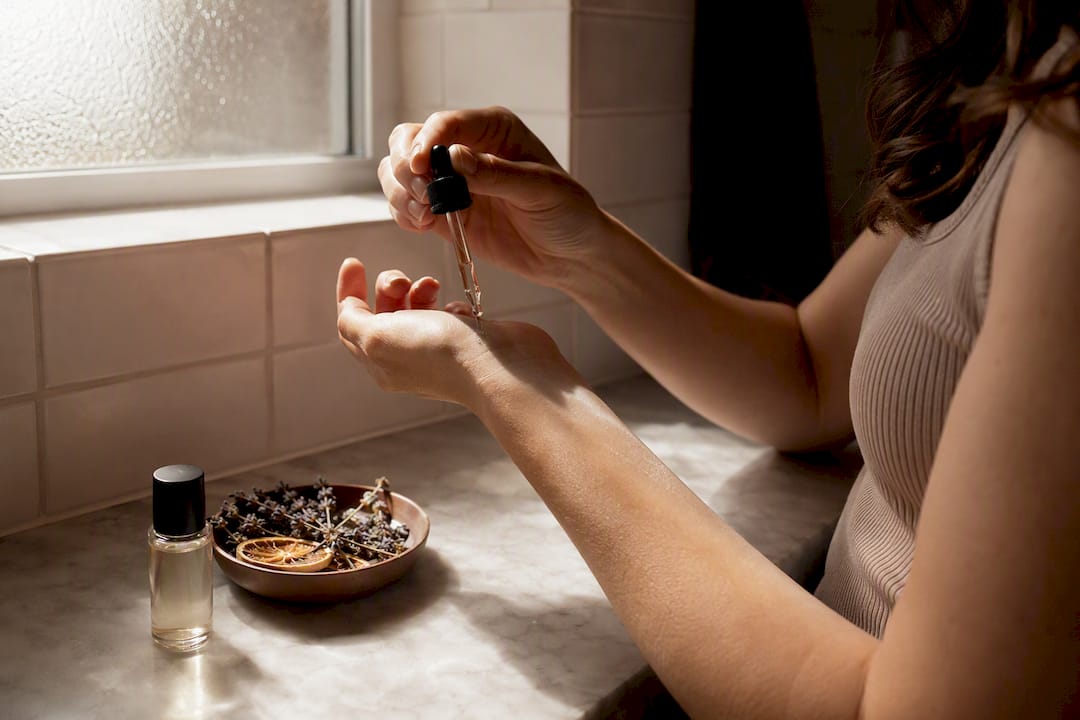
Drier skin tends to hold fragrance longer but can read a scent as sharper or more concentrated at first application. Oilier skin often amplifies base notes and warms a fragrance faster, sometimes shortening how long the top notes last before the deeper, muskier layers take over.
Beyond skin type, scent family matters just as much. Beauty coverage in Spain has noted that floral and citrus accords remain consistently popular among consumers looking for something lighter and more botanical-forward, which makes them a reasonable starting point if you’re new to natural fragrance and unsure where your preferences lie.
If you gravitate toward warmth, look for formulas built around resins, woods, or amber accords rather than pure florals. If you prefer something fresher and more transparent, citrus and green notes tend to wear lighter and refresh more easily throughout the day.
The most reliable method remains simple: order two or three samples across different families, wear each for a full day, and note not just how it smells at first spray but how it evolves over six to eight hours.
Marcas Españolas Destacadas De Perfumes Naturales
Spain’s natural perfume scene ranges from small-batch island producers to Madrid-based artisan houses, and each brings a distinct approach worth understanding before you pick where to spend.
Mallorca has become something of a hub for certified natural perfumery, with small producers holding ACENE certification and building formulas around local botanicals in 10 ml and 30 ml formats, often carrying Slow Cosmétique labels alongside their organic certification.
Mainland brands take varied approaches to the same natural-ingredient commitment. Some emphasize organic certification percentages explicitly on product pages, publishing claims of high organic content for a specific formula. Others focus on production method, highlighting maceration times and the use of undenatured agricultural alcohol as their primary quality signal rather than a percentage claim.
Where island producers lean into local botanical identity and some mainland brands lead with certification percentages, Maison Voyageur leads with the emotional and narrative dimension of each fragrance, still backed by transparent, natural formulation.
Spotting Real Natural Perfume vs. Imitations
Imitations rarely announce themselves. They borrow the language of natural perfumery, sustainable, botanical, pure, without the substance behind it, so the burden falls on you to verify.
Start with the INCI list every time. A genuine natural formula names its essential oils and extracts specifically: lavandula angustifolia, not just “essential oil blend.” Vague catchall phrasing is the single most common tell of a formula cutting corners.
Check whether the brand discloses a percentage-natural claim and whether that claim is backed by a certification logo you can independently verify, rather than just a badge the brand designed itself. Ecocert, COSMOS, and ACENE certifications are checkable; a brand’s self-styled “eco-verified” sticker isn’t.
Price is a signal too, though not an absolute one.
Finally, pay attention to how the brand talks about production. Makers who mention maceration time, alcohol origin, and batch-specific details tend to be more transparent overall than brands that stick to purely emotional marketing language with no technical substance behind it.
Environmental Impact and Sustainability in Spanish Perfumery
Natural doesn’t automatically mean sustainable, and that distinction matters more than most marketing copy admits. The real environmental benefit of a natural perfume depends on how the ingredients were sourced and how the finished product gets packaged, not just on the absence of synthetic molecules.
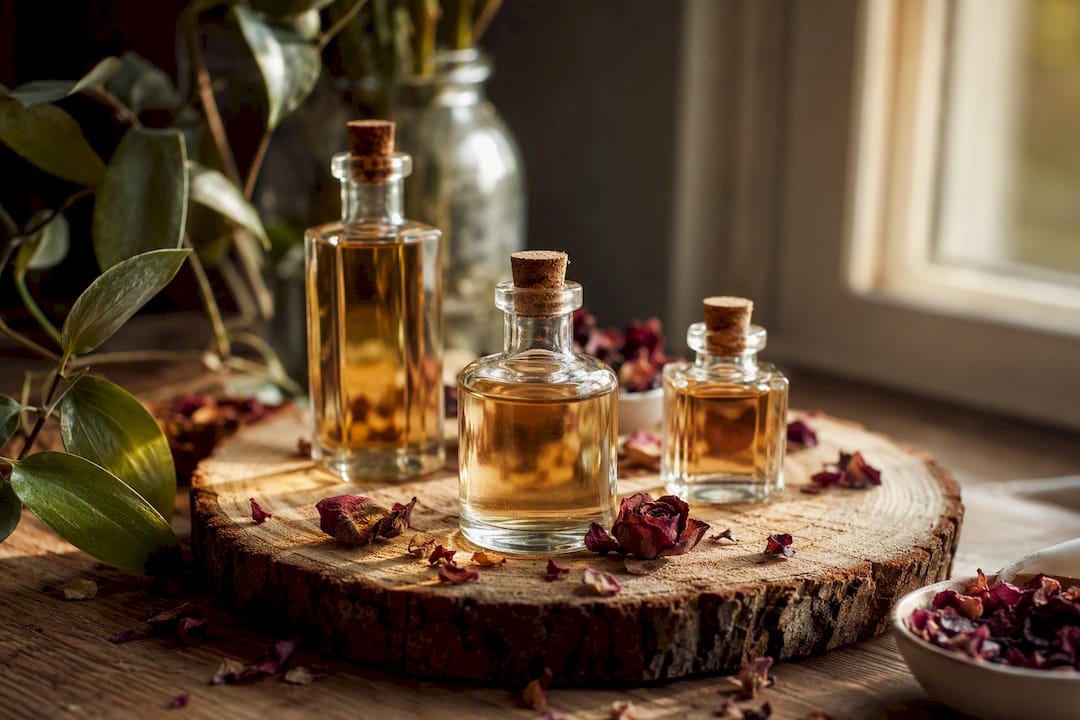
Responsibly made natural perfumes can reduce reliance on petrochemical-derived ingredients, and some Spanish brands pair that with recyclable glass, compostable secondary packaging, or even local zero-emission delivery in select cities. Those choices compound: a natural formula in a recyclable bottle, shipped without excess packaging, genuinely reduces environmental load compared with a synthetic fragrance in heavily processed plastic and foil.
But sourcing botanical ingredients at scale carries its own environmental cost, from water use in agriculture to land dedicated to growing aromatic crops instead of food. A brand that sources rare essential oils irresponsibly isn’t automatically greener than a well-made synthetic alternative.
The practical takeaway: look past the word “natural” and check whether the brand discusses sourcing practices, packaging materials, and shipping methods specifically. Brands willing to detail those choices are usually the ones actually making them.
Current Trends in Spain’s Natural Perfume Market
Spanish demand for natural and artisanal fragrance has grown alongside broader interest in sustainable beauty, and lifestyle media has taken notice. Coverage of emerging sustainable Spanish brands points to a shift toward “clean” scent profiles and transparent brand storytelling as consumer priorities, not just fragrance quality alone.
Floral and citrus accords continue to dominate new natural launches, reflecting a broader preference for lighter, more wearable botanical scents over heavier traditional formulas. Industry recognition has followed too. Events like the Spanish Perfume Academy awards have begun highlighting niche and artisan perfumers specifically, giving smaller Spanish brands a credibility signal that used to belong exclusively to established fragrance houses.
Expect more brands to publish ingredient transparency as a baseline expectation rather than a differentiator, as Spanish consumers grow more comfortable reading an INCI before checking a price tag.
Why I Favor Transparent, Artisan-Made Scents
I’ve spent enough time reading ingredient lists to trust the ones that name their botanicals plainly over the ones that hide behind “fragrance” and a good photograph. Traceable INCI isn’t a nice extra. It’s the difference between buying a scent and buying a story someone made up about a scent.
As someone writing for Maison Voyageur, I test samples the same way I’d want a reader to: on skin, over hours, before deciding anything.
Try Maison Voyageur’s Mediterranean Scents for Yourself

If the checklist earlier in this guide matters to you, natural INCI, sample access, transparent sourcing, Maison Voyageur checks each box while adding something the checklist can’t measure: a scent designed around introspection rather than impression. Travel sizes ship within Spain, so you can start with a smaller format before committing to a full bottle. Visit the Maison Voyageur scent discovery experience to find the fragrance that matches where you are right now, and order a sample to begin.
Frequently Asked Questions
What natural colognes are available in Spain?
Several Spanish and European artisans produce natural colognes built around citrus, herbal, and woody accords, often certified by Ecocert, COSMOS, or ACENE.
Where can I buy original natural perfumes in Spain, not imitations?
Buy directly from the brand’s own site or from certified natural retailers like Ecco Verde, where ingredient lists and certification badges are visible before purchase. Avoid third-party marketplace listings with no verifiable seller history or ingredient disclosure.
Are ecological perfumes the same as natural perfumes?
Not exactly. “Ecological” typically refers to environmental practices like sustainable sourcing and packaging, while “natural” refers to the ingredients themselves. A perfume can be natural without being fully ecological, and the strongest brands address both.
How long do natural perfumes last on skin compared to synthetic ones?
Natural perfumes generally have shorter longevity and softer projection than synthetic-heavy fragrances, since essential oils evaporate faster than many lab-created fixatives. Applying to moisturized skin and layering with a matching body oil helps extend wear time.
Is a higher percentage of natural ingredients always better?
Not necessarily.
Sources
- Comprar perfumes y fragancias naturales
- Perfumes naturales: beneficios para el medio ambiente
- Glamour
Recommended
- The Best Perfumes with Incense Notes: A Spain Guide – Maison Voyageur
- Precios de perfumes de autor en España: guía práctica – Maison Voyageur
- Tipos de perfumería nicho en España: guía completa 2026 – Maison Voyageur
- How to Choose a Natural Perfume That Fits Your Personality – Maison Voyageur
Les sept fragrances Maison Voyageur
- Manifesting · unisexe (69,99 €)
- Intuition · femme (69,99 €)
- Certainty · femme (69,99 €)
- Expansion · femme (69,99 €)
- Release · homme (69,99 €)
- Presence · homme (69,99 €)
- Inner Fire · homme (69,99 €)
Nouvelle ici ? Commence par le Discovery Set · les 7 fragrances en format voyage (40 €).