
The Best Perfumes with Incense Notes: A Spain Guide
Incense in perfumery reads as resinous, warm, and faintly smoky — a base note that settles into skin slowly and stays for hours. If you want to understand what you are smelling before you buy, start here. Three options worth testing right now:
- Niche: Comme des Garçons Series 3 Incense: Avignon. Austere, churchy, and unmistakably incense-forward. Find samples at niche boutiques in Madrid or Barcelona.
- Designer: Guerlain Encens Mythique d’Orient (Les Absolus d’Orient). Warmer and more approachable, with amber softening the resin. Available at El Corte Inglés and Sephora España.
- Artisan: Maisonvoyageurparfum, composed in Madrid with natural Boswellia and ladanum. Samples available directly through the brand’s site.
Test any of these on skin, not paper. Wait at least 30 minutes before deciding. A small sample is always worth ordering before committing to a full bottle.
Key Takeaways
Incense in perfumery is a resinous, warm base note that rewards patience — test on skin, wait for the dry-down, and choose concentration deliberately before buying a full bottle.
| Point | Details |
|---|---|
| Incense is a base note | It emerges after 30 minutes; judge a fragrance at the 2–3 hour mark, not on first spray. |
| Concentration shapes the experience | EDT reads soft and background; EDP and extrait push the resin forward with stronger longevity. |
| Best in autumn and winter | Cold temperatures slow diffusion and amplify warmth; lighter incense blends work for spring evenings. |
| Sample before you buy | Most niche and artisan brands, including Maisonvoyageurparfum, offer 2–3 ml samples and travel sizes. |
| Maisonvoyageurparfum | A Madrid-composed artisan option using natural Boswellia and ladanum, available with guided scent discovery. |
Table of Contents
- What do perfumes con incienso actually smell like?
- Incense-forward perfumes worth trying
- How incense behaves in blends and what it pairs best with
- How to choose and test a perfume with incense notes in Spain
- When do incense perfumes work best?
- How Maisonvoyageurparfum works with incense
- Why incense deserves more than a seasonal recommendation
- Maisonvoyageurparfum’s artisan incense option
- Where to read more and verify notes
- Sources
What do perfumes con incienso actually smell like?
Incense in perfumery refers primarily to olibanum, the dried resin of the Boswellia sacra tree. On Fragrantica, its descriptors cluster around resinous, smoky, ambery, and balsamic — a profile that sits somewhere between a warm wood and a sweet resin, with a faint medicinal or camphor edge depending on the dose.
Perfumers have two routes to that character. The first is the natural resin itself, steam-distilled into an essential oil or used as an absolute. The second is a synthetic accord, which can isolate specific facets — the smokiness, the sweetness, or the dry-wood quality — without the full complexity of the raw material. Niche houses tend to favor the natural resin or a blend of both; mass-market formulations often rely on accords alone.
In the fragrance pyramid, incense almost always functions as a base note. The top notes open first, the heart develops over 20–30 minutes, and then incense emerges as those layers fade. That is why a fragrance that smells fresh or floral on first spray can turn resinous and contemplative an hour later. Labdanum and myrrh (mirra) often accompany olibanum in the base, deepening the amber warmth and extending longevity.
Pro Tip: Concentration changes everything. An EDT version of an incense fragrance may read as a soft, background warmth. The same formula as an EDP or extrait will push the resin forward, making it denser and more persistent. If a fragrance feels too faint on your skin, try the higher concentration before abandoning it.
Incense-forward perfumes worth trying
GQ notes that olibanum has seen a genuine resurgence in perfumery, with industry voices pointing to a broader appetite for raw, rooted materials. The examples below span olfactory families and price tiers, each with a distinct take on what incense can do.
-
Serge Lutens L’Orpheline. Unisex, with a cold, mineral incense that reads almost austere. The resin is dry rather than sweet, supported by white musks and a faint floral ghost. Incense is dominant here. Available through niche retailers and authorized online perfumeries in Spain; samples are common in the niche community.
-
Comme des Garçons Series 3 Incense: Avignon. Unisex. This is the benchmark for ecclesiastical incense in modern perfumery — smoky, cold, and spare, evoking stone floors and liturgical smoke. Esquire places it among the most referenced incense fragrances for men, though it wears without gender. Find it at CdG stockists and niche boutiques in Madrid and Barcelona.
-
Guerlain Encens Mythique d’Orient (Les Absolus d’Orient). Unisex, leaning feminine. Incense here is warmer and more approachable — amber and rose soften the resin into something opulent rather than austere. A strong entry point for those new to incense-forward scents. Widely available at El Corte Inglés and Sephora España.
-
Loewe 7. Masculine. Loewe’s interpretation is quieter — incense as a supporting depth note rather than the lead. Cedar and amber frame it, making it wearable for daytime. Available at Loewe boutiques and major Spanish department stores.
-
Amouage Interlude Man. Masculine. One of the most complex incense compositions available — oregano and birch tar open before the resin settles into a smoky, leathery base. Incense is dominant and long-lasting. Amouage is available through authorized niche retailers in Spain and online.
-
Tom Ford Private Blend (incense-forward options). Tom Ford’s Private Blend line includes several resin-heavy compositions. Oud Wood and Sahara Noir both carry incense character, with the latter leaning more directly into olibanum. Available at Tom Ford counters in El Corte Inglés and select perfumeries.
-
Maisonvoyageurparfum. Artisan, Mediterranean, composed in Madrid. Where mass-market incense accords tend to smooth out the resin’s rougher edges, Maisonvoyageurparfum works with a higher natural-resin load — Boswellia and ladanum used with restraint, so the incense reads as genuine rather than synthetic. The result is quieter, more personal. Samples and travel sizes are available directly through the brand’s site, which makes testing before a full-bottle commitment straightforward.
Primor’s editorial guide and Revista GQ’s gallery both note that some formulations make incense the central motif while others use it as a supporting depth note — a useful distinction when reading ingredient lists.
How incense behaves in blends and what it pairs best with
Incense rarely works alone. Its character shifts significantly depending on what surrounds it, and understanding those pairings helps you predict how a fragrance will evolve on your skin.
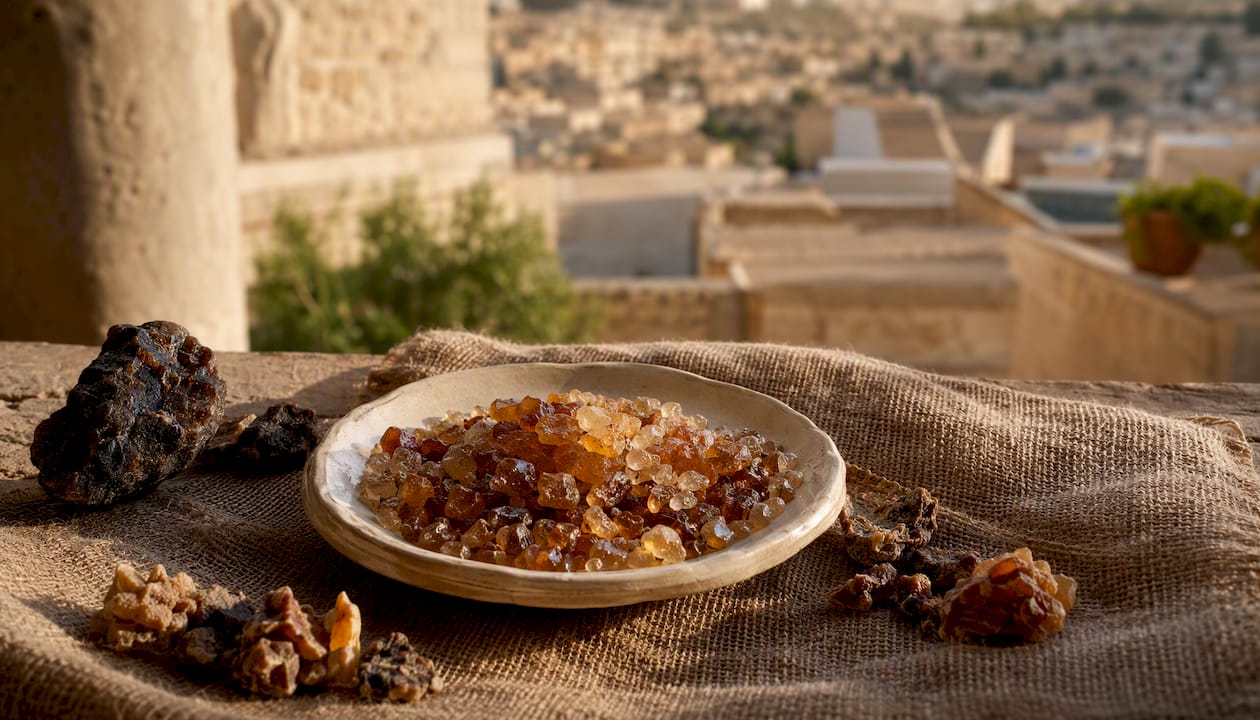
With amber and resins: This is incense’s most natural home. Labdanum and benzoin deepen the base, adding a honeyed warmth that softens the resin’s sharper edges. The result is an oriental structure — dense, long-lasting, and enveloping. Many of the great incense-amber compositions lean unisex because neither element reads as gendered.
With woods: Cedar and sandalwood add a dry, structural quality that keeps incense from reading as too sweet or too heavy. Vetiver pushes it toward earthiness. Oud amplifies the smokiness and adds an animalic depth that can feel almost medicinal at high doses. This pairing appears frequently in Middle Eastern-influenced perfumery.
With florals: Rose and incense is a classic oriental pairing — the floral softens the resin, and the resin gives the rose a ceremonial gravity it would not have alone. Jasmine works similarly, though it adds a more indolic, almost carnal quality to the blend.
With leather: Incense and leather together produce something smoky and animalic. Amouage Interlude Man is a clear example: the birch tar and incense create a dry, almost austere smokiness that settles into a warm leather base. This combination suits cooler weather and evening wear.
With gourmand notes: Vanilla and tonka bean sweeten incense considerably, pulling it away from the sacred and toward the sensual. Benzoin, a balsamic resin itself, bridges the two directions. The effect can be cozy rather than austere — incense as warmth rather than ceremony.
Pro Tip: If a fragrance’s incense reads as too sharp or smoky on your skin, check whether the formula includes vanilla, benzoin, or sandalwood in the base. Those notes soften the resin’s harsher facets. A version without them will read drier and more austere — which is not a flaw, just a different mood.
How to choose and test a perfume with incense notes in Spain
Incense fragrances reward patience. The opening spray rarely tells you what you are actually buying.
- Spray on skin, not paper. Incense reacts with skin chemistry in ways that paper strips cannot replicate. Apply to the inner wrist or forearm and wait.
- Wait at least 30 minutes. The top notes will fade and the resin will begin to emerge. At 2–3 hours, you are smelling the base — which is where incense lives.
- Assess longevity and projection separately. A fragrance can have strong longevity (staying close to skin for hours) without projecting far. Incense-heavy compositions often do exactly this: they become a skin scent rather than a room-filling presence.
- Order a 2–3 ml sample before a full bottle. Most niche retailers in Spain, including authorized online perfumeries and the brands’ own sites, offer samples. Maisonvoyageurparfum provides samples and travel sizes for this reason.
- Choose concentration deliberately. EDT for lighter, daytime incense. EDP for the full resin character and better longevity. Extrait for the most intense, skin-close version.
For sampling in Spain, niche boutiques in Madrid (Barrio de Salamanca, Malasaña) and Barcelona (Eixample) carry a wide range of incense-forward fragrances. El Corte Inglés stocks designer options. For artisan and hard-to-find niche scents, finding unique scents outside mainstream stores is worth reading before you shop.
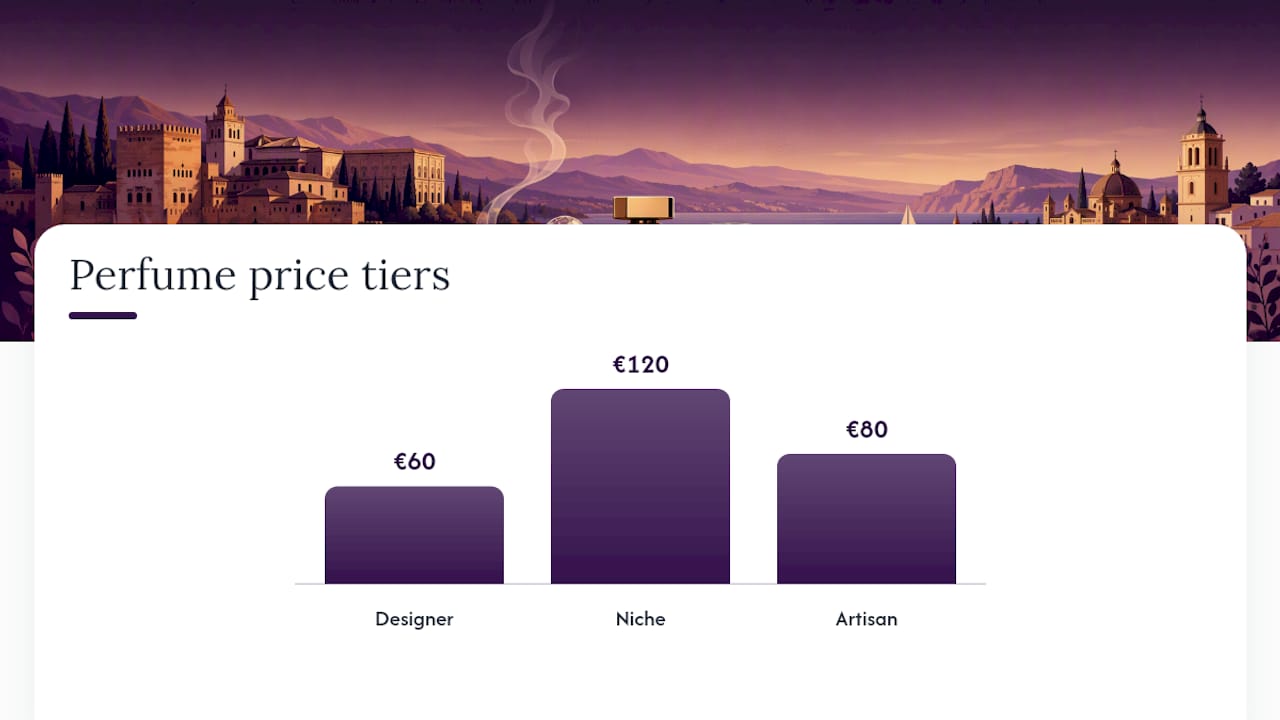
Price ranges in Spain (approximate, subject to retailer and concentration):
| Tier | Typical price range | What to expect |
|---|---|---|
| Designer | €60 | Widely available; incense often as a supporting note |
| Niche | €120 | Incense more dominant; higher natural-material content |
| Artisan | €80 | Small-batch; natural resins; samples usually available |
When do incense perfumes work best?
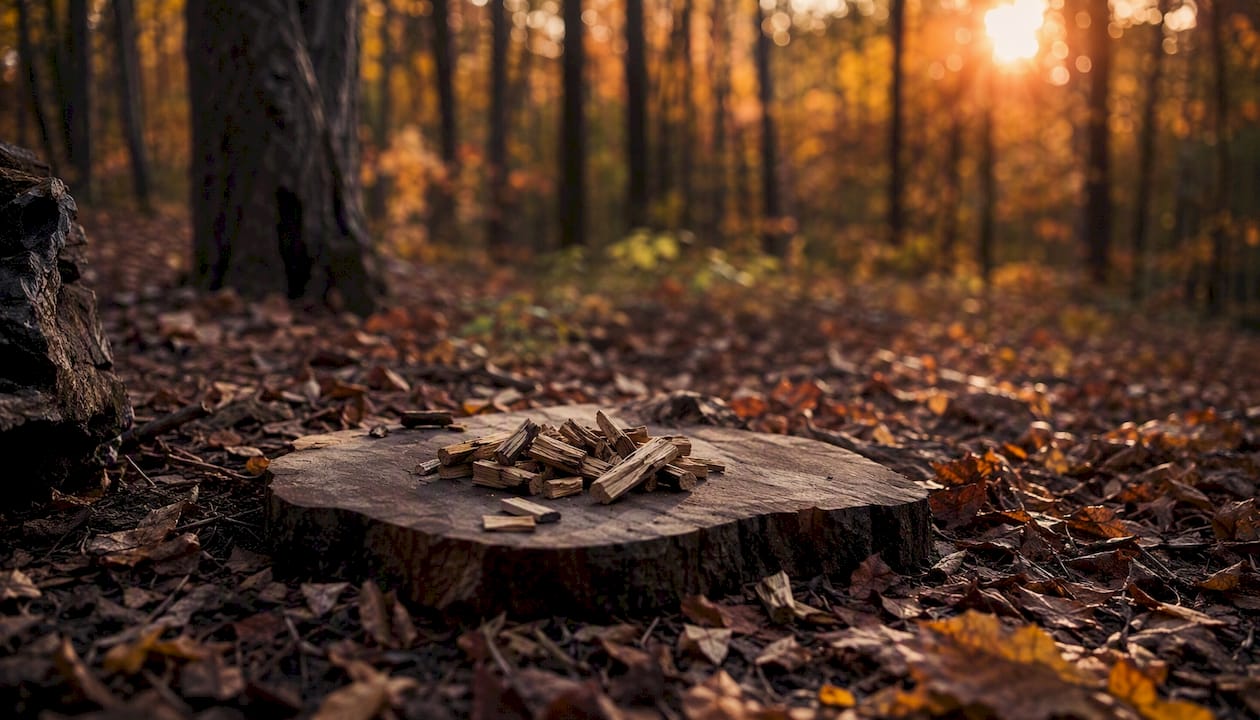
Esquire is direct on this: incense is a prized base note for colder months. Autumn and winter amplify its warmth and depth, and the lower ambient temperatures slow the diffusion, keeping the resin close to skin rather than evaporating quickly.
That said, not every incense fragrance is a winter-only proposition. Lighter compositions — those where incense supports a floral or woody heart rather than dominating — can work well in spring evenings or air-conditioned indoor settings. The key variable is how dominant the resin is. A soft incense accord in an EDP like Guerlain Encens Mythique reads differently in March than Amouage Interlude Man would.
For occasions, incense fragrances suit evening wear, formal settings, and contemplative moments. They carry a ceremonial quality that feels out of place in a gym or a casual beach afternoon, but entirely right at a dinner, a gallery opening, or a quiet evening at home. Travel to cooler climates — northern Spain in November, a weekend in the mountains — is another natural fit.
Pro Tip: Incense fragrances tend to project less in warm weather and more in cold. If you want the resin to be perceptible to others, apply to pulse points on the neck and wrists rather than clothing. On fabric, incense can linger for days — which is either a feature or a problem depending on your wardrobe.
How Maisonvoyageurparfum works with incense
Most commercial incense accords are engineered for consistency and mass appeal. They isolate the warm, amber-adjacent facets of olibanum and suppress the sharper, more medicinal edges — the result is pleasant but predictable.
At Maisonvoyageurparfum, the choice to work with natural Boswellia and ladanum is deliberate. We do not smooth the resin into something easier. The slightly rough, camphor-edged quality of real olibanum is part of what makes it feel alive on skin — and part of what makes it useful for introspection. Incense has been used in ceremony and contemplation across cultures for thousands of years. That history does not disappear when you put it in a bottle. We use restraint in the supporting notes so that the resin can speak. A fragrance built around natural incense does not need ten other materials competing for attention.
That restraint shows up in the formulation choices: a higher natural-resin load, fewer synthetic bridges, and supporting notes selected to frame rather than mask. The Mediterranean context matters too. Spanish and North African perfumery traditions have a long relationship with resins and incense, and that regional sensibility shapes how Maisonvoyageurparfum approaches the material — warmer and more personal than the cold, ecclesiastical interpretations common in northern European niche perfumery.
For buyers who want to test before committing, samples and travel sizes are available directly through the brand’s site. The fragrance and introspection guide on the Maisonvoyageurparfum blog explains the psychological dimension of why incense-based scents tend to feel more meditative than other fragrance families.
Why incense deserves more than a seasonal recommendation
Most fragrance guides treat incense as a winter note and move on. That framing is too narrow, and it misses what makes incense genuinely interesting as an olfactory material.
Incense is one of the few fragrance materials with a documented history across nearly every human culture — burned in temples, used in burial rites, carried along trade routes from the Arabian Peninsula to medieval Europe. That depth of association does not make it heavy or inaccessible. It makes it resonant. When you wear an incense-forward fragrance, you are wearing something that carries meaning beyond its chemistry.
The contemporary resurgence of incense in perfumery, noted by GQ, reflects a broader shift toward materials that feel grounded and authentic. Synthetic musks and aquatic accords dominated the 1990s and 2000s. The current appetite is for something with more weight. Incense answers that.
For Maisonvoyageurparfum, incense fits naturally into a Mediterranean identity — a material that connects the brand’s Madrid roots to older perfumery traditions from across the sea. Wearing it is not a statement. It is a quiet, personal act. That is the kind of intentional perfume wearing that makes fragrance more than a finishing touch.
Maisonvoyageurparfum’s artisan incense option
Where most incense fragrances ask you to choose between austere and sweet, Maisonvoyageurparfum offers something quieter: a natural-resin composition that reads as personal rather than theatrical.

Available in Spain through the brand’s own site, with samples and travel sizes for first-time buyers. If you are not sure which scent fits your skin and your mood, the Inner Trip guided discovery method helps you find your way before you commit to a full bottle. Order a sample, wear it for a full day, and let the resin settle before you decide.
Where to read more and verify notes
For note definitions and community reviews, Fragrantica’s incense note page is the most thorough starting point — it lists descriptors, raw materials, and hundreds of tagged fragrances, which makes it useful for cross-referencing ingredient lists before you buy.
For editorial roundups and curated picks available in Spain, the GQ incense perfume guide and Esquire’s men’s incense roundup both offer well-researched starting points, with commentary on how different houses approach the material. Primor’s guide covers options available through Spanish retail channels specifically.
For the artisan perspective and sample ordering, Maisonvoyageurparfum is the place to start — the brand’s editorial content on base notes and longevity and on perfume and meditation adds useful context for anyone who wants to understand why incense-based fragrances feel different from other scent families.
Sources
- Los mejores perfumes con incienso que huelen a éxito y duran todo el día | GQ
- Los 8 mejores perfumes para hombre con olor a incienso
- Incienso
- Los mejores perfumes con incienso
- Los 10 mejores perfumes con incienso para ser el hombre …
Recommended
- Tipos de perfumería nicho en España: guía completa 2026 – Maison Voyageur
- Precios de perfumes de autor en España: guía práctica – Maison Voyageur
- Cata de perfumes: guía práctica para talleres y experiencias – Maison Voyageur
- Aromatherapy vs Perfumery: A Guide for Connoisseurs – Maison Voyageur
Les sept fragrances Maison Voyageur
- Manifesting · unisexe (69,99 €)
- Intuition · femme (69,99 €)
- Certainty · femme (69,99 €)
- Expansion · femme (69,99 €)
- Release · homme (69,99 €)
- Presence · homme (69,99 €)
- Inner Fire · homme (69,99 €)
Nouvelle ici ? Commence par le Discovery Set · les 7 fragrances en format voyage (40 €).