
Sustainable Perfumery: How to Choose Eco-Friendly Fragrances
Sustainable perfumery means evaluating a fragrance across its entire life cycle: from how raw materials are sourced and how the formula is made, to what happens to the packaging after use and where the scent molecules end up once they wash down the drain. That last part matters more than most shoppers realize. The single most practical step you can take right now is to choose a refillable format or ask the brand directly whether its fragrance molecules are biodegradable. Two reference points worth knowing: the EU’s Product Environmental Footprint (PEF) methodology, which gives formulators a standardized way to measure impact across the supply chain, and the COSMOS standard, which sets sourcing and processing criteria for natural and organic cosmetics. Artisanal brands like Maison Voyageur, which composes its fragrances in Madrid with 98% natural ingredients, apply these principles at the product level rather than as marketing language.
- Life cycle scope: ingredients, production, packaging, transport, and post-use fate
- Immediate action: ask for an INCI ingredient list and confirm refill availability before buying
- Key references: PEF/ACV methodology, COSMOS certification, Ecocert
Key Takeaways
Sustainable perfumery requires evaluating ingredients, packaging, production transparency, and post-use fate together — no single label or certification covers all four.
| Point | Details |
|---|---|
| Life cycle thinking | Evaluate fragrance impact across sourcing, production, packaging, and what happens after use. |
| Biodegradability over “natural” | Ask whether fragrance molecules persist in water, not just whether they come from plants. |
| Certifications have limits | COSMOS and Ecocert cover sourcing; neither assesses downstream aquatic persistence of scent molecules. |
| Packaging format matters | Refillable bottles and solid formats reduce waste most effectively when refills are actually available. |
| Maisonvoyageurparfum | Composed in Madrid with 98% natural ingredients and a published sourcing philosophy built for traceability. |
Table of Contents
- Why sustainable perfumery matters: the real environmental footprint
- Natural vs. synthetic ingredients: what actually determines environmental impact
- Packaging and circular models: refills, solids, and design for recycling
- Certifications, transparency, and trust signals: what seals mean and red flags
- How to choose a sustainable perfume: a practical checklist
- Practical formats that lower your fragrance footprint
- The science behind “down-the-drain” fragrance compounds
- How Maison Voyageur applies these criteria in practice
- Why traceability matters more than the “natural” label
- Maison Voyageur: slow luxury with a traceable origin
- Sources
Why sustainable perfumery matters: the real environmental footprint
The perfume industry creates pressure at every stage of its supply chain. Raw material extraction can deplete wild botanical populations. Production is energy-intensive, particularly the distillation and synthesis steps. Decorative glass and metal packaging generates significant waste. And transport emissions accumulate across a global supply network. Industry analyses confirm that these four areas, taken together, represent the main levers consumers and brands can act on.
The least visible impact is what happens after you spray. When fragrance molecules rinse off skin or clothing and enter the water system, wastewater treatment plants often cannot fully remove them. Synthetic musks in particular are designed to be stable and long-lasting, which is exactly what makes them useful in a bottle and problematic in a river. This “down-the-drain” pathway is where aquatic persistence becomes an ecological concern, not just a regulatory footnote.
71% of consumers say they look for more environmentally friendly products, according to figures cited by fragrance ingredient suppliers. That demand is now reshaping R&D priorities across the industry. (dsm-firmenich)
Consumer choices do move markets. Brands that see sustained demand for transparency tend to invest in lifecycle tools and reformulation. Choosing a fragrance with a clear ingredient list and a refillable bottle is not a symbolic gesture; it signals to the industry which practices to scale.
Natural vs. synthetic ingredients: what actually determines environmental impact
The instinct to reach for “natural” is understandable, but the label alone tells you very little. Natural sourcing carries its own trade-offs: land use, water consumption, biodiversity pressure on wild-harvested species, and the carbon cost of distillation. A natural ingredient extracted irresponsibly can leave a larger footprint than a well-designed synthetic alternative.
What to evaluate instead of the natural/synthetic binary:
- Biodegradability: does the molecule break down in water and soil within a reasonable timeframe, or does it persist?
- Persistence and bioaccumulation: some synthetic musks resist degradation and accumulate in aquatic organisms
- Sourcing pressure: is the botanical wild-harvested from a stressed population, or cultivated with responsible land management?
- INCI transparency: is every ingredient listed by its standardized International Nomenclature of Cosmetic Ingredients name so you can look it up?
A brief glossary worth knowing: ACV (Análisis del Ciclo de Vida, or Life Cycle Assessment) is a methodology that quantifies environmental impact across a product’s full life. PEF (Product Environmental Footprint) is the EU’s standardized version of that approach. Biodegradability refers to how quickly and completely a substance breaks down in the environment. Persistence describes the opposite: a compound that resists breakdown and remains active in ecosystems.
Pro Tip: When a brand lists “fragrance” or “parfum” as a single ingredient without further breakdown, that is a signal to ask for more detail. Reputable sustainable brands will provide a fuller INCI list or at least confirm which fragrance families they use and whether those molecules have been screened for persistence.
Some synthetics genuinely reduce pressure on scarce botanicals. Synthetic sandalwood, for example, removes demand from a slow-growing tree that has been over-harvested in several regions. The question is not natural versus synthetic but whether the ingredient has been evaluated for its full environmental profile. For guidance on natural raw materials and sourcing impact, the distinction between responsibly sourced naturals and high-persistence synthetics is where the real work happens.
Packaging and circular models: refills, solids, and design for recycling
Packaging is often the most visible sustainability variable, and it is also one of the most manipulated. A heavy glass bottle with a metal collar looks luxurious and feels premium, but from a lifecycle perspective it represents significant embedded energy and near-zero recyclability in most municipal systems. Industry guidance on design-for-recyclability points to a few practical principles: reduce material weight, eliminate mixed-material components that cannot be separated, and provide clear labeling so consumers know how to sort the packaging.
The formats that consistently reduce packaging impact:
- Refillable bottles: the outer vessel stays in use; only the inner cartridge or a bulk refill is replaced. This cuts glass and metal waste per use significantly
- Solid perfume bars: no bottle required; typically packaged in cardboard or a small tin that is easier to recycle than a glass atomizer
- Concentrates: higher fragrance-to-carrier ratio means less product per application, reducing both packaging frequency and solvent use
- Lightweight recyclable design: mono-material glass or aluminum with no glued-on labels or mixed-metal components
Refillable and solid formats can materially reduce packaging waste when paired with refill collection programs or genuinely recyclable materials. The caveat is “when implemented alongside” those systems. A refillable bottle that has no refill available to buy is just a marketing claim.
| Format | Packaging waste reduction | Practical limitation |
|---|---|---|
| Refillable bottle | High, if refills are available | Requires brand to maintain refill supply |
| Solid perfume bar | High | Lower scent intensity; not for all preferences |
| Concentrate | Moderate | Higher cost per unit; smaller market |
| Standard recyclable glass | Low to moderate | Depends on local recycling infrastructure |

Certifications, transparency, and trust signals: what seals mean and red flags
Certifications are useful shortcuts, but none of them covers every dimension of sustainability. Knowing what each one actually audits prevents you from treating a single seal as a complete answer.
| Certification | What it covers | Key limitation |
|---|---|---|
| COSMOS Organic / Natural | Ingredient sourcing, processing standards, and packaging criteria | Does not assess downstream persistence of fragrance molecules |
| Ecocert | Organic and natural ingredient thresholds, manufacturing practices | Scope varies by product category; check which standard applies |
| EU Ecolabel | Broader environmental criteria including packaging and biodegradability | Rarely applied to fine fragrance; more common in household products |
| PEF/ACV reference | Quantified lifecycle impact across multiple environmental categories | A methodology, not a consumer-facing label; requires brand to publish data |
| INCI list | Ingredient transparency (standardized naming) | Transparency only; does not indicate sourcing quality or persistence |
Red flags to watch for when evaluating a brand’s sustainability claims:
- “Natural” with no INCI list: the word natural has no legal definition in fragrance; without an ingredient list it is unverifiable
- Vague lifecycle claims: “eco-friendly formula” or “green production” with no methodology cited
- No refill or take-back option: a brand serious about packaging waste will have a practical answer to what happens to the bottle
- Unverifiable origin claims: “sustainably sourced” without naming the supplier, region, or certification body
- No response to direct questions: a brand that cannot or will not answer questions about biodegradability or sourcing is telling you something
The EU’s online dispute resolution portal exists for consumers who believe they have been misled by product claims, including environmental ones. Knowing it exists is useful leverage when evaluating whether a brand’s claims hold up.
For a deeper look at which aroma chemicals raise concern as emerging pollutants, the distinction between a certified natural ingredient and a persistent synthetic musk is worth understanding before you buy.
How to choose a sustainable perfume: a practical checklist
Use this sequence when evaluating any fragrance, whether at a counter or online.
- Request the INCI list. If the brand does not publish one and will not provide it on request, stop here.
- Check the format. Is a refill available? Is the packaging mono-material or clearly labeled for recycling?
- Ask about biodegradability. Specifically: have the fragrance molecules been screened for aquatic persistence? A credible brand will have an answer, even if it is partial.
- Look for a recognized certification. COSMOS or Ecocert for ingredient sourcing; a PEF/ACV reference for lifecycle data.
- Verify botanical sourcing. Where do key natural ingredients come from? Are they cultivated or wild-harvested? Is there a named supplier or region?
- Check production transparency. Does the brand disclose where and how the fragrance is made? Artisanal production in a named location is a traceable claim.
- Assess social sourcing. Are fair-trade or ethical-labor conditions mentioned for botanicals from high-risk supply chains (vanilla, jasmine, oud)?
Questions worth asking the brand directly:
- Which fragrance molecules in this formula have been assessed for biodegradability?
- What energy source powers your production facility?
- How should I dispose of the bottle, and is a refill available?
- Can you name the supplier or certification for your key botanicals?
Acceptable answers are specific and verifiable. Red flags are deflections, vague marketing language, or silence. For a practical guide to low-impact fragrance purchases, the checklist above maps directly onto the criteria that matter most at the formulation level.
Practical formats that lower your fragrance footprint
Changing the format you buy is one of the fastest ways to reduce impact without giving up quality.
- Solid perfume bars: no alcohol carrier, no glass bottle, minimal packaging. Apply directly to pulse points. Scent intensity is typically softer, which suits everyday wear
- Roll-on concentrates: a small metal or glass roller replaces a spray atomizer; the higher concentration means you use less per application
- Upcycled extracts: some artisanal brands use by-products from food or botanical processing (citrus peel, spent rose petals) as raw materials, reducing demand for virgin extraction
- Travel sizes as a trial format: a smaller bottle lets you verify you love a scent before committing to a full-size purchase, reducing the risk of waste from an unused bottle
- Layering technique: applying an unscented moisturizer to skin before fragrance extends longevity, so you use less product overall
Price-wise, solid bars and roll-ons tend to cost less upfront than full-size spray bottles, though the cost per application can be comparable or lower given the higher concentration. Refillable formats often carry a higher initial cost for the vessel, with lower per-refill pricing over time.
For context on fragrance in personal care products and when to be cautious about synthetic compounds, the same persistence concerns that apply to rinse-off fragrance apply to leave-on products.
The science behind “down-the-drain” fragrance compounds
The Great Lakes research changed how the fragrance industry thinks about post-use fate. Monitoring campaigns detected synthetic musks, specifically HHCB (galaxolide) and AHTN (tonalide), in sediments and fish tissue across the region. One yellow perch sample showed a concentration of 945 ng/g wet weight, a figure that demonstrated these compounds were not simply passing through aquatic systems but accumulating in the food web.
Synthetic musks detected in Great Lakes fish tissue at concentrations up to 945 ng/g wet weight show that fragrance molecules designed for stability on skin can persist through wastewater treatment and accumulate in aquatic organisms. The down-the-drain pathway is not a theoretical concern; it is a documented route of environmental exposure.
Wastewater treatment plants were not designed to remove fragrance molecules. Conventional activated-sludge processes can reduce some compounds, but persistent musks and certain aroma chemicals pass through largely intact. Once in receiving waters, they partition into sediments and are taken up by organisms. Transformation products, the compounds that form as a molecule partially degrades, can themselves be persistent or toxic, which means a molecule that appears to break down may simply become a different problem.
Pro Tip: When a brand mentions “biodegradable fragrance,” ask whether that assessment covers the full molecule or just the primary breakdown pathway. A compound might degrade under ideal laboratory conditions but behave differently in cold, low-oxygen river sediments.
Lifecycle tools like ACV and PEF are increasingly used by ingredient suppliers to quantify these trade-offs at the formulation level. For consumers, the practical implication is straightforward: favor brands that have screened their fragrance molecules for aquatic persistence and can tell you what they found.
How Maison Voyageur applies these criteria in practice
Maisonvoyageurparfum composes its fragrances in Madrid with 98% natural ingredients, a figure that is verifiable through the brand’s published ingredient information rather than a standalone marketing claim. The artisanal production model means small batches, a named location, and direct traceability from formula to bottle.
What that looks like in practice:
- Ingredient transparency: natural-origin ingredients listed by INCI name, with sourcing information available on the brand’s site
- Formulation philosophy: slow, deliberate composition that prioritizes ingredient quality over volume production, reducing the pressure to use cheaper, higher-persistence synthetics
- Artisanal production: made in Madrid, which means a short, auditable supply chain rather than a multi-continent manufacturing network
- Conscious sourcing: a focus on botanicals with traceable origins, consistent with the brand’s ethical production approach
Choosing a fragrance with a named origin, a published ingredient list, and a production philosophy built around natural materials is not a guarantee of zero impact. It is, however, a meaningful reduction in the unknowns — and unknowns are where greenwashing hides.
Readers can verify Maisonvoyageurparfum’s claims by requesting the full INCI list, checking the brand’s sustainable practices guide, and asking directly about the biodegradability profile of the fragrance molecules used. A brand that welcomes those questions is a brand that has thought through the answers.
Why traceability matters more than the “natural” label
The most common mistake conscious shoppers make is treating “natural” as the finish line. It is not. The label describes the origin of the molecules. It says nothing about what happened before or after.
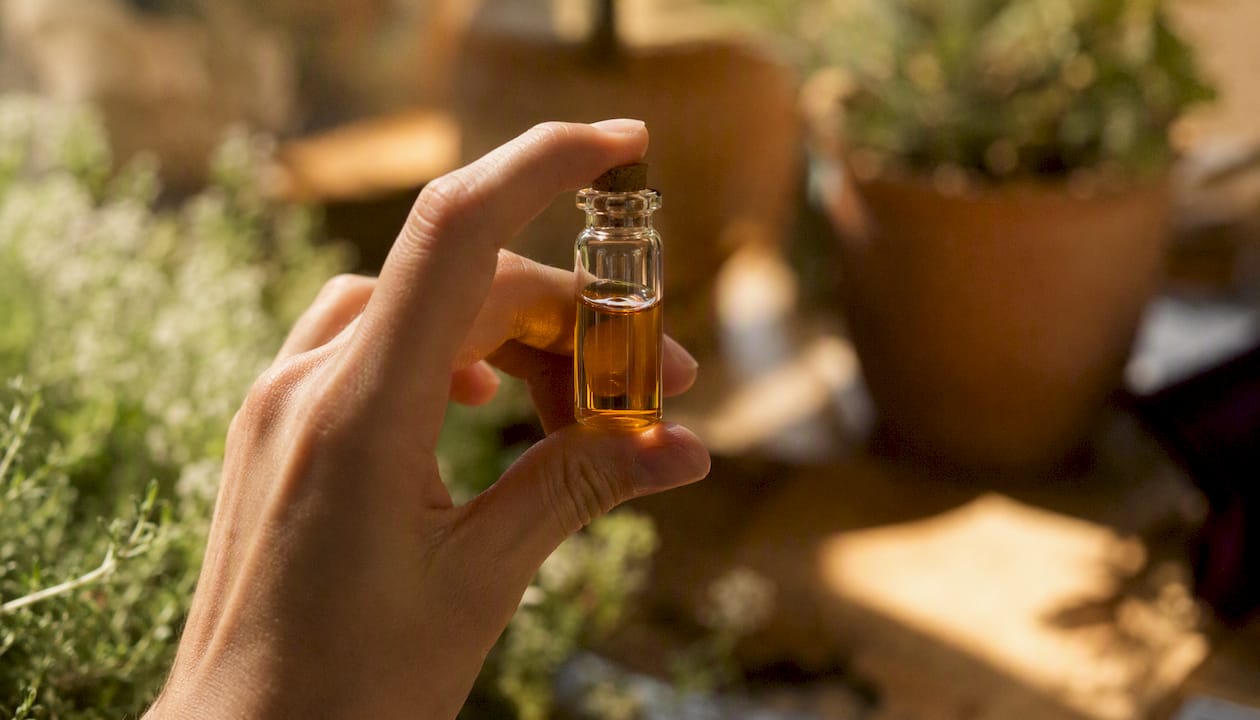
Traceability is the more useful standard. When a brand can name its botanical suppliers, describe its production process, and answer questions about what happens to its packaging, that is a brand that has done the work. Lifecycle data, even partial, is more honest than a certification that covers only one stage of the supply chain.
The fragrance you wear is a small decision with a surprisingly long chain of consequences. Slowing down to ask one or two specific questions before buying, about ingredients, about the bottle, about what happens when you wash it off, is what separates a genuinely considered purchase from one that just feels responsible.
Maison Voyageur: slow luxury with a traceable origin
For shoppers who have worked through the checklist above and want a fragrance that holds up to scrutiny, Maisonvoyageurparfum offers something specific: artisanal Mediterranean scents composed in Madrid, built on 98% natural ingredients, with a production philosophy that treats slowness as a quality standard rather than a constraint.

The brand’s slow luxury philosophy page explains the sourcing and production approach in plain terms, without the vague green language that makes most sustainability pages unreadable. If you want to understand what a fragrance is made of and why, that is the place to start. From there, the Seven Archetypes scent discovery tool helps you find a scent that fits your sensibility, not just your nose. Browse the collection, read the ingredient philosophy, and ask the questions this article gave you. The answers are there.
Sources
- Fragancias sostenibles | dsm-firmenich Perfumery & Beauty
- ¿Cuál es el impacto ambiental de la industria del perfume? - Ecoportal
- Perfumes naturales: beneficios para el medio ambiente - L’Oréal
- Sustainability LAB - STANPA
This article provides general information about sustainable fragrance practices and is not a substitute for professional environmental or regulatory advice. For specific claims or disputes, consult the relevant certification body or the EU consumer resources linked above.
Recommended
- The Environmental Impact of Perfume: What Conscious Buyers Should Know – Maison Voyageur
- How to Shop Consciously for Luxury Fragrances – Maison Voyageur
- Non-Toxic Fragrance for Conscious Shoppers: Top Picks – Maison Voyageur
- Cómo elegir perfume bajo impacto ambiental – Maison Voyageur
Les sept fragrances Maison Voyageur
- Manifesting · unisexe (69,99 €)
- Intuition · femme (69,99 €)
- Certainty · femme (69,99 €)
- Expansion · femme (69,99 €)
- Release · homme (69,99 €)
- Presence · homme (69,99 €)
- Inner Fire · homme (69,99 €)
Nouvelle ici ? Commence par le Discovery Set · les 7 fragrances en format voyage (40 €).