
The Environmental Impact of Perfume: What Conscious Buyers Should Know
Perfume carries a footprint that most of us never see. The biggest environmental pressures come from three places: how raw ingredients are grown and extracted, how the fragrance is manufactured (particularly the alcohol and synthesis steps), and what happens to fragrance chemicals once they wash down the drain. Three things you can do right now:
- Choose refillable bottles or solid perfumes to cut packaging waste and transport emissions.
- Ask your brand for LCA data or eco-design documentation before accepting any “natural” or “green” claim at face value.
- Avoid products that list persistent synthetic musks or phthalates in their ingredient disclosures.
The rest of this guide unpacks the evidence behind each of those steps, so you can make choices grounded in science rather than marketing.
Key Takeaways
The environmental impact of perfume is real and measurable across every stage of the lifecycle, from ingredient cultivation to downstream ecotoxicology, and reducing it starts with choosing formats and brands that have actually measured their footprint.
| Point | Details |
|---|---|
| Lifecycle hotspots | Raw material production and chemical transformation are the dominant impact contributors in most LCA studies. |
| “Natural” is not a guarantee | An RSC Green Chemistry LCA of 27 ingredients found renewable-origin materials do not consistently outperform synthetic ones on environmental metrics. |
| Downstream fate matters | Fragrance chemicals enter waterways through wastewater, are only partially removed by treatment plants, and can accumulate in sediments and biota. |
| Top consumer actions | Choose refillable or solid formats, request LCA data, and avoid products listing persistent synthetic musks or phthalates. |
| Maisonvoyageurparfum | Composed in Madrid with mostly natural ingredients using a slow, small-batch approach that supports direct sourcing transparency and lower consumption frequency. |
Table of Contents
- How a perfume’s environmental footprint builds across its lifecycle
- Ingredient sourcing: why “natural” doesn’t automatically mean lower impact
- Manufacturing and greenhouse-gas emissions: why alcohol and synthesis matter
- Packaging and distribution: what glass bottles, atomizers, and refills actually cost the planet
- Waste, wastewater, and ecotoxicology: what happens after the fragrance leaves your skin
- Sustainable alternatives and industry trends worth knowing
- What the science actually says: LCA evidence and the “natural vs. synthetic” question
- How to choose lower-impact perfumes: a practical checklist
- Trust signals: how to read certifications and green claims from brands
- Why slow perfumery changes the environmental equation
- Maisonvoyageurparfum’s approach to responsible fragrance
- Sources
How a perfume’s environmental footprint builds across its lifecycle
The ecological impact of perfume does not sit in one place. It accumulates across every stage, from the field where a flower is grown to the moment a fragrance molecule reaches a river.
The stages, roughly in order of typical impact weight:
- Raw material production: Often the largest contributor. Agricultural land use, fertilizer and pesticide inputs, water consumption, and the energy intensity of extraction all add up before a single bottle is filled.
- Chemical synthesis and transformation: Converting raw extracts into stable fragrance ingredients requires solvents, heat, and energy. Solvent losses here release volatile organic compounds (VOCs) into the air.
- Ethanol and alcohol production: Most liquid perfumes are 70–90% alcohol by volume. The sourcing and fermentation of that ethanol carries its own carbon and land-use cost.
- Packaging manufacturing: Glass, metal atomizer components, plastic caps, and cardboard boxes each require energy and materials to produce.
- Logistics and transport: Heavier glass bottles and long supply chains amplify transport emissions.
- Use and disposal: Fragrance chemicals released during application or washed off the skin enter wastewater systems, where treatment is incomplete.
No two formulas share the same profile. A perfume built on sustainably sourced, high-yield plant materials with bio-based ethanol and a refillable glass bottle will look very different from a mass-market fragrance with a complex synthetic base, a heavy bottle, and no end-of-life plan.
Ingredient sourcing: why “natural” doesn’t automatically mean lower impact
This is where the most persistent misconception lives. A life-cycle assessment of 27 fragrance ingredients published in Green Chemistry (RSC Publishing) found that renewable-origin ingredients do not consistently show lower environmental impacts than fossil-based ones. The outcome depends on cultivation practices, extraction yield per hectare, and how processing byproducts are managed.
Some specific sourcing pressures worth knowing:
- Sandalwood: Decades of overharvesting have pushed several wild species toward protected status. Plantation-grown sandalwood exists, but yields are slow and land conversion remains a concern in some regions.
- Oud (agarwood): Wild agarwood trees are listed under CITES Appendix II due to overharvesting pressure. Cultivated oud is available, but sourcing transparency varies widely across the market.
- Large-scale essential oil crops: Rose, jasmine, and vetiver require enormous quantities of plant material per kilogram of extract. Intensive cultivation can mean high water use, pesticide inputs, and monoculture pressure on local biodiversity.
A lower-impact natural ingredient tends to come from a high-yield crop grown with regenerative practices, processed with efficient extraction, and supported by co-product valorization (using the leftover plant material rather than discarding it).
Pro Tip: Ask any brand three specific questions: Where is this ingredient grown? What is the extraction yield per hectare? And what happens to the byproduct? A brand that can answer all three is operating with genuine transparency.
Manufacturing and greenhouse-gas emissions: why alcohol and synthesis matter
The production stage is often underestimated. Ethanol alone can account for a substantial share of a liquid fragrance’s carbon footprint, depending on whether it is derived from sugarcane, corn, or wheat, and how the fermentation facility is powered. Energy-intensive distillation and synthesis steps compound that load.
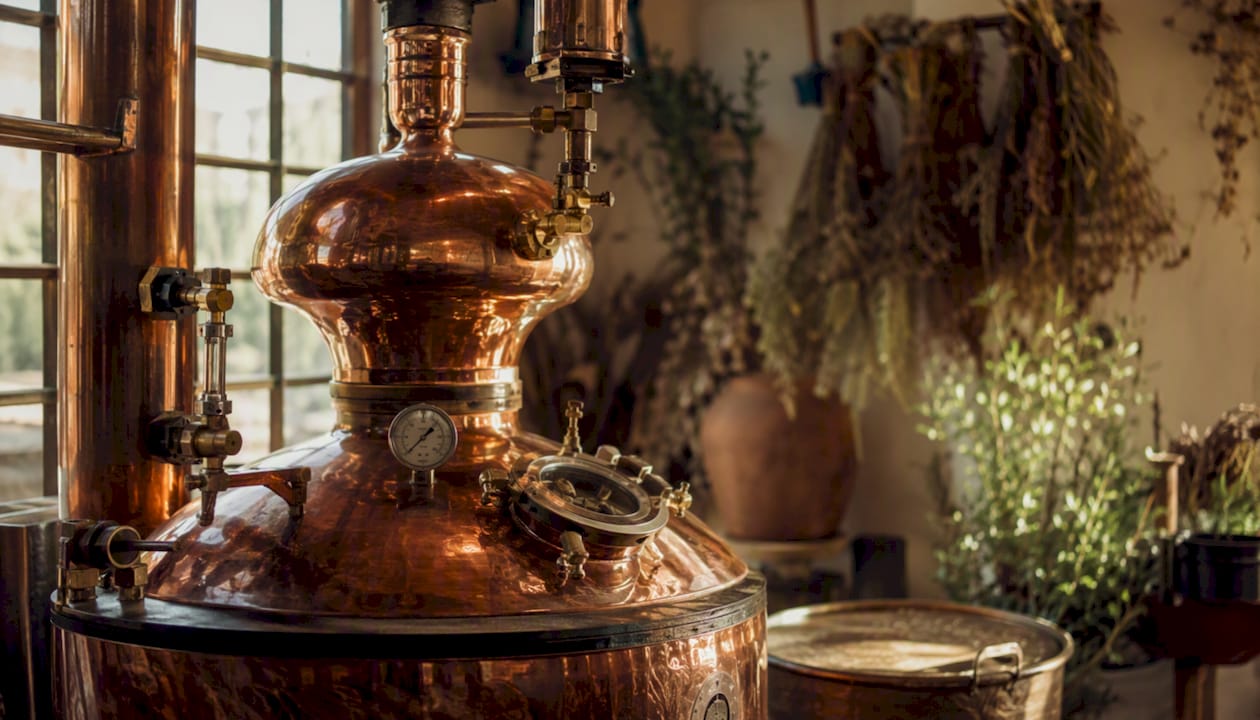
The RSC Green Chemistry LCA study identified raw-material production and chemical transformation as the dominant contributors across most of the 27 ingredients assessed. Solvent losses during synthesis were a recurring secondary hotspot, releasing VOCs that contribute to ground-level ozone formation.
Lower-impact production practices that exist today:
- Bio-based ethanol with certified sustainable sourcing (e.g., from sugarcane certified under Bonsucro or equivalent schemes)
- Solvent-recovery systems that capture and reuse solvents rather than releasing them
- Green chemistry process changes that reduce reaction steps and minimize waste streams
- On-site or purchased renewable energy for distillation and blending facilities
Small-batch artisanal production tends to use less energy per unit than continuous industrial processes, though the relationship is not automatic. What matters is whether the producer has actually measured and optimized their process.
Packaging and distribution: what glass bottles, atomizers, and refills actually cost the planet
Glass is heavy. A standard 50ml perfume bottle can weigh more than the fragrance it contains, and that weight drives transport emissions across a global supply chain. Glass is also infinitely recyclable in principle, but mixed-material atomizers (metal springs, plastic dip tubes, rubber gaskets) make most perfume bottles difficult to recycle in practice.
Key packaging considerations:
- Single-use glass bottles: High material and transport footprint; recyclability is limited by mixed components.
- Refillable systems: A refillable bottle used across multiple fill cycles spreads the manufacturing footprint over more uses, reducing the per-use impact significantly.
- Solid perfumes and concentrates: No alcohol, no atomizer, lighter packaging. The trade-off is a different application experience and sometimes a shorter scent throw.
- Cartridge-based refill formats: Emerging in niche perfumery; reduce outer packaging waste while keeping the bottle in circulation.
In the United States, Extended Producer Responsibility (EPR) laws are accelerating packaging redesign across consumer goods, creating regulatory pressure on brands to design for recyclability and reuse. Several states have already adopted EPR frameworks for packaging, which means the refillable formats that conscious buyers prefer are increasingly aligned with where regulation is heading.
Pro Tip: When evaluating a refill program, ask the brand what percentage of the bottle is made from recycled content, whether the atomizer is separable for recycling, and whether they comply with or exceed EPR requirements in your state.
Waste, wastewater, and ecotoxicology: what happens after the fragrance leaves your skin
This is the part of the story that rarely appears on a label. A 2024 review in Frontiers in Environmental Science summarizes monitoring and ecotoxicology studies showing that fragrance chemicals enter waterways through wastewater, are only partially removed by treatment plants, and can accumulate in sediments and aquatic organisms.
The main environmental concerns downstream:
- Persistent synthetic musks (nitromusks and polycyclic musks): Some are lipophilic, meaning they accumulate in fatty tissue. Monitoring studies in the Great Lakes documented synthetic musks in sediments and fish tissue, illustrating how down-the-drain emissions translate into trophic transfer.
- Phthalates: Used as fixatives or solvents in some formulations. A Greenpeace chemical analysis of perfumes found measurable phthalate levels in several products, raising concerns about persistence and endocrine disruption.
- Transformation products: Some fragrance molecules break down in the environment into compounds that are more toxic than the parent substance.
- Sewage sludge application: When fragrance chemicals adsorb onto sludge solids in treatment plants, that sludge is sometimes applied to agricultural land, creating a secondary pathway into soils and groundwater.
Consequences for ecosystems include disrupted endocrine function in fish, reduced reproductive success in invertebrates, and altered microbial communities in aquatic sediments. These are not theoretical risks. They are documented in peer-reviewed monitoring literature across multiple continents.
Sustainable alternatives and industry trends worth knowing
The good news: the fragrance industry has more genuinely lower-impact options than it did a decade ago. The challenge is separating real progress from marketing language.
Practical format alternatives available to consumers today:
- Solid perfumes: Wax or oil-based, no alcohol, minimal packaging. Lower transport weight and no atomizer waste.
- Concentrated parfum oils: Higher fragrance concentration means less product used per application, extending the life of each bottle.
- Refill stations: Some niche brands offer in-store or mail-in refill services that keep the original bottle in use across multiple cycles.
- Cartridge and pod systems: Reduce outer packaging; the cartridge itself still needs to be designed for end-of-life recovery to close the loop.
On the ingredient and chemistry side, meaningful trends include:
- Macrocyclic musks: Biodegradable alternatives to persistent polycyclic musks, with a lower bioaccumulation profile.
- Biosynthetic isolates: Molecules produced via fermentation rather than extraction from endangered plants, with transparent LCA documentation from some suppliers.
- Designed-for-degradability molecules: A growing area in green chemistry, where fragrance molecules are engineered to break down predictably in the environment.
- Circular packaging materials: Recycled glass, bio-based plastics, and refillable aluminum formats are all commercially available in the niche and artisanal segment.
Business models matter too. Local small-batch production shortens supply chains. Longer-lasting parfum concentrations reduce how often you need to repurchase. Refill-as-service models keep bottles out of the waste stream entirely.
What the science actually says: LCA evidence and the “natural vs. synthetic” question
The most important finding from the scientific literature is also the most counterintuitive. The RSC Green Chemistry LCA of 27 fragrance ingredients showed wide variance across ingredients and confirmed that renewable origin does not consistently translate into lower environmental impact. Some synthetic ingredients outperformed their natural equivalents on climate, land use, and water metrics, depending on how they were produced.
What LCA actually measures, and where it has limits:
- What it covers: Energy use, greenhouse gas emissions, land use, water consumption, and sometimes ecotoxicity, across the full production chain.
- What it often misses: Biodiversity impacts at specific sites, social impacts on farming communities, and the fate of fragrance chemicals after consumer use.
- Data limitations: Fragrance formulations are often proprietary, so LCAs of finished products rely on estimated or averaged ingredient data rather than actual supplier figures.
These four levers are where a brand’s actual environmental commitment shows up, or doesn’t.
A comprehensive volume on fragrance fate and ecotoxicology compiled by Springer documents detection methods and ecological effects across water, soil, and marine environments, reinforcing that the downstream fate of fragrance chemicals is a real and measurable problem, not a hypothetical one.
Pro Tip: When a brand claims low impact, ask whether they use a recognized eco-design tool like GREEN MOTION™ or report an E-factor for their synthesis steps. These are specific, verifiable metrics. A brand that can point to either one is doing more than most.
How to choose lower-impact perfumes: a practical checklist
Choosing a lower-impact fragrance does not require a chemistry degree. It requires asking the right questions and knowing which answers are meaningful.
- Prefer refillable, solid, or concentrated formats. These reduce packaging waste and, in the case of concentrates, lower consumption frequency.
- Look for documented LCA or eco-design data. A brand that has measured its footprint is more credible than one that simply claims to be “natural.”
- Check packaging recyclability and recycled content. Ask whether the atomizer is separable and what percentage of the bottle is made from post-consumer recycled glass.
- Favor transparent ingredient sourcing. Regenerative agriculture, certified sustainable wildcrafting, and co-product valorization are all meaningful signals.
- Avoid products listing persistent synthetic musks or phthalates. Check the ingredient labels and cross-reference with published concern lists.
Questions worth asking a brand directly:
- Where are your key aromatic ingredients grown or synthesized, and by whom?
- Do you have an LCA or eco-design assessment available for your formulations?
- What is your refill program, and how does it work in the U.S.?
- What percentage of your packaging uses recycled content?
- How should I dispose of an empty bottle and its components?
Pro Tip: Treat vague claims like “eco-friendly” or “clean” as prompts for follow-up questions, not answers. Third-party verification (COSMOS, Ecocert, or a published carbon footprint declaration) is the difference between a claim and a commitment.
Trust signals: how to read certifications and green claims from brands
Certifications are useful, but they are not all equivalent. Understanding what each one covers helps you weigh them accurately.
- COSMOS and Ecocert: These certifications cover ingredient origin (percentage of natural and organic content) and some manufacturing practices. They do not certify a full lifecycle assessment or downstream ecotoxicological safety.
- Leaping Bunny: Covers cruelty-free testing practices. It says nothing about environmental footprint.
- Carbon footprint declarations: A brand that publishes a verified carbon footprint per bottle has done more work than one that holds a natural-ingredient certification alone.
- IFRA Transparency List: The International Fragrance Association publishes a list of fragrance chemicals in use. A BCPP analysis of that list found significant data gaps for many chemicals and identified dozens linked to high-concern hazards including cancer, endocrine disruption, and reproductive toxicity. Presence on the list does not mean a chemical is safe or fully characterized.
Watch for these warning signs in brand communications:
- “Natural” or “eco” claims with no ingredient list or third-party verification
- Vague references to “sustainable sourcing” with no named origin or certification
- Undisclosed “fragrance” or “parfum” as a catch-all ingredient entry, which can mask dozens of individual chemicals
- Carbon-neutral claims without a published methodology or third-party audit
A brand that discloses its full ingredient list, names its sourcing regions, and can point to a third-party certification or LCA summary is operating at a meaningfully higher standard than one that relies on aesthetic signals alone. For a deeper look at harmful chemicals in conventional perfumes, the ingredient-level concerns are worth understanding before you buy.
Why slow perfumery changes the environmental equation
There is a tendency in sustainability conversations to focus on certifications and carbon offsets, as if the right label resolves the underlying problem. What actually changes the footprint is a different set of decisions made much earlier: how much of each ingredient you use, where it comes from, and how the formula is built.
Artisanal, small-batch perfumery tends to produce those decisions differently. When a perfumer works slowly, with a small number of carefully chosen ingredients, the sourcing relationship is direct enough to ask the questions that matter: yield, farming practice, extraction method. There is no anonymized supply chain to hide behind. The formula itself tends to use higher concentrations of fewer materials, which means less alcohol, less packaging per unit of scent, and a longer-lasting product that reduces repurchase frequency.
That is not a guarantee of lower impact. A small-batch perfume built on overharvested naturals with no refill option is not automatically better than a well-designed synthetic. But the conditions for genuine transparency are more present in slow perfumery than in mass production, and that transparency is where real accountability begins.
Maisonvoyageurparfum’s approach to responsible fragrance
Conscious shoppers often find themselves choosing between mass-market products with opaque supply chains and niche options that make sustainability claims without the data to back them.

The slow-luxury philosophy at Maisonvoyageurparfum means smaller batches, direct ingredient relationships, and a higher natural concentration that reduces how much product you need per application. Each scent is built for depth and longevity, not volume. For readers who have worked through the checklist above, the practical next step is to explore the collection and ask the brand directly about sourcing, formats, and refill options. Start at the slow-luxury page to see how the philosophy translates into specific product and sourcing choices.
Sources
These are the primary studies and reports cited throughout this article, each worth consulting if you want to go deeper on a specific dimension of the topic.
- Environmental profile of the production of fragrance ingredients used in cosmetic products: comparative analysis of results obtained by life cycle ass … - Green Chemistry (RSC Publishing) DOI:10.1039/D2GC04860D
- Frontiers in Environmental Science review on environmental and health impacts of cosmetics (fragrances) - 2024
- Right to Know: Just How Hazardous are Fragrances? - BCPP (2025)
- Greenpeace report on chemicals in perfumes (Eau de Tóxicos)
Recommended
- How to Shop Consciously for Luxury Fragrances – Maison Voyageur
- Harmful Chemicals in Mass Perfumes: What to Avoid – Maison Voyageur
- Cómo elegir perfume bajo impacto ambiental – Maison Voyageur
- Non-Toxic Fragrance for Conscious Shoppers: Top Picks – Maison Voyageur
Les sept fragrances Maison Voyageur
- Manifesting · unisexe (69,99 €)
- Intuition · femme (69,99 €)
- Certainty · femme (69,99 €)
- Expansion · femme (69,99 €)
- Release · homme (69,99 €)
- Presence · homme (69,99 €)
- Inner Fire · homme (69,99 €)
Nouvelle ici ? Commence par le Discovery Set · les 7 fragrances en format voyage (40 €).