
Non-Toxic Fragrance for Conscious Shoppers: Top Picks
For most conscious shoppers, Maisonvoyageurparfum is the clearest starting point. The brand’s artisanal Mediterranean collection uses natural ingredients, publishes ingredient details on each product page, and ships directly to U.S. customers in full-size bottles, travel sizes, and curated sets. That combination of transparency, craftsmanship, and accessibility is rare in the non-toxic fragrance space.
A few other categories round out the shortlist for different needs:
- Maisonvoyageurparfum — best overall for sensitive, conscious shoppers who want 98% natural content and guided scent discovery. Available at maisonvoyageurparfum.com with sample and travel-size options.
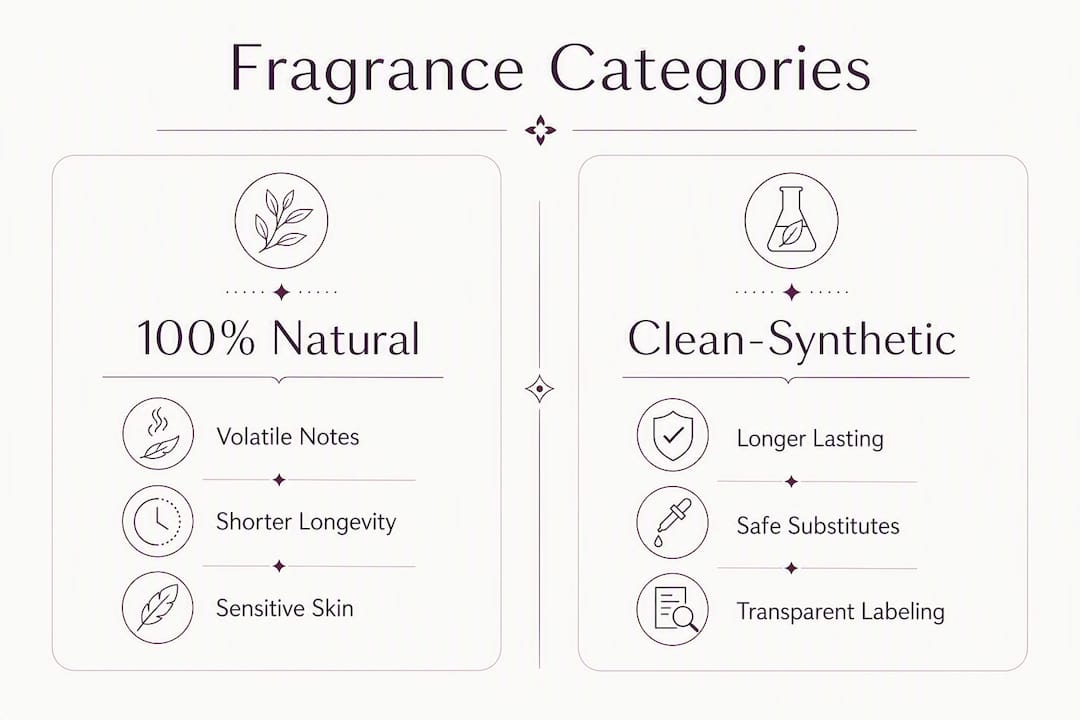
- 100% natural botanical options (e.g., brands like Abel or Heretic) — best for shoppers who want zero synthetics, even safe ones. Typically available via brand sites and clean-beauty retailers like The Detox Market.
- Clean-synthetic blends (e.g., Henry Rose, Merit, Phlur, By Rosie Jane, Maison Louis Marie) — best for longevity and a wider scent palette while still avoiding phthalates and synthetic musks. Available at Sephora’s Clean Fragrance section and brand sites.
- Budget-conscious clean options — best for first-time clean-fragrance buyers who want to test the category without a large upfront cost.
Start with a sample or travel size from Maisonvoyageurparfum before committing to a full bottle. That single step removes most of the purchase risk.
Table of Contents
- How do these non-toxic fragrances compare side by side?
- How do you choose a truly non-toxic fragrance?
- What fragrance ingredients should you actually avoid?
- Natural vs. “clean” synthetics: which one actually lasts longer?
- Why Maison Voyageur stands out for sensitive, conscious buyers
- How were these picks chosen?
- What do customers say about these non-toxic perfumes?
- Key Takeaways
- Why the fragrance you choose is worth thinking about
- Maisonvoyageurparfum: where to start your clean-scent search
- Useful sources and further reading
How do these non-toxic fragrances compare side by side?
The table below covers the dimensions that actually move purchase decisions: what each category is best for, how natural the formula is, which ingredients are excluded, price range, longevity, where to buy in the U.S., and any certifications worth noting.

| Category | Best for | % Natural / synthetics | Ingredients avoided | Price range | Longevity | U.S. availability | Certifications / claims |
|---|---|---|---|---|---|---|---|
| Maisonvoyageurparfum | Sensitive skin, introspective shoppers, gift buyers | 98% natural | Phthalates, synthetic musks, parabens | premium price | 4–6 hours | maisonvoyageurparfum.com; travel sizes and sets | Natural formulation claim; ingredient transparency on product pages |
| 100% natural botanical | Zero-synthetic purists, allergy-aware shoppers | 100% natural | All synthetics, including safe ones | wider price range | 2–4 hours | Brand sites, The Detox Market | COSMOS or USDA Organic (varies by brand) |
| Clean-synthetic blend | Longevity seekers, wider scent palette | mostly natural with vetted synthetics | Phthalates, synthetic musks, parabens | mid-range price | 5–8 hours | Sephora Clean, brand sites | Leaping Bunny, EWG Verified (varies by brand) |
| Budget clean option | First-time clean-fragrance buyers | mostly natural | Phthalates, synthetic musks | budget price | 3–5 hours | Brand sites, select online retailers | Vegan/cruelty-free (varies) |
Maisonvoyageurparfum
Slowly composed in Madrid using Mediterranean botanicals, each scent is designed for personal reflection rather than mass appeal. The 98% natural formulation means the ingredient list is short and legible. Travel sizes and sample sets make it easy to explore without committing to a full bottle.
- Pros: 98% natural content, full ingredient transparency, guided scent discovery, meaningful gift options, U.S. direct shipping
- Cons: Premium price point; scent families lean contemplative rather than bold
100% natural botanical brands
These are built entirely from plant-derived absolutes, essential oils, and resins. No synthetics at all, which appeals to shoppers with chemical sensitivities. The tradeoff is shorter wear time and higher variability batch to batch.
- Pros: Zero synthetic exposure, often COSMOS or USDA Organic certified, strong ethical story
- Cons: Shorter longevity (2–4 hours), higher cost per wear, some natural allergens still present
Clean-synthetic blend brands
Brands like Henry Rose, Merit, Phlur, By Rosie Jane, and Maison Louis Marie use a mix of natural materials and carefully vetted synthetics to achieve longevity and scent complexity. They avoid the most problematic chemicals while offering more projection.
- Pros: Longer wear, wider scent variety, often EWG Verified or Leaping Bunny certified, widely available at Sephora
- Cons: Not fully natural; some shoppers prefer to avoid all synthetics regardless of safety classification
How do you choose a truly non-toxic fragrance?
The phrase “non-toxic fragrance” is not a regulated term in the United States. Any brand can use it. That means the work of verification falls to you, and a short checklist makes that process fast.
Positive signals to look for
- Full INCI list published — every ingredient listed by its standardized international name, not just marketing descriptors. A brand that reads ingredient labels openly has nothing to hide.
- Third-party certification — COSMOS, USDA Organic, EWG Verified, or Leaping Bunny logos are independently audited, not self-declared.
- Sample or travel-size availability — a brand confident in its formula offers you a way to test before buying.
- Clear “free from” callouts — specific exclusions (phthalates, synthetic musks, parabens) stated by name, not vague “clean” language.
- Visible customer reviews — real, dated reviews on the brand site or a third-party retailer.
- Return or satisfaction policy — signals the brand stands behind what it sells.
Questions worth asking the brand or retailer
- “Do you publish the full INCI list for each batch?”
- “Which synthetic musks or phthalates do you explicitly exclude?”
- “Is your ‘fragrance’ ingredient a proprietary blend, and if so, what does it contain?”
- “Are your certifications current and independently audited?”
Red flags to walk away from
- The word “fragrance” or “parfum” appears alone in the ingredient list with no further disclosure. Under U.S. law, fragrance disclosure is not required, so a single “fragrance” entry can legally hide dozens of undisclosed chemicals.
- Aggressive “100% safe” or “completely non-toxic” claims with no supporting evidence or certification.
- No sample option and a strict no-return policy.
- Certifications that link to no verifiable third-party body.
Conscious shopping for luxury fragrances means prioritizing transparency over marketing language. The brands worth trusting are the ones that make verification easy.

What fragrance ingredients should you actually avoid?
The concern with conventional perfumes is not scent itself. It is the class of synthetic chemicals that can accompany it. Here are the most commonly flagged ingredients, based on guidance from the Environmental Working Group and independent researchers:
- Phthalates (diethyl phthalate / DEP in particular) — used as solvents and fixatives; linked to endocrine disruption in multiple peer-reviewed studies
- Synthetic musks (galaxolide, tonalide, musk ketone) — persistent in the environment and in human tissue; some are classified as potential endocrine disruptors
- Benzophenone and related UV filters — used in some formulas for stability; flagged by EWG as a possible carcinogen
- Formaldehyde-releasing preservatives (DMDM hydantoin, quaternium-15) — less common in fine fragrance but present in some body sprays
- Styrene — a solvent sometimes found in fragrance compounds; classified as a possible human carcinogen
- Oakmoss and treemoss absolutes (in high concentrations) — natural but flagged by IFRA’s transparency list as common sensitizers
U.S. fragrance regulation is largely self-governed: the FDA does not require pre-market approval of fragrance ingredients, and the FTC’s Fair Packaging and Labeling Act does not mandate full ingredient disclosure for fragrances. The industry’s own body, IFRA, sets voluntary usage limits. That gap is precisely why reading the INCI list yourself matters.
Pro Tip: Before buying a full bottle, request a sample and apply a small amount to the inside of your wrist. Wait 24 hours. Sensitive skin often reacts to a formula within that window, and a sample costs far less than a $150 bottle you cannot wear.
A detailed breakdown of synthetic ingredients to avoid is available on the Maisonvoyageurparfum blog, including a 2026-focused list of controversial compounds.
Natural vs. “clean” synthetics: which one actually lasts longer?
This is the question most guides skip. The honest answer: 100% natural perfumes and clean-synthetic blends behave very differently on skin, and neither is universally better.
100% natural perfumes
Natural absolutes, essential oils, and resins are volatile by nature. Top notes (citrus, light florals) evaporate within an hour. Middle and base notes (woods, resins, musks from natural sources) linger, but the overall arc is shorter than a synthetic-boosted formula. The complexity of natural scent comes from hundreds of naturally occurring molecules working together, which makes each wear slightly different. That is a feature for some, a frustration for others.
Clean-synthetic blends
Vetted synthetics like Ambroxan (derived from ambergris chemistry) or Iso E Super extend wear time significantly. They also allow perfumers to replace known sensitizers (oakmoss, certain tree mosses) with safer alternatives that smell similar. The result is more predictable longevity, typically 5–8 hours, and better projection.
How to make natural fragrances last longer
- Apply to pulse points: wrists, inner elbows, base of the throat, behind the knees. Warmth activates the scent.
- Layer with an unscented moisturizer first. Dry skin absorbs fragrance faster; a hydrated base slows evaporation.
- Apply to hair or clothing for longer diffusion, but test on fabric first since natural oils can stain.
- Store away from light and heat. Natural formulas degrade faster than synthetics when exposed to UV or temperature swings.
- Use a base-note booster: a drop of sandalwood or vetiver oil applied before your perfume anchors the lighter notes.
For sensitive skin, lower-concentration formats (eau de cologne or eau fraîche) reduce the risk of irritation while still delivering the scent experience. Testing on clothing rather than directly on skin is a practical first step.
Safe synthetics are a reasonable choice when the goal is to replace a known sensitizer while preserving longevity. The key is knowing which synthetics are in the bottle, which is why INCI transparency matters even for “clean” formulas.
Why Maison Voyageur stands out for sensitive, conscious buyers
Maisonvoyageurparfum occupies a specific and uncommon position: artisanal Mediterranean perfumery composed slowly in Madrid, with formulations that reach 98% natural content. That is not a marketing claim layered over a conventional formula. It reflects a deliberate philosophy of slow luxury, where the time taken to source and blend natural materials is part of what you are buying.
For sensitivity-minded shoppers, the practical implications are real. Fewer synthetic compounds means a shorter, more legible ingredient list. Product pages on the brand site carry ingredient details, and the brand’s guided scent discovery tool, built around seven fragrance archetypes, helps shoppers identify which scent family resonates before they commit to a purchase.
Travel sizes and sample sets reduce purchase risk for anyone with sensitivities or simply an uncertain nose. The brand ships directly to U.S. customers, and the slow-luxury philosophy page explains the sourcing and craftsmanship behind each formula in plain language.
The intentional use of fragrance for wellbeing is a thread that runs through the brand’s content, connecting scent choice to mindfulness rather than trend. For shoppers who want their fragrance to mean something, that framing is more than aesthetic.
How were these picks chosen?
Every entry on this shortlist was evaluated against the same criteria. No brand was included on the basis of marketing claims alone.
Selection criteria:
- Ingredient transparency: full or near-full INCI list published on the brand’s product pages
- Percent natural content: preference for formulas at or above 90% natural, with clear disclosure of any synthetics used
- Specific chemical exclusions: confirmed absence of phthalates, synthetic musks (galaxolide, tonalide), parabens, and formaldehyde-releasing preservatives
- Third-party availability in the U.S.: brand site direct, Sephora Clean, The Detox Market, or equivalent clean-beauty retailer
- Reviewer wear tests: real-world wear experience across skin types and climates, not lab claims alone
- Price range: options across $25–$220 to reflect different budgets
- Certifications: USDA Organic, COSMOS, EWG Verified, and Leaping Bunny were noted where present and independently verified
U.S. availability note: All shortlisted options ship to U.S. addresses via brand sites. Clean-synthetic blend brands are additionally available through Sephora’s Clean Fragrance category, which makes them accessible for in-store testing. Maisonvoyageurparfum ships directly to U.S. customers with travel-size and sample options available at checkout.
Certifications were treated as supporting evidence, not primary qualifiers. A brand with full INCI transparency and confirmed chemical exclusions but no formal certification can still be a trustworthy choice. A certification without transparency is not sufficient on its own.
What do customers say about these non-toxic perfumes?
Customer feedback on clean and natural fragrances tends to cluster around a few consistent themes: the scent experience itself, how the formula behaves on skin, and whether the brand’s transparency claims hold up after purchase.
For 100% natural botanical options, reviewers frequently note that the scent evolves noticeably on skin, opening bright and drying down to something warmer and more personal. The shorter longevity is the most common criticism, though many wearers find reapplication a small price for knowing exactly what is on their skin.
Clean-synthetic blend brands like Henry Rose, Phlur, and By Rosie Jane consistently receive praise for longevity and projection. Shoppers with sensitivities report fewer reactions than with conventional department-store fragrances, though individual responses vary. The availability of these brands at Sephora means customers can test in-store before buying, which reduces the guesswork considerably.
Maisonvoyageurparfum draws a specific kind of response. Customers describe the scents as quiet and considered, the kind that prompt people to ask what you are wearing rather than announcing themselves across a room. The guided discovery experience, built around personal archetypes, is frequently cited as the reason buyers feel confident in their choice. The scent therapy dimension of the brand resonates with shoppers who want their fragrance to do more than smell good.
Across all categories, the pattern is clear: shoppers who start with a sample or travel size report higher satisfaction and fewer returns. That single habit, sample before you commit, is the most consistent piece of advice across thousands of clean-fragrance reviews.
Key Takeaways
The clearest path to a non-toxic fragrance you will actually wear is this: start with a sample, check the INCI list, and choose a brand that names what it excludes.
| Point | Details |
|---|---|
| Check the INCI list first | Any brand worth trusting publishes every ingredient by its standardized name, not just “fragrance.” |
| Know what to avoid | Phthalates, synthetic musks (galaxolide, tonalide), and formaldehyde-releasing preservatives are the top chemicals to screen for. |
| Natural ≠ longer lasting | 100% natural perfumes typically last 2–4 hours; clean-synthetic blends extend wear to 5–8 hours. |
| Sample before you buy | Travel sizes and sample sets reduce purchase risk, especially for sensitive skin. |
| Maisonvoyageurparfum | 98% natural, ingredient-transparent, ships to U.S. customers with sample and travel-size options available. |
Why the fragrance you choose is worth thinking about
There is a quiet kind of care in choosing what you put on your skin with intention. Most of us spend more time reading food labels than fragrance labels, even though a perfume sits on the body all day, absorbed through warmth and breath. The shift toward mindful fragrance use is not about fear. It is about knowing what you are choosing and why.
What strikes me about the clean-fragrance conversation is how often it gets framed as a sacrifice: you give up longevity, you give up complexity, you give up the big department-store names. That framing is outdated. The most interesting perfumery happening right now is in the natural and near-natural space, where constraints force creativity. A perfumer working with mostly natural materials cannot rely on synthetic shortcuts. The result is often something more alive, more personal, more worth wearing slowly.
The brands that earn trust in this space are the ones that make transparency feel natural rather than defensive. They publish the list. They offer the sample. They explain the philosophy without hiding behind it. That is the standard worth holding every fragrance to, regardless of price.
Maisonvoyageurparfum: where to start your clean-scent search
Choosing a non-toxic perfume should feel like a discovery, not a compromise. Maisonvoyageurparfum offers something specific: artisanal Mediterranean scents composed in Madrid with 98% natural ingredients, available in travel sizes and sample sets so you can find your fit before committing to a full bottle.

The brand’s guided scent discovery experience uses seven fragrance archetypes to help you identify which scent family resonates with who you are right now. It is a thoughtful way to shop, particularly for buyers who have never found a clean fragrance that truly felt like theirs. Full-size bottles, curated sets, and gift options ship directly to U.S. customers. The slow-luxury philosophy behind each formula is explained plainly on the brand site, ingredient details included.
Start with a sample. Wear it for a day. See what it opens in you.
Useful sources and further reading
Maisonvoyageurparfum resources:
| Resource | What it covers |
|---|---|
| Slow Luxury Philosophy | Brand formulation approach, 98% natural claim, product formats |
| Synthetic Ingredients to Avoid | 2026-focused list of controversial fragrance chemicals |
| How to Read Ingredient Labels | Step-by-step INCI label guidance for fragrance shoppers |
| Harmful Chemicals in Mass Perfumes | Phthalates, synthetic musks, and avoidance strategies |
| How to Shop Consciously | Buyer priorities, transparency criteria, market context |
| Seven Archetypes Discovery | Guided sampling experience and scent archetype method |
External references for verification:
- The IFRA Transparency List is the industry’s own reference for ingredient usage limits and sensitizer classifications.
- The Campaign for Safe Cosmetics explains the U.S. fragrance disclosure gap and what it means for consumers.
- The FTC Fair Packaging and Labeling Act governs what must appear on a U.S. cosmetic label, including what fragrance brands are not required to disclose.
This article is general information for educational purposes. For medical advice on skin sensitivities or chemical exposures, consult a qualified dermatologist or healthcare professional.