
Benefits of Intentional Fragrance Use for Wellness
Intentional fragrance use is defined as the deliberate, consistent practice of engaging with scent to support emotional balance, cognitive function, and personal well-being. Unlike passive perfume wearing, this practice, often called olfactory training or scent therapy in clinical literature, treats fragrance as a functional wellness tool. Research shows that consistent olfactory training over six months produces a 226% improvement in verbal learning and memory scores. That number signals something profound: scent is not decoration. It is a direct pathway into the brain.
1. Benefits of intentional fragrance use for mood and emotional balance
Scent reaches the brain faster than any other sense. The olfactory nerve connects directly to the limbic system, the brain’s emotional control center, bypassing the cognitive filter that processes sight and sound. That direct route is why a single breath of lavender can shift your state before you consciously register the smell.
Deep, slow inhalation of a chosen scent for at least 30 seconds slows heart rate and activates the parasympathetic nervous system. This is the body’s rest-and-digest mode, the opposite of the stress response. Brief sniffing does not engage these pathways. Duration matters.
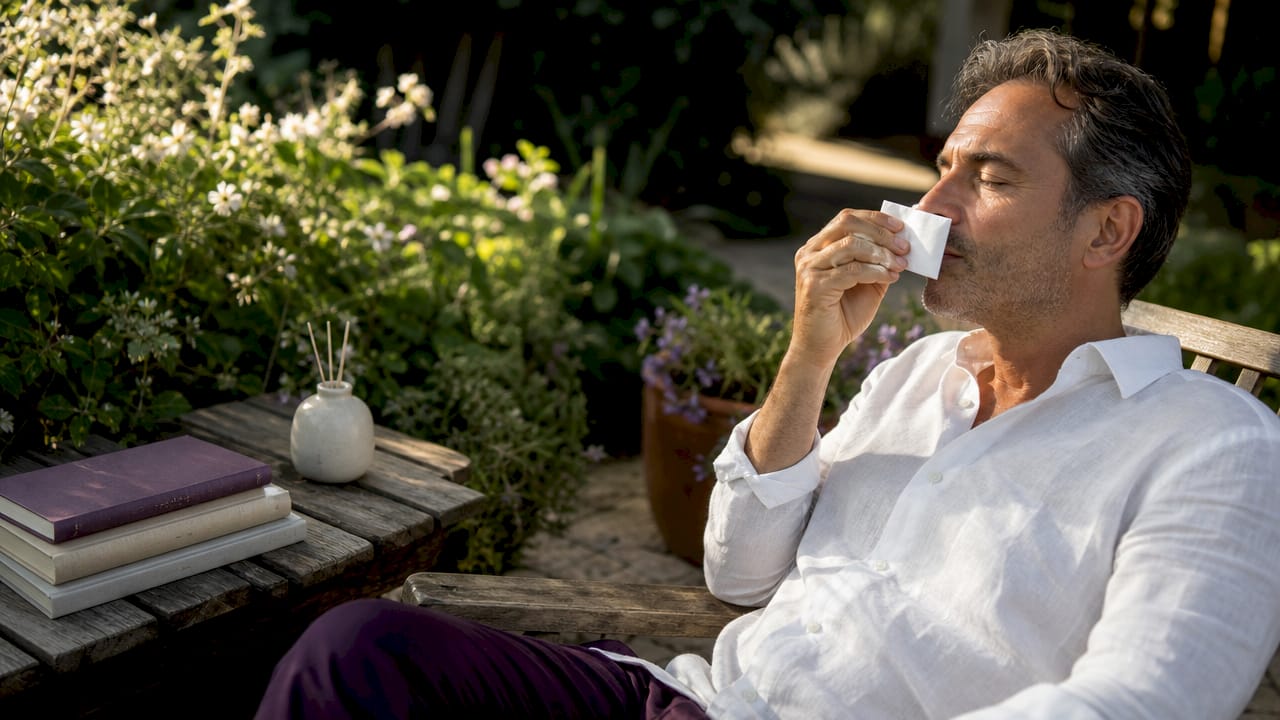
Scent-emotion anchoring takes this further. When you pair a specific fragrance with a calm, focused, or joyful state repeatedly, the brain encodes that association. Later, the scent alone can recall the state. Functional fragrance blends are now designed and tested using neuroscience to elicit specific emotional responses such as energy, calm, or comfort.
Common fragrance notes and their general emotional effects:
- Lavender and chamomile: calming, sleep-supportive
- Citrus and peppermint: energizing, mentally clarifying
- Sandalwood and vetiver: grounding, centering
- Rose and jasmine: uplifting, emotionally warming
- Frankincense and cedarwood: meditative, introspective
Pro Tip: Choose your morning scent based on the emotional state you want to build, not the one you are already in. A citrus or mint note when you feel sluggish trains your brain to associate that scent with alertness over time.
2. How fragrance improves memory, cognition, and brain health
The olfactory bulb sits at the base of the brain and connects directly to the hippocampus, the region responsible for forming and retrieving memories. Stimulating this pathway regularly produces measurable physical changes in brain structure. This is neuroplasticity at work through something as simple as smell.
Olfactory training over six months causes physical enlargement of the olfactory bulb and hippocampus alongside a 226% gain in verbal learning and memory scores. Think of it as a cognitive workout for regions of the brain that most people never deliberately exercise. The gains are not subtle.
Around 20% of the population suffers from olfactory dysfunction, which strongly predicts five-year mortality. That statistic reframes olfactory health from a sensory nicety into a genuine wellness priority. Maintaining and strengthening your sense of smell is preventive care.
Olfactory dysfunction also impacts emotions, social interactions, and mental health, with links to loneliness and depression. Actively engaging your sense of smell through intentional practice protects against this decline. Scent use is not passive; it is protective.
| Training method | Duration per session | Frequency | Reported benefit |
|---|---|---|---|
| Essential oil inhalation | 10 seconds per scent | Twice daily | Improved smell sensitivity |
| Slow deep inhalation | 30+ seconds | Once or more daily | Parasympathetic activation |
| Structured olfactory training | Multiple scents, varied | 6-month program | 226% verbal memory gain |
| Diffused ambient scent | Continuous | During focused work | Enhanced cognitive environment |
Pro Tip: Rotate four distinct scents, such as rose, eucalyptus, lemon, and clove, during your training sessions. Variety challenges the olfactory system more than repeating a single scent.
3. Fragrance as a tool for personal identity and sensory mindfulness
Scent is the most personal of the senses. A fragrance you wear consistently becomes part of how others recognize you and how you recognize yourself. This is not vanity. It is identity construction through scent, a process grounded in how the brain encodes memory and self-concept.
Repeated scent exposure paired with specific activities creates conditioned emotional responses in the hippocampus. When you wear the same fragrance during meditation, journaling, or creative work, that scent becomes a mental cue. Over time, it signals your brain to enter that state more readily.
Fragrance also grounds you in the present moment. Focusing on the top, heart, and base notes of a scent as it evolves on your skin is a form of sensory mindfulness. It pulls attention away from abstract thought and into direct physical experience. That shift is the same mechanism used in formal mindfulness practices.
Daily fragrance rituals that build sensory awareness:
- Apply a grounding scent before morning reflection or journaling
- Use a single signature fragrance during focused creative work to build a concentration anchor
- Practice slow inhalation of a calming scent before sleep as a wind-down signal
- Pause to notice how a fragrance changes on your skin over 30 minutes, training sensory attention
- Explore why certain smells feel emotionally significant to you as a form of self-inquiry
4. Practical ways to build intentional fragrance routines
A consistent routine is what separates passive scent wearing from a functional wellness practice. Without consistent pairing of a fragrance with a specific activity or emotional state, the scent remains a passive accessory. Intention and repetition are what create the neurological benefit.
Olfactory training typically involves inhaling essential oils for approximately 10 seconds per scent, twice a day. This simple structure is enough to strengthen smell sensitivity and support cognitive function over time. You do not need elaborate equipment or a clinical setting.
Steps to build your practice:
- Select 3–4 distinct scents that represent different emotional goals, such as one for calm, one for focus, and one for energy
- Set a fixed time for your scent practice, morning and evening work well for most people
- Inhale slowly and deeply for at least 30 seconds per scent to engage the parasympathetic nervous system
- Pair each scent with a consistent activity to build reliable scent-emotion anchors
- Rotate your collection seasonally to keep the olfactory system challenged and engaged
Fragrance layering is another way to deepen your practice. Layering techniques allow you to build a scent that reflects your emotional state for the day, combining a grounding base with an energizing top note, for example.
| Scent category | Key notes | Emotional effect | Best use time |
|---|---|---|---|
| Calming | Lavender, chamomile, sandalwood | Reduces anxiety, slows heart rate | Evening, before sleep |
| Energizing | Citrus, peppermint, rosemary | Increases alertness, lifts mood | Morning, before work |
| Grounding | Vetiver, cedarwood, patchouli | Centers attention, reduces distraction | Meditation, creative work |
| Uplifting | Rose, jasmine, ylang-ylang | Elevates mood, supports emotional warmth | Midday, social settings |
Pro Tip: Keep a small scent journal. Note which fragrances you used, when, and how you felt afterward. Patterns emerge quickly, and they tell you more about your emotional landscape than most self-assessments.
5. How fragrance supports long-term mental health and resilience
The advantages of fragrance therapy extend beyond single sessions. Fragrances stimulate the brain’s GABAergic system, which governs inhibitory signaling and plays a central role in reducing anxiety. These calming effects develop through ritualized, repeated use rather than appearing instantly. This is a practice, not a quick fix.
Scent also functions as an emotional anchor during difficult periods. When stress or grief disrupts your sense of self, a familiar fragrance can reconnect you to a stable emotional state. The brain retrieves the associated memory and feeling, offering a moment of continuity. That continuity is a form of resilience.
Using scent for wellness over time also builds interoceptive awareness, the ability to notice and interpret your own internal states. When you regularly check in with how a scent makes you feel, you practice a skill that transfers to emotional regulation more broadly. Fragrance becomes a mirror for your inner state.
Key Takeaways
Intentional fragrance use is a science-backed wellness practice that strengthens memory, regulates mood, and builds emotional resilience through consistent, deliberate scent engagement.
| Point | Details |
|---|---|
| Slow inhalation activates calm | Breathing a chosen scent deeply for 30+ seconds triggers the parasympathetic nervous system. |
| Consistency creates brain change | Six months of olfactory training produces a 226% gain in verbal memory and physical brain growth. |
| Scent anchors emotional states | Pairing a fragrance with a specific activity builds a conditioned response you can trigger at will. |
| Olfactory health is preventive care | Around 20% of people have olfactory dysfunction, which links to depression, loneliness, and mortality risk. |
| Routine separates practice from habit | Without intentional pairing, fragrance remains passive and delivers no lasting neurological benefit. |
What consistent scent practice has taught me
Most people treat fragrance as an afterthought. They spray something pleasant and move on. I spent years doing the same, and I missed almost everything the practice had to offer.
What changed my thinking was noticing that the fragrances I wore during focused, meaningful moments became emotionally loaded over time. A particular woody scent I wore while writing became a concentration trigger. I did not plan that. It happened because I was consistent. That is when I understood that scent is not about smelling good. It is about training your nervous system.
The most common mistake I see is passive smelling. People diffuse beautiful oils and expect results without engaging. Real benefit requires slow, deliberate inhalation and intentional pairing. Brief exposure does not reach the brain pathways that matter. You have to slow down and actually smell.
The second mistake is inconsistency. Switching fragrances randomly prevents the brain from forming the associations that make scent therapeutically useful. Pick a scent for a purpose. Use it repeatedly for that purpose. Let the anchor form.
Fragrance, used with intention, is one of the quietest and most accessible forms of self-care available. It asks nothing dramatic of you. Only attention. And attention, it turns out, is the whole practice.
— Celeste
Scent with purpose: Maisonvoyageurparfum’s artisanal collection
Intentional fragrance use deserves a scent worth returning to. Maisonvoyageurparfum crafts each fragrance slowly, using 98% natural ingredients, with the specific aim of evoking emotion and supporting personal reflection. These are not mass-market products. They are made to be felt.

The personalized soy candle from Maisonvoyageurparfum is designed for exactly this kind of mindful ritual. Its Mediterranean-inspired scent profile supports grounding and introspection, making it a natural companion for the practices described here. For those ready to build a curated scent collection aligned with emotional wellness, the full perfume collection offers a considered starting point.
FAQ
What is intentional fragrance use?
Intentional fragrance use is the deliberate practice of selecting and engaging with scent to support a specific emotional or cognitive goal. It differs from casual perfume wearing in that it requires consistent pairing of a scent with a particular activity or state.
How does fragrance affect mood?
Scent reaches the brain’s limbic system directly through the olfactory nerve, triggering emotional responses faster than any other sense. Deep inhalation for at least 30 seconds activates the parasympathetic nervous system, producing measurable calming effects.
What are the cognitive benefits of olfactory training?
Consistent olfactory training over six months produces a 226% improvement in verbal learning and memory scores, along with physical enlargement of the olfactory bulb and hippocampus. These changes reflect genuine neuroplasticity driven by regular scent engagement.
How long does it take to build a scent-emotion anchor?
Scent-emotion anchors form through repeated, consistent pairing of a fragrance with a specific activity or emotional state. The timeline varies, but research on olfactory training points to meaningful neurological change after several months of regular practice.
Can fragrance support mental health?
Fragrance stimulates the brain’s GABAergic system, which governs anxiety regulation, and its calming effects build through ritualized use over time. Loss of smell is linked to depression and loneliness, making active olfactory engagement a meaningful part of mental wellness.
Recommended
- How Fragrance Promotes Introspection: A Science Guide – Maison Voyageur
- Nature’s Role in Scent Therapy: A Science-Backed Guide – Maison Voyageur
- How Wearing Fragrance Builds Confidence and Presence – Maison Voyageur
- Why Certain Smells Feel Like Home – Maison Voyageur
Les sept fragrances Maison Voyageur
- Manifesting · unisexe (69,99 €)
- Intuition · femme (69,99 €)
- Certainty · femme (69,99 €)
- Expansion · femme (69,99 €)
- Release · homme (69,99 €)
- Presence · homme (69,99 €)
- Inner Fire · homme (69,99 €)
Nouvelle ici ? Commence par le Discovery Set · les 7 fragrances en format voyage (40 €).