
How Wearing Fragrance Builds Confidence and Presence
Wearing fragrance builds confidence by triggering a measurable psychological feedback loop that improves mood, self-perception, and social ease. This effect is not incidental. Research shows that frontal brain activity shifts when you wear a pleasant scent, producing a subjective confidence increase of up to 100%. A survey of women found that 90% reported feeling more confident when wearing fragrance, with similar effects confirmed in men. The psychology of wearing perfume, formally studied under olfactory self-perception research, reveals that scent is one of the most direct paths to a stronger sense of self.
How wearing fragrance builds confidence: the psychology behind it
Scent reaches the brain faster than any other sense. The olfactory bulb connects directly to the limbic system, the brain’s emotional center, bypassing the rational cortex entirely. This means a familiar, pleasant fragrance triggers an emotional response before you consciously register it.
The mechanism behind fragrance and self-esteem is called olfactory self-signaling. When you wear a scent you associate with strength, calm, or elegance, your brain reads that signal and adjusts your internal state to match. Frontal ERP responses show measurable changes in self-perception of attractiveness when a pleasant scent is present. That shift in self-perception changes how you carry yourself physically.
Body language follows mood. When your brain registers a positive internal state, your posture opens, your voice steadies, and your eye contact holds longer. These physical cues then influence how others respond to you, completing the first turn of the feedback loop.
- Olfactory signals bypass rational thought and reach the emotional brain directly
- Pleasant scents activate positive self-concept pathways linked to safety and stability
- Mood improvement from scent produces visible body language changes
- Improved body language generates better social responses from others
- Better social responses reinforce internal confidence, sustaining the cycle
Pro Tip: Apply your fragrance before you dress, not after. The ritual of scent before clothing primes your brain to treat the whole process as intentional preparation, not an afterthought.
Which fragrance notes are proven to boost confidence?
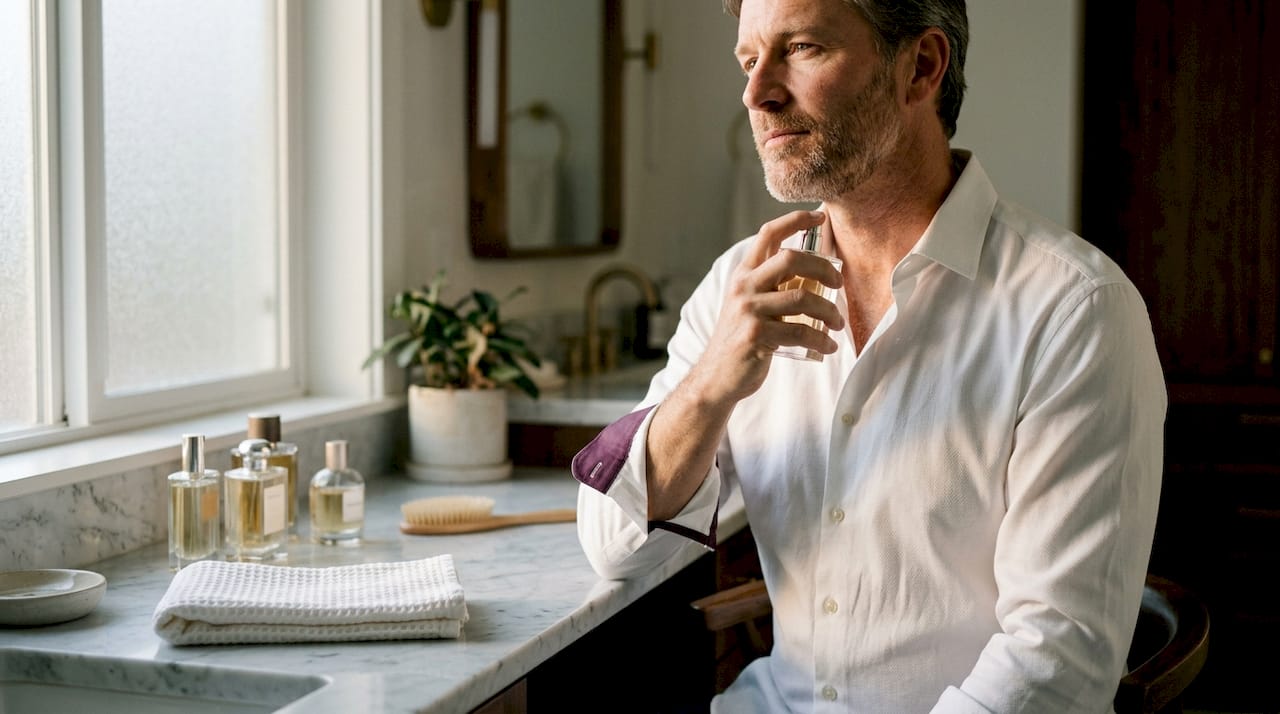
Not all scents produce the same psychological effect. Specific fragrance families act on distinct neurochemical pathways, making note selection a meaningful choice rather than a matter of pure preference.
| Fragrance note | Primary effect | Best used for |
|---|---|---|
| Citrus (bergamot, lemon) | Stimulates dopamine and serotonin | Morning energy, presentations, social events |
| Woody (sandalwood, cedar) | Increases physiological arousal and attentiveness | Focus, authority, long meetings |
| Lavender | Reduces anxiety, increases interpersonal trust | High-stress situations, social interactions |
| Vanilla | Calms the nervous system, promotes warmth | Creative work, intimate settings |
| Jasmine | Produces euphoric and uplifting emotional states | Confidence in unfamiliar environments |
Studies in Planta Medica show that sandalwood inhalation elevates physiological arousal and mood, correlating directly with higher self-rated attentiveness. This makes woody base notes particularly effective when you need to project authority over several hours.
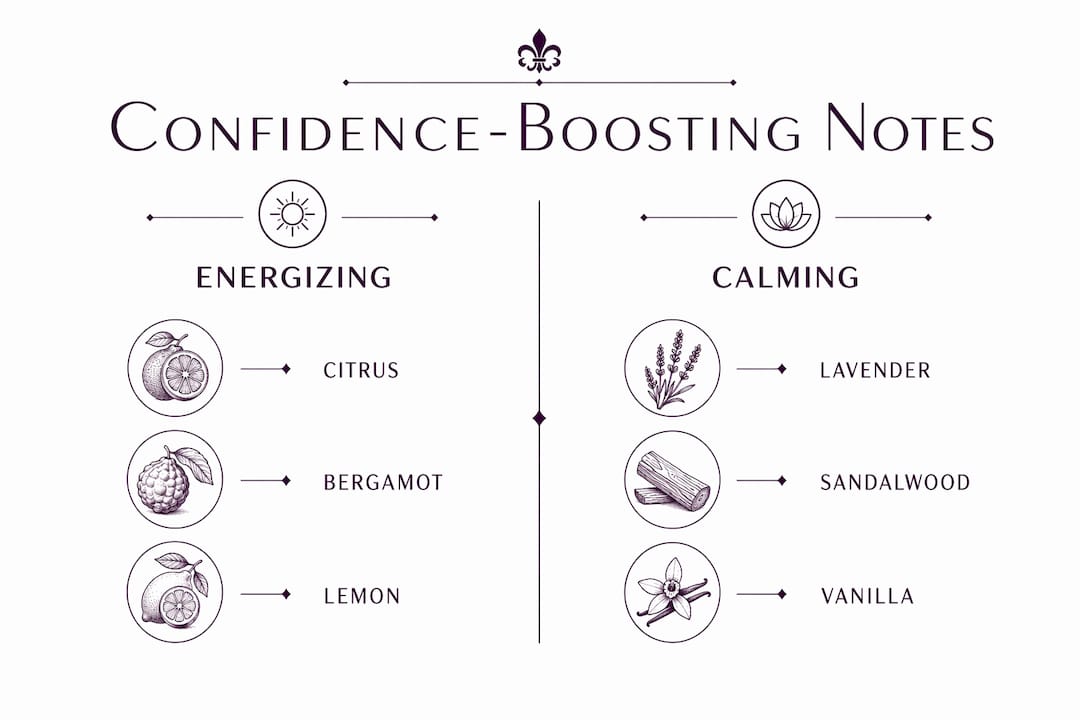
Lavender scent increases trust levels in behavioral studies, with participants showing measurably higher cooperative behavior after exposure. The implication is direct: wearing lavender in a high-stakes social setting reduces your own anxiety while simultaneously making others more receptive to you.
Citrus notes work differently. They stimulate dopamine and serotonin release, producing a burst of energy and mental clarity. The effect is fast but shorter-lived, which makes citrus ideal for the opening moments of an important event rather than sustained presence throughout the day.
Pro Tip: Layer a citrus top note over a woody or vanilla base to get both the immediate energy lift and the longer-lasting grounding effect. Many artisanal fragrances from Maisonvoyageurparfum are built around exactly this kind of intentional layering.
How does a signature scent ritual build lasting confidence?
The confidence benefits of fragrance come more from consistency and ritual than from the complexity or price of the scent itself. Scent acts as a psychological uniform. Wearing the same fragrance repeatedly conditions your brain to associate it with control, competence, and positive outcomes.
This is classical conditioning applied to self-perception. Each time you wear your signature scent before a successful experience, the association deepens. Over time, the scent alone is enough to recall that state of readiness. The olfactory bulb’s direct link to the amygdala means this recall is automatic and fast, activating safety and stability signals within seconds of application.
Building a signature scent ritual takes intention. These four steps create the psychological anchor:
- Choose one scent for high-stakes moments. Wear it consistently before presentations, interviews, or important social events. Repetition builds the association.
- Apply mindfully, not mechanically. Take 30 seconds to breathe in the scent after applying. This brief pause shifts your nervous system from reactive to deliberate.
- Time your application to the event. Top citrus notes last 30–60 minutes with energetic impact. Apply 20 minutes before the moment you need peak energy, so the base notes are settling in as you arrive.
- Protect the association. Avoid wearing your signature confidence scent casually or during stressful, negative experiences. The psychological anchor only holds if the associations stay positive.
The result is what psychologists call the psychological armor effect. Your brain learns that this scent means you are prepared. The fragrance stops being decoration and becomes a cue for authority and poise.
How does fragrance shape social perception and reinforce self-esteem?
Fragrance changes how others perceive you, and that perception feeds directly back into how you feel about yourself. People wearing pleasant scents are rated higher on attractiveness, warmth, and competence by others, even when those others cannot consciously identify the scent. The effect operates below awareness.
This social feedback loop is the most underrated aspect of how scent affects mood and self-esteem. When others treat you as more competent or warm, you internalize that treatment. Your self-concept adjusts upward. The confidence you feel is no longer just chemical. It is socially validated and therefore more durable.
Psychologists emphasize that fragrance-enabled confident body language leads to more positive social treatment, which amplifies self-esteem in a self-reinforcing cycle. The scent starts the chain, but the social confirmation sustains it.
- Wearing a pleasant scent raises others’ ratings of your attractiveness and competence
- This improved social reception validates your internal confidence
- Validated confidence produces more open, assured body language
- More assured body language generates further positive social responses
- The cycle sustains confidence well beyond the scent’s initial neurochemical effect
You can explore how fragrance promotes introspection and shapes both internal and external experience in more depth. The science behind this feedback loop is more layered than most people realize.
Practical tips for choosing and wearing fragrance for confidence
Matching fragrance to your confidence goals is a skill, not guesswork. The right scent for a job interview differs from the right scent for a creative afternoon or a first date. Knowing what you need from a fragrance before you choose it makes the difference between a scent that serves you and one that simply smells pleasant.
Start by identifying your confidence gap. If anxiety is the obstacle, reach for lavender or vanilla. If energy and focus are the need, citrus or light woody notes serve better. If you want to project authority in a room, deeper sandalwood or cedar bases carry that weight.
Application matters as much as selection. Pulse points, the wrists, neck, and inner elbows, emit heat that amplifies scent diffusion. Apply to clean, moisturized skin for longer wear. Avoid rubbing the wrists together after application. That friction breaks down the top notes and shortens the scent’s lifespan.
Overapplication is the most common mistake. Sustainable confidence arises from scent reducing internal tension, not from overpowering aromas. Two to three sprays are sufficient. The goal is a scent that others notice when they are close, not one that enters the room before you do.
Pro Tip: Before committing to a signature confidence scent, wear it for a full day on skin, not paper. Fragrance interacts with your body chemistry, and the scent that reads as grounding and authoritative on you may read differently on someone else. Maisonvoyageurparfum’s discovery set lets you test multiple profiles on your own skin before choosing.
Understanding scent therapy science can also help you make more deliberate choices about which natural ingredients serve your specific emotional needs.
Key takeaways
Wearing fragrance builds confidence through a self-reinforcing cycle of neurochemical response, improved body language, and positive social feedback that sustains self-esteem over time.
| Point | Details |
|---|---|
| Scent triggers immediate brain response | The olfactory bulb connects directly to the limbic system, producing emotional shifts before conscious thought. |
| Note selection shapes the effect | Citrus energizes, woody grounds, lavender calms anxiety, and jasmine lifts mood for social openness. |
| Consistency creates a psychological anchor | Wearing the same scent before positive experiences conditions the brain to associate it with confidence. |
| Social perception reinforces self-esteem | Others rate pleasant-scented wearers higher in warmth and competence, validating internal confidence. |
| Application timing and quantity matter | Top notes peak at 30–60 minutes; two to three sprays on pulse points is the effective, non-overwhelming dose. |
Scent as a quiet form of self-knowledge
I came to fragrance late, and I came to it sideways. I was not looking for a confidence tool. I was looking for something that felt like mine, something that was not performance or presentation but just presence. What I found, slowly, was that the two things are not separate.
The scent I wore consistently during a period of significant personal change became inseparable from the memory of feeling capable. That is not mysticism. That is conditioning, and it works. What surprised me most was how little the fragrance itself mattered in terms of price or prestige. What mattered was the ritual. The pause. The intention.
What I have observed in others mirrors this. The people who use fragrance with the most confidence are not the ones wearing the most expensive bottles. They are the ones who know why they chose what they chose. That self-knowledge, expressed through scent, is what others actually perceive.
The underrated truth about fragrance and self-esteem is that the confidence it builds is not borrowed. You are not wearing someone else’s authority. You are conditioning your own brain to recognize its readiness. The scent is just the cue. The capability was already there.
— Celeste
Maisonvoyageurparfum: fragrance crafted for self-expression

Maisonvoyageurparfum is a Mediterranean perfumerie based in Madrid, built on the belief that a fragrance should be more than something you wear. Each scent is crafted slowly with 98% natural ingredients, designed to evoke emotion, memory, and a deeper sense of self. The collections are not organized by trend. They are organized by archetype, by the kind of presence you want to inhabit.
For those who want to find a scent that genuinely aligns with their inner world, the archetype quiz is a good place to begin. For those ready to explore the full range, the Mediterranean fragrance collections offer profiles built around confidence, introspection, and authentic self-expression. Real luxury, slowly made.
FAQ
Does wearing fragrance actually boost confidence?
Yes. Research confirms that 90% of women and a comparable proportion of men report increased confidence when wearing fragrance. The effect is driven by neurochemical responses and a social feedback loop that reinforces self-esteem.
Which scent notes are best for confidence?
Citrus notes boost energy and focus through dopamine stimulation, while woody notes like sandalwood increase attentiveness and authority. Lavender reduces anxiety and increases interpersonal trust, making it effective for social confidence.
How does a signature scent build confidence over time?
Repeated use of the same fragrance before positive experiences conditions the brain to associate that scent with control and success. Over time, the scent alone activates a readiness response, acting as a psychological anchor.
Can fragrance change how others perceive you?
Yes. People wearing pleasant scents are rated higher in attractiveness, warmth, and competence by others, even without conscious awareness of the scent. This improved social perception feeds back into the wearer’s own confidence.
How much fragrance should I wear for the best effect?
Two to three sprays on pulse points is the effective dose. Sustainable confidence comes from scent that reduces internal tension, not from volume. Overapplication diminishes the effect and can create the opposite impression socially.
Recommended
- How Fragrance Promotes Introspection: A Science Guide – Maison Voyageur
- Build a Curated Artisanal Fragrance Wardrobe – Maison Voyageur
- How to Shop Consciously for Luxury Fragrances – Maison Voyageur
- Maison Voyageur · All Perfumes · Mediterranean Perfumerie Madrid
Les sept fragrances Maison Voyageur
- Manifesting · unisexe (69,99 €)
- Intuition · femme (69,99 €)
- Certainty · femme (69,99 €)
- Expansion · femme (69,99 €)
- Release · homme (69,99 €)
- Presence · homme (69,99 €)
- Inner Fire · homme (69,99 €)
Nouvelle ici ? Commence par le Discovery Set · les 7 fragrances en format voyage (40 €).