
Cómo leer las etiquetas de los ingredientes de las fragancias naturales
Leer las etiquetas de ingredientes de fragancias naturales revela si un producto contiene realmente componentes botánicos o productos químicos sintéticos no revelados que se esconden detrás de términos vagos. La práctica estándar de la industria para listar estos componentes sigue las convenciones INCI (Nomenclatura Internacional de Ingredientes Cosméticos), un sistema que la mayoría de los consumidores nunca aprende. Sin embargo, una vez que comprenda su estructura, podrá decodificar las listas de ingredientes de perfumes naturales con confianza. Esta guía le orienta a través de la estructura de las etiquetas, las convenciones de nombres, las lagunas comunes y las herramientas prácticas para que pueda tomar decisiones genuinamente informadas.
Cómo leer las etiquetas de ingredientes de fragancias naturales
Las listas de ingredientes cosméticos siguen un estricto orden descendente de predominio. El ingrediente presente en la mayor concentración aparece primero. Esta regla se aplica a todos los componentes por encima del 1% de concentración, lo que significa que los primeros ingredientes de cualquier producto de fragancia son los que realmente actúan. Los ingredientes por debajo de ese umbral del 1% pueden aparecer en cualquier orden al final de la lista. Muchos alérgenos de fragancias se encuentran en esta zona de baja concentración, por lo que son tan fáciles de pasar por alto.
Los nombres INCI son los nombres científicos o botánicos latinos asignados a cada ingrediente. El aceite de flor de Rosa damascena significa aceite esencial de rosa. El aceite de cáscara de Citrus aurantium bergamia significa bergamota. Cuando ve estos nombres latinos, está viendo ingredientes botánicos revelados. Cuando ve solo "fragancia" o "perfume", está viendo un marcador de posición legal que puede ocultar docenas o cientos de compuestos individuales.
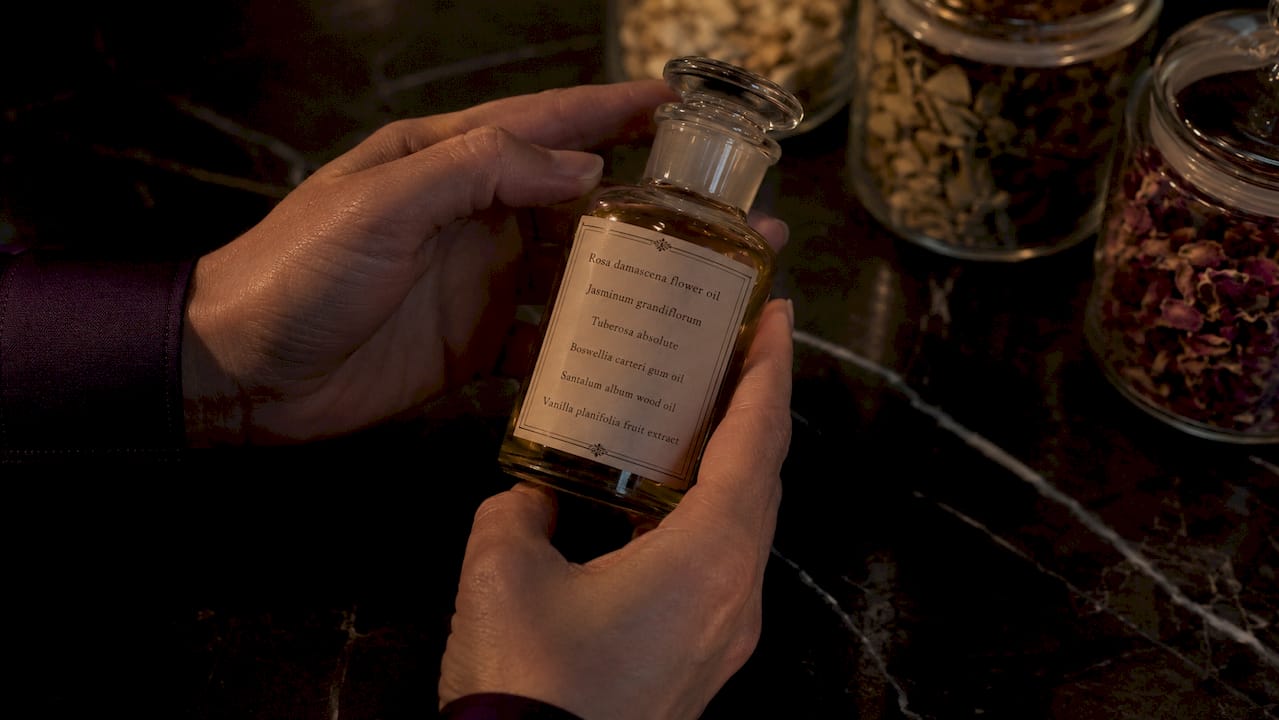
La diferencia entre las regulaciones de EE. UU. y la UE es importante aquí. La UE exige la divulgación de 26 alérgenos específicos cuando aparecen por encima de ciertas concentraciones en productos que se aclaran y que no se aclaran. La Administración de Alimentos y Medicamentos de EE. UU., según 21 CFR 701.3, permite a las marcas listar todos los componentes de fragancia como una única entrada para proteger los secretos comerciales. Esto significa que una etiqueta de EE. UU. puede decir legalmente "fragancia" y no revelar nada más.
| Término de la etiqueta | Qué significa | Nivel de transparencia |
|---|---|---|
| Fragancia / Perfume | Comodín legal; oculta todos los compuestos aromáticos | Muy bajo |
| Fragancia Natural | Término no regulado; aún puede ocultar compuestos | Bajo a medio |
| Aceite Esencial (nombre INCI) | Origen botánico específico revelado | Alto |
| Absoluto / Resina (nombre INCI) | Extracto botánico específico revelado | Alto |
| Aroma | Similar a fragancia; a menudo mezcla no revelada | Muy bajo |
Consejo profesional: Busque el nombre INCI de cualquier ingrediente que no reconozca en INCI Decoder antes de comprar. Traduce nombres científicos a un lenguaje sencillo y señala posibles sensibilizantes.
¿Cómo distinguir los ingredientes naturales de los sintéticos?
Los componentes de fragancias naturales auténticos incluyen aceites esenciales, absolutos, resinas y extractos de CO2, cada uno listado por su nombre botánico INCI. El aceite de Lavandula angustifolia, el aceite de flor de Cananga odorata (ylang ylang) y el extracto de resina de Boswellia carterii son ejemplos de ingredientes genuinamente naturales. Aparecen completos en una etiqueta transparente.
Las moléculas de fragancias sintéticas tienen un propósito diferente. Compuestos como aldehídos, almizcles sintéticos e Iso E Super ofrecen efectos de aroma consistentes y una mayor estabilidad en el almacenamiento. No son intrínsecamente dañinos, pero a menudo no se divulgan. Cuando una marca lista solo "fragancia", moléculas sintéticas como estas pueden estar presentes sin su conocimiento.
Aquí le indicamos qué buscar para distinguirlos:
- Nombres botánicos INCI (aceite de raíz de Vetiveria zizanoides, resina de Cistus ladanifer) indican origen natural.
- "Fragancia" o "perfume" sin más detalles indica una mezcla potencialmente sintética o no revelada.
- "Fragancia natural" sin especificaciones botánicas es un término de marketing, no una categoría reguladora.
- La certificación COSMOS o ECOCERT significa que el producto ha sido verificado en cuanto a contenido natural y excluye colorantes sintéticos, conservantes y petroquímicos.
- La ausencia de ftalatos y almizcles sintéticos se confirma solo cuando cada ingrediente se nombra individualmente.
Una corrección importante a una creencia común: lo natural no es automáticamente más seguro. Los aceites esenciales son mezclas químicas complejas. El linalool y el limoneno, ambos presentes naturalmente en los aceites de cítricos y lavanda, se encuentran entre los alérgenos de contacto más comunes en los cosméticos. La calidad y la transparencia importan más que si la fuente es botánica o sintética.
Consejo profesional: Busque productos certificados por COSMOS cuando desee contenido natural verificado. Los organismos de certificación auditan la cadena de suministro, no solo la etiqueta.
¿Qué vacíos legales en el etiquetado debe conocer?
La única palabra "fragancia" en una etiqueta puede ocultar legalmente entre 50 y más de 3.000 compuestos individuales. Ese rango no es una exageración. Una fragancia fina compleja puede contener cientos de moléculas distintas, todas ocultas detrás de una única entrada de ingrediente. Esta es la laguna de la fragancia, y afecta tanto a los productos convencionales como a los llamados productos naturales.
“La laguna de la ‘fragancia’ impide a los consumidores gestionar eficazmente las sensibilidades químicas. Los productos verificados sin fragancia son opciones más seguras para pieles sensibles.” — Fair Marrow
Los ftalatos, utilizados como fijadores para prolongar la duración del aroma, y los almizcles sintéticos, utilizados para notas de fondo limpias o atalcadas, son dos categorías de compuestos que con frecuencia aparecen en mezclas de fragancias sin ser revelados. Ninguno de ellos debe ser listado por separado según las regulaciones actuales de EE. UU. Los consumidores con sensibilidades a estos compuestos no tienen una forma fiable de detectarlos a menos que la marca revele voluntariamente todos los detalles de los ingredientes.
La "fragancia natural" no resuelve este problema. El término no está regulado por la ley de EE. UU., lo que significa que una marca puede usarlo para describir una mezcla que aún contiene aislados sintéticos o alérgenos no revelados. La palabra "natural" en una etiqueta de fragancia no tiene una definición legal en los Estados Unidos.
Para los consumidores con piel sensible o alergias conocidas a las fragancias, este es un enfoque práctico:
- Busque productos etiquetados como "sin fragancia", no solo "sin aroma". Los productos sin aroma pueden contener fragancias enmascarantes.
- Confirme la ausencia de "parfum", "aroma" y "fragancia" en la lista INCI, ya que las etiquetas verificadas sin fragancia son la opción más fiable para pieles propensas a alergias.
- Compruebe los 26 alérgenos regulados por la UE por su nombre si la marca sigue voluntariamente los estándares de divulgación de la UE.
- Póngase en contacto directamente con la marca y solicite una divulgación completa de ingredientes o una hoja de datos de seguridad.
- Priorice las marcas que enumeran cada ingrediente botánico por su nombre INCI en lugar de agruparlos bajo "fragancia natural".
Guía paso a paso para evaluar una etiqueta de fragancia
Leer bien una etiqueta de fragancia lleva unos dos minutos una vez que se conoce el método. Siga estos pasos cada vez que evalúe un nuevo producto.
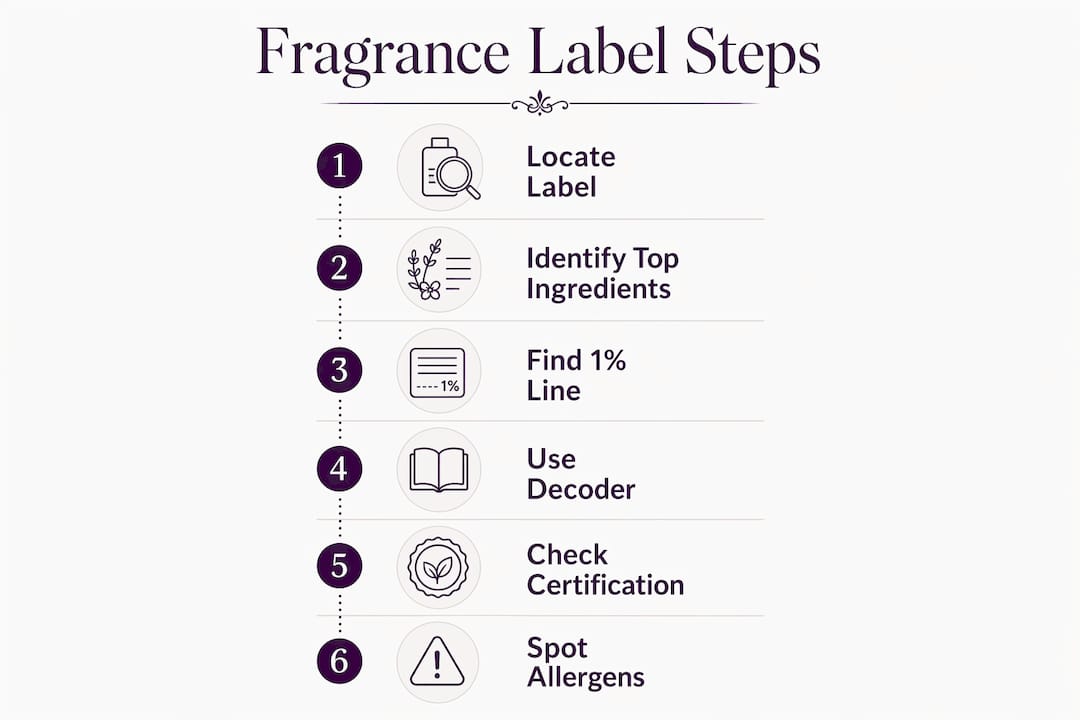
Paso 1: Localice la lista completa de ingredientes INCI. Aparece en el envase, a menudo en letra pequeña. Para compras en línea, consulte la página del producto en el sitio web de la marca o solicítela directamente. Si no se proporciona ninguna lista, considérelo una señal de alarma.
Paso 2: Identifique los primeros cinco ingredientes. Estos representan las concentraciones más altas. En un perfume natural, se espera ver una base portadora (alcohol, aceite de Simmondsia chinensis jojoba, o similar) seguida de extractos botánicos con nombres latinos. Si "fragancia" o "perfume" aparece entre los cinco primeros, la composición aromática del producto no está revelada en gran medida.
Paso 3: Encuentre la línea de concentración del 1%. Los conservantes como el fenoxietanol suelen aparecer en o justo por debajo del 1% de concentración. Los ingredientes listados después del fenoxietanol están presentes en niveles traza. Los alérgenos de fragancias a menudo aparecen en esta zona, por lo que su posición en la lista es importante.
Paso 4: Use INCI Decoder o EWG Skin Deep. Ambas herramientas le ayudan a comprender los peligros y funciones de los ingredientes. INCI Decoder explica lo que hace cada ingrediente. EWG Skin Deep asigna puntuaciones de peligro basadas en los datos de seguridad disponibles. Úselas juntas para obtener una imagen más completa, y trate las puntuaciones de EWG como un punto de partida en lugar de un veredicto final.
Paso 5: Compare las certificaciones. Las certificaciones COSMOS, ECOCERT y NATRUE requieren estándares específicos para el contenido natural. Un producto certificado ha sido auditado. Un producto que solo afirma ser "natural" no lo ha sido.
Paso 6: Compruebe los alérgenos conocidos por su nombre. La lista de 26 alérgenos de fragancia regulados por la UE incluye linalool, limoneno, citronelol, geraniol y eugenol, entre otros. Las marcas que divulgan voluntariamente estos nombres en productos de EE. UU. ofrecen un nivel de transparencia más alto del requerido.
| Herramienta | Mejor uso | Limitación |
|---|---|---|
| Decodificador INCI | Traduce los nombres de los ingredientes a un lenguaje sencillo | No reemplaza las pruebas clínicas de alergia |
| EWG Skin Deep | Puntuación de peligros para ingredientes individuales | Las puntuaciones se basan en los datos disponibles, que varían |
| COSMOS / ECOCERT | Verifica el contenido natural mediante auditoría | Los costos de certificación limitan el acceso de las pequeñas marcas |
| Lista de alérgenos de la UE | Identifica 26 sensibilizantes de fragancias regulados | Las marcas estadounidenses no están obligadas a seguir las normas de la UE |
Las marcas que listan cada ingrediente botánico por su nombre INCI, revelan los alérgenos voluntariamente y cuentan con certificación de terceros le ofrecen algo realmente raro: total transparencia. Ese nivel de divulgación es la señal más clara de una marca que se toma en serio la integridad de los ingredientes. También puede obtener más información sobre las diferencias en la concentración de perfumes para comprender cómo los niveles de concentración afectan lo que ve en una etiqueta.
Puntos clave
Decodificar una etiqueta de fragancia natural requiere comprender la estructura INCI, reconocer la laguna de la fragancia y usar herramientas como INCI Decoder y EWG Skin Deep para verificar lo que realmente significa "natural".
| Punto | Detalles |
|---|---|
| El orden INCI revela la concentración | Los ingredientes por encima del 1% aparecen primero; los alérgenos de fragancia a menudo se esconden por debajo de la línea del 1%. |
| La “fragancia” oculta cientos de compuestos | Una sola entrada en la etiqueta puede ocultar legalmente entre 50 y más de 3.000 sustancias químicas individuales bajo la ley de EE. UU. de protección de secretos comerciales. |
| “Natural” no está regulado | El término no tiene una definición legal en EE. UU.; busque en su lugar la certificación COSMOS o ECOCERT. |
| Utilice INCI Decoder y EWG Skin Deep | Estas herramientas traducen los nombres de los ingredientes y señalan los peligros para decisiones de compra más informadas. |
| Los nombres botánicos INCI indican transparencia | Las marcas que listan nombres latinos específicos para cada extracto ofrecen una responsabilidad mucho mayor que los términos vagos. |
Lo que he aprendido al decodificar etiquetas de fragancias
Lo que la decodificación de etiquetas me ha enseñado sobre la confianza
He pasado años leyendo listas de ingredientes en productos de fragancia, y el patrón más consistente que he encontrado es este: las marcas que tienen más que ocultar usan el lenguaje más vago. "Fragancia natural" en una etiqueta es casi siempre una señal de que la marca no puede o no quiere decirle lo que realmente hay en la botella.
La parte frustrante es que incluso los perfumistas genuinamente naturales a veces caen en este hábito. Usan "fragancia natural" como abreviatura porque listar 30 nombres botánicos INCI parece abrumador. Pero esa abreviatura le cuesta todo al consumidor. No se puede evaluar lo que no se puede ver.
Mi recomendación honesta para cualquier persona con piel sensible o alergias a las fragancias: ignore por completo la etiqueta frontal. Vaya directamente a la lista INCI. Si ve nombres botánicos latinos, está tratando con una marca que respeta su derecho a saber. Si solo ve "fragancia" o "fragancia natural", solicite más información antes de comprar. Las marcas que se preocupan por la integridad de los ingredientes responderán esa pregunta de buena gana.
El llamado a una mejor regulación es real y está atrasado. El enfoque de la UE de exigir la divulgación de 26 alérgenos específicos es un paso significativo, y los consumidores estadounidenses merecen el mismo estándar. Hasta que eso cambie, la responsabilidad recae en usted para leer con atención y en las marcas para divulgar voluntariamente. La buena noticia es que más marcas están optando por la transparencia. Ese cambio merece ser apoyado.
— Celeste
Descubre fragancias naturales hechas con total transparencia
Maisonvoyageurparfum se construyó sobre una idea diferente. Cada aroma se elabora lentamente siguiendo la tradición mediterránea, utilizando un 98% de ingredientes naturales con fuentes botánicas que puedes rastrear. La filosofía es simple: el verdadero lujo significa saber exactamente lo que llevas.

Para aquellos que desean una fragancia que refleje un cuidado genuino por los ingredientes y la artesanía, Maisonvoyageurparfum ofrece una colección donde la transparencia no es una afirmación de marketing, sino una práctica. Explore la colección completa de perfumes o comience con algo reconfortante y personal, como la vela de soja mediterránea, elaborada con el mismo compromiso con los ingredientes naturales y el etiquetado honesto. Esto es la fragancia como debe ser. Sin prisas. Considerada. Suya.
Preguntas frecuentes
¿Qué significa "fragancia" en una etiqueta de ingredientes?
"Fragancia" o "perfume" es un término genérico legal que puede ocultar entre 50 y más de 3.000 compuestos químicos individuales bajo las protecciones de secretos comerciales de la FDA. No revela nada sobre los ingredientes reales del aroma en el producto.
¿Es la "fragancia natural" más segura que la fragancia sintética?
No necesariamente. "Fragancia natural" es un término de marketing no regulado en EE. UU., y los aceites esenciales pueden causar sensibilización al igual que los compuestos sintéticos. La transparencia al listar cada ingrediente botánico importa más que el origen natural o sintético.
¿Cómo encuentro la línea de concentración del 1% en una etiqueta?
Localice los conservantes como el fenoxietanol en la lista de ingredientes. Los ingredientes listados después del fenoxietanol suelen estar presentes en una concentración inferior al 1%, que es donde aparecen muchos alérgenos de fragancias.
¿Qué herramientas ayudan a decodificar las listas de ingredientes de fragancias?
INCI Decoder traduce los nombres científicos de los ingredientes a un lenguaje sencillo, mientras que EWG Skin Deep proporciona puntuaciones de riesgo para los ingredientes individuales. Utilice ambos como punto de partida y compruebe con la certificación COSMOS o ECOCERT el contenido natural verificado.
¿Cómo puedo saber si un perfume natural es realmente natural?
Busque nombres botánicos INCI específicos como aceite de flor de Rosa damascena o aceite de Lavandula angustifolia en lugar de términos vagos. Las certificaciones de terceros de COSMOS o ECOCERT confirman que el producto cumple con los estándares auditados de contenido natural y excluye aditivos sintéticos.