
Why Scent Evokes Personal Narrative: The Science
Scent is defined as the most direct sensory pathway to autobiographical memory, making it uniquely capable of triggering vivid personal narratives on contact. This happens because olfactory signals travel directly to the amygdala and hippocampus, the brain’s emotion and memory centers, without first passing through the thalamus. No other sense works this way. People recognize about 77% of odors they encounter, and in roughly 55% of those cases, the scent triggers a linked visual or spatial memory. That rate is not accidental. It reflects a neurological architecture built for personal story recall. Understanding why scent evokes personal narrative is the first step toward using fragrance with real intention.
Why scent evokes personal narrative: the brain’s direct line
The olfactory system is the only sensory system that bypasses the thalamus entirely. Every other sense, sight, sound, touch, and taste, routes through the thalamus before reaching the cortex. Smell does not. Olfactory signals travel from the nose directly to the amygdala and hippocampus, arriving with emotional charge already attached. This is why a single breath of a familiar scent can feel like stepping back in time.
“Smell is the only sense that has a direct anatomical connection to the hippocampus and amygdala, the brain structures involved in memory and emotion. This is why odors can trigger such vivid and emotionally powerful memories.” — Dr. Rachel Herz, neuroscientist and author of The Scent of Desire
The amygdala processes emotional significance. The hippocampus encodes and retrieves episodic memory. When a scent activates both simultaneously, the result is what researchers call an olfactory memory: a memory that arrives with full emotional context, not just factual content. You do not simply remember the event. You feel it again.
This differs sharply from visual or auditory memory retrieval. Visual memories tend to be more abstract and reconstructed over time. Olfactory memories stay emotionally intact because they were encoded with limbic involvement from the start. The scent-memory connection is not metaphorical. It is structural.
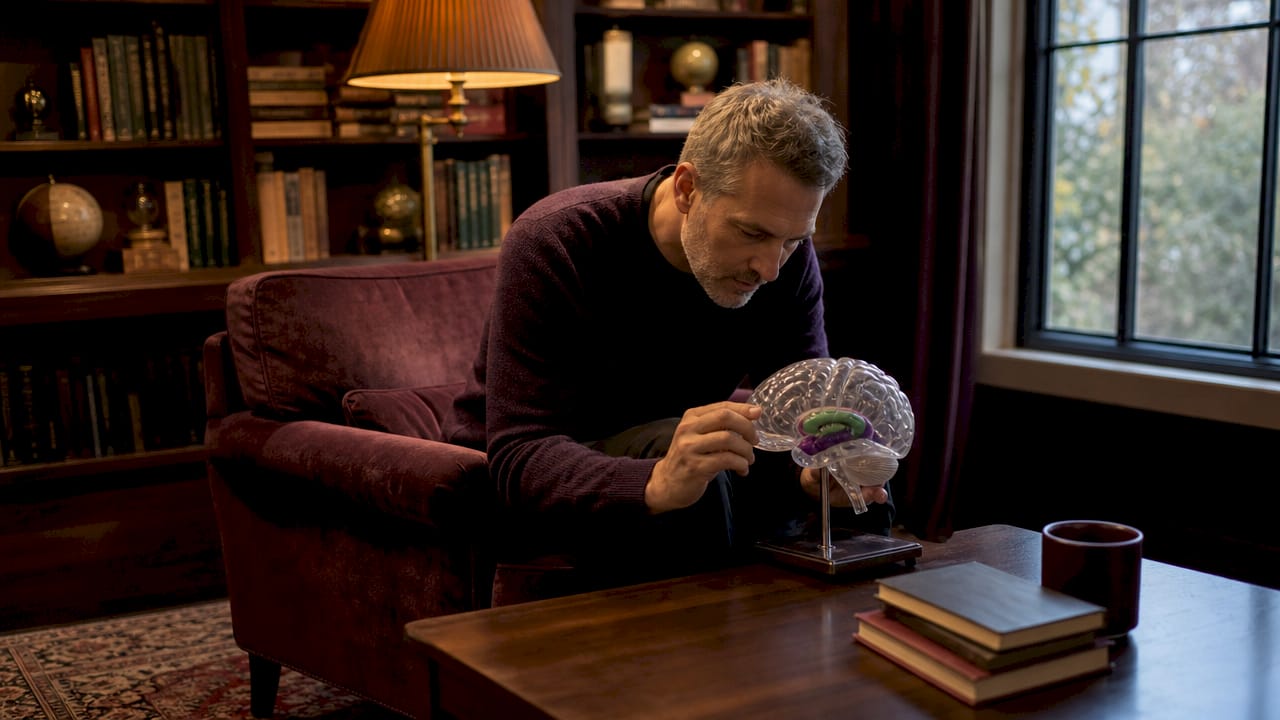
Pro Tip: When you want to preserve the emotional quality of a meaningful moment, introduce a distinctive scent during that experience. Your brain will encode the scent alongside the memory, making it easier to retrieve the full emotional texture later.
How does scent familiarity affect memory and storytelling?
Not every scent triggers a personal story with equal force. The relationship between odor familiarity and memory retrieval follows a U-shaped curve. Very familiar scents and highly distinctive unfamiliar ones both perform well as memory anchors. Moderately familiar scents are the weakest triggers. They feel recognizable but lack the sharp identity needed to pull a specific memory forward.
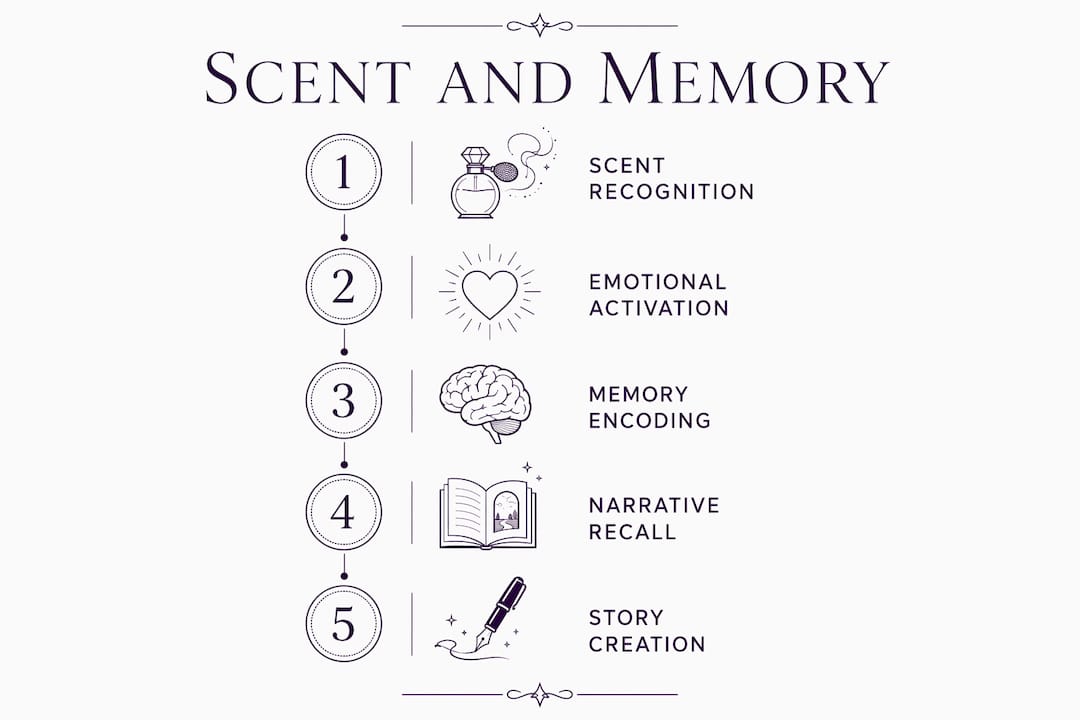
Semantic distinctiveness matters just as much as familiarity. When you can name a scent clearly, “cedar,” “rain on concrete,” “my grandmother’s kitchen,” your brain creates a conceptual label that strengthens the memory anchor. Vague or unnamed scents produce weaker narrative retrieval because the brain has no verbal hook to attach to the experience.
Here is how the three familiarity levels compare as narrative triggers:
| Familiarity level | Narrative trigger strength | Why |
|---|---|---|
| Very familiar | Strong | Deep encoding with repeated emotional context |
| Moderately familiar | Weak | Recognized but lacks a distinct memory anchor |
| Highly distinctive or novel | Strong | Unusual enough to encode as a standalone event |
This has a practical implication. If you want a fragrance to carry personal meaning, choose one that is either deeply tied to your history or genuinely unlike anything you have smelled before. The middle ground produces pleasant recognition, not story.
- Identify your anchor scents. Think of two or three smells that immediately pull up a specific memory. These are your existing narrative anchors.
- Notice what makes them distinctive. Is it the context in which you first encountered them? Their rarity? Their intensity? Naming the quality helps you choose future anchors deliberately.
- Avoid generic replacements. A mass-market fragrance that smells “nice” rarely becomes a narrative anchor. Distinctiveness is the prerequisite.
Pro Tip: Keep a brief scent journal. When a smell triggers a memory, write down the scent, the memory, and the emotion. Over time, patterns emerge that reveal which types of scents carry the most personal weight for you.
What cultural trends are shaping narrative fragrance today?
The fragrance industry has shifted. Post-pandemic consumers now favor scents that evoke emotional anchors over fragrances that simply smell pleasant. This is not a niche preference. It reflects a broad cultural turn toward meaning, identity, and self-expression through personal objects.
Fragrance collections are increasingly treated as olfactory autobiographies. Each bottle represents a chapter: a place visited, a relationship, a period of personal change. The spatial presence and protagonist identity embedded in a scent’s narrative drive purchase decisions more than its aesthetic qualities alone. Consumers are not buying a smell. They are buying a version of themselves.
Several shifts define this trend:
- From “smelling good” to “meaning something.” Fragrance marketing now leads with story, place, and emotional resonance rather than ingredient lists or celebrity association.
- Scent as self-healing. Consumers report using specific fragrances to re-enter calm states, recall confidence, or reconnect with a past self. This is intentional emotional regulation through smell.
- Collections as identity maps. Wearing different scents for different moods or life chapters is now common practice among fragrance enthusiasts. Each scent marks a distinct emotional territory.
- Artisanal and slow-made fragrances gaining ground. Readers seeking genuine narrative connection are moving toward niche and artisanal perfumes that prioritize natural ingredients and intentional craftsmanship over mass production.
The agency dimensions of fragrance, meaning the sense that a scent places you somewhere specific, as a specific person, in a specific emotional state, now drive consumer behavior more than any other factor. Scent has become a narrative tool, not just a grooming product.
How can you use scent to build your personal narrative?
Scent’s power as a narrative tool is not passive. You can build new associations deliberately. Training with a distinct scent during meditation, focused learning, or emotionally significant moments creates a retrievable anchor. Later, that same scent can re-trigger the cognitive or emotional state on demand.
This is not abstract. Studies show that participants who memorized information with a specific scent present recalled it more effectively when that scent was reintroduced. The scent acted as a retrieval cue, not just a pleasant backdrop. Olfactory training also improves broader memory and cognitive performance, suggesting that developing your sense of smell actively strengthens your capacity for narrative recall.
Practical ways to use scent for intentional fragrance use and personal story building:
- Pair a new scent with a new chapter. Starting a new job, moving to a new city, or beginning a creative project? Introduce a distinctive fragrance at the same time. The scent will encode alongside the experience.
- Use scent during meditation or reflection. Burning a specific incense or wearing a particular fragrance during quiet practice trains your brain to associate that smell with a calm, open state.
- Layer fragrances to mark complexity. Combining two scents can represent the meeting of two life periods or emotional states. The layered result becomes uniquely yours.
- Revisit old anchors with intention. If a scent from your past carries a memory you want to reconnect with, wear it deliberately during reflection. You are not just remembering. You are re-entering.
- Choose scents with clear conceptual identities. A fragrance built around a specific place, material, or moment gives your brain a semantic label to attach. That label strengthens the narrative anchor.
Pro Tip: When selecting a fragrance for a significant life event, wear it only during that period. Keeping it exclusive to that chapter preserves its narrative power. Once a scent becomes everyday, it loses its ability to mark a specific story.
Key Takeaways
Scent evokes personal narrative because olfactory signals reach the amygdala and hippocampus directly, encoding memories with emotional depth that no other sense can replicate.
| Point | Details |
|---|---|
| Direct brain pathway | Scent bypasses the thalamus, reaching emotion and memory centers instantly. |
| Recognition and retrieval rates | People recognize about 77% of odors; 55% trigger linked associative memories. |
| Familiarity and distinctiveness | Very familiar and highly distinctive scents anchor narratives best; moderate familiarity underperforms. |
| Intentional narrative building | Pairing a distinct scent with a meaningful experience creates a retrievable emotional anchor. |
| Cultural shift | Post-pandemic consumers treat fragrance collections as olfactory autobiographies, not just grooming products. |
Scent, story, and what I have learned from paying attention
I used to think scent preferences were purely aesthetic. You liked what you liked, and that was the end of it. Years of paying close attention to how fragrances affect memory and mood changed that view entirely.
The most common misunderstanding I encounter is the belief that scent-triggered memories are random. They are not. They follow the logic of encoding. The memories that surface most vividly are the ones that were emotionally charged when first formed, and the scents present during those moments became permanently linked to that charge. Once you understand that, you stop treating fragrance as decoration.
What I find most underused is the intentional side of this. Most people wait for scent to trigger memory passively. The more interesting practice is building new anchors deliberately. Choosing a fragrance for a specific chapter of your life, wearing it consistently during that period, and then setting it aside creates a kind of olfactory archive. You can return to it years later and re-enter that emotional state with remarkable clarity.
The emotional landscape of fragrance is not fixed. It is something you shape over time, if you pay attention. Maisonvoyageurparfum’s approach to slow, natural fragrance reflects exactly this philosophy: that a scent worth wearing is one worth remembering.
— Celeste
Fragrance as a personal archive: Maisonvoyageurparfum
Maisonvoyageurparfum was built on the idea that a fragrance should mean something. Each scent in the collection is slowly crafted with 98% natural ingredients, designed not to impress at first breath but to deepen over time. The slow luxury philosophy behind every bottle reflects a commitment to mindfulness and personal meaning, the exact conditions under which narrative anchors form most powerfully.

If you are ready to treat fragrance as a tool for self-exploration rather than a finishing touch, the Maisonvoyageurparfum collection offers a considered starting point. Each scent is an invitation to explore within yourself, slowly and without rush.
FAQ
Why does scent trigger memories so powerfully?
Scent connects directly to the amygdala and hippocampus, the brain’s emotion and memory centers, without passing through the thalamus. This direct pathway means olfactory memories arrive with full emotional context intact.
What is personal narrative through scent?
Personal narrative through scent, also called olfactory autobiography, is the process by which specific fragrances become linked to life chapters, emotional states, or identity. Each scent acts as a retrievable anchor for a specific personal story.
Which scents are best for building personal narrative?
Very familiar scents and highly distinctive or novel ones work best as narrative anchors. Moderately familiar scents produce recognition without strong episodic recall, making them weaker tools for personal story building.
Can you intentionally create scent-memory associations?
Yes. Pairing a distinctive scent consistently with a specific activity, such as meditation or learning, trains the brain to encode that scent as a retrieval cue. Later exposure to the same scent can re-trigger the associated emotional or cognitive state.
How has fragrance culture changed around personal storytelling?
Post-pandemic consumers increasingly select fragrances for emotional resonance and narrative identity rather than aesthetic appeal alone. Fragrance collections are now commonly treated as olfactory autobiographies, with each scent marking a distinct chapter of personal history.