
Find Unique Scents Outside Mainstream Stores in 2026
Niche perfumery is defined as the practice of crafting fragrances in small batches, prioritizing rare ingredients and artistic storytelling over mass-market appeal. To find unique scents outside mainstream stores, you need to look beyond department store counters and toward artisan perfume shops, independent creators, and specialty boutiques where each bottle carries a distinct narrative. The global fragrance market is saturated with safe, crowd-pleasing options. Artisanal alternatives offer something different: a scent that feels like yours alone, built from unconventional materials and personal meaning. Maisonvoyageurparfum, based in Madrid, represents exactly this philosophy, crafting each fragrance slowly with 98% natural ingredients to evoke memory and introspection.
What distinguishes artisanal and niche perfumes from mainstream options?
Artisanal and niche perfumes differ from mainstream options in three fundamental ways: production scale, ingredient quality, and creative intent. Understanding these differences helps you recognize genuine craftsmanship when you encounter it.
Production scale and creative freedom
Mass-market fragrances are produced in enormous quantities, which forces formulators to rely on inexpensive, stable synthetic compounds. Niche houses work in small batches, which gives perfumers the freedom to experiment with rare or costly raw materials without worrying about industrial-scale consistency. Small-batch production preserves creative independence and allows perfumers to reformulate or discontinue a scent when the inspiration runs its course. That freedom is simply not available to a brand producing millions of units per year.
Concentration and ingredient quality
Niche perfumes carry oil concentrations of 18–30%, compared to 10–15% in most designer releases. Higher concentration means the scent evolves more slowly on your skin, revealing different facets over hours rather than fading within the first hour. Artisanal creators also source unusual raw materials: aged resins, rare florals, and even unconventional notes like ink, old paper, or industrial landscapes. These choices reflect artistic vision, not focus-group testing.
Storytelling over broad appeal
Mainstream brands design fragrances to offend as few people as possible. Niche creators do the opposite. Independent perfumers craft scents that evoke specific moods, memories, or emotional states, which makes them deeply personal and sometimes polarizing. A scent that smells like a library after rain or a Mediterranean coastline at dusk will not appeal to everyone. That specificity is the point.
Pro Tip: When evaluating a niche perfume, ask the retailer about the perfumer’s background and ingredient sourcing. A brand that cannot answer those questions is likely trading on aesthetics rather than genuine craftsmanship.
The table below summarizes the core differences between artisanal and mass-market fragrances.
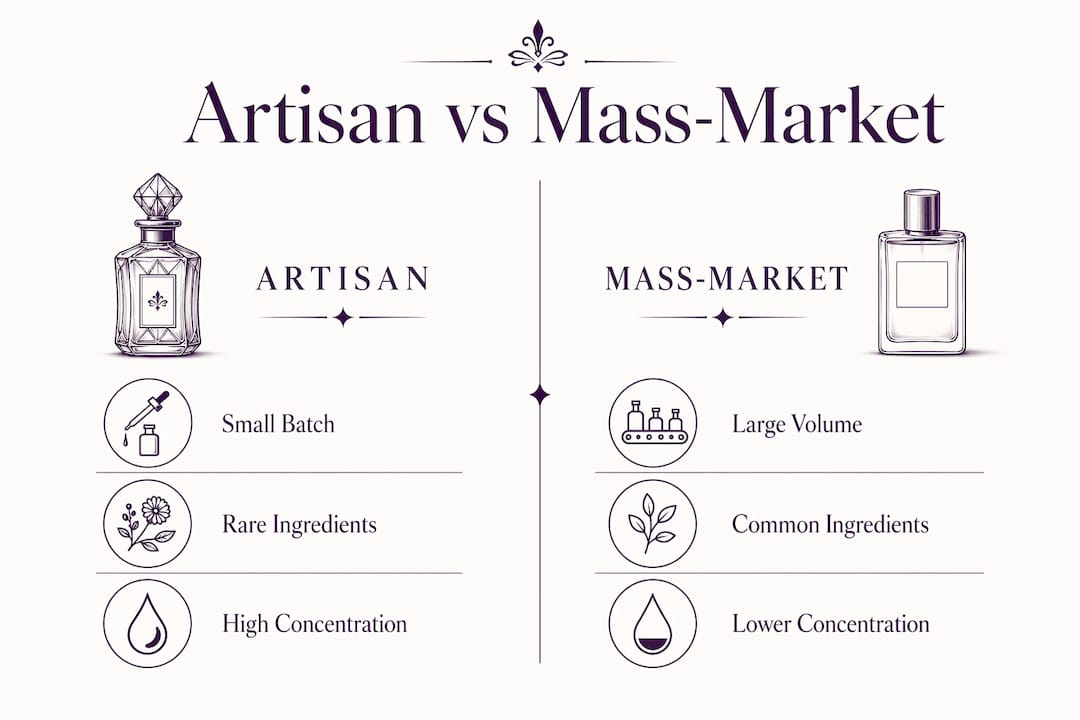
| Feature | Artisanal / Niche | Mass-Market |
|---|---|---|
| Production volume | Small batch, limited runs | Industrial scale |
| Oil concentration | 18–30% | 10–15% |
| Ingredient sourcing | Rare, natural, ethically sourced | Primarily synthetic, cost-driven |
| Creative intent | Artistic storytelling | Broad consumer appeal |
| Availability | Boutiques, specialty retailers | Department stores, pharmacies |
Where can you find genuine unique scents beyond mainstream stores?
The best places to discover niche fragrances are specialized boutiques, online decanting platforms, and fragrance communities where enthusiasts share knowledge freely. Each channel offers a different depth of access.
Specialized boutique stores and artisan perfumers
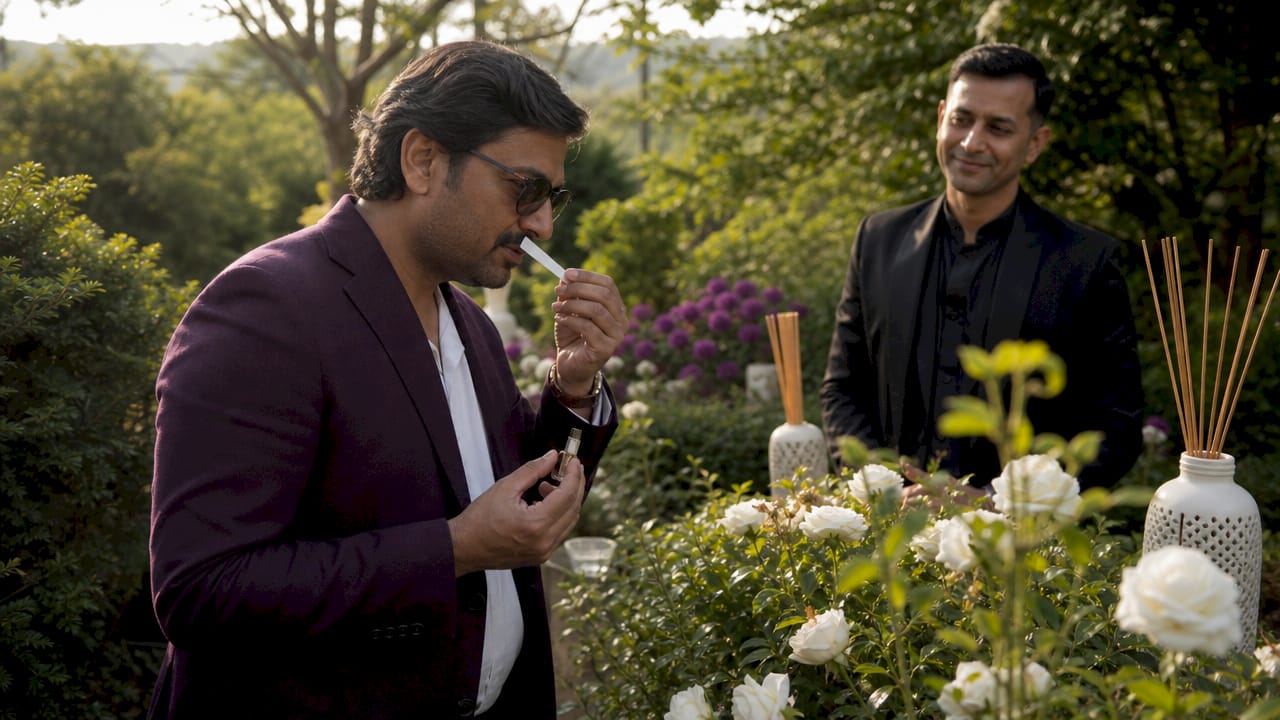
Independent perfume boutiques carry curated selections from small houses that department stores never stock. These shops employ staff who understand fragrance families, note structures, and the stories behind each bottle. Artisan perfumers like Sifr Aromatics formulate in small batches to maintain independence from mass-market pressures, and visiting their physical spaces gives you direct access to the creator’s vision. Maisonvoyageurparfum operates with the same philosophy from Madrid, offering an immersive experience rooted in Mediterranean sensibility and natural ingredients.
Online niche fragrance retailers and decanting platforms
Online specialty retailers stock hundreds of niche and indie releases that never appear in mainstream channels. Decanting platforms go further: they divide full bottles into small samples of 2–5 ml, letting you test a fragrance properly before committing to a full purchase. This model has made rare scents accessible to people who live far from major cities with dedicated boutiques.
Community forums and enthusiast groups
Fragrance communities on platforms like Reddit’s r/fragrance and dedicated forums connect thousands of enthusiasts who share reviews, decant trades, and sourcing advice. These communities surface obscure releases, warn against misleading marketing, and help newcomers build vocabulary for describing what they smell. The collective knowledge in these spaces rivals that of many professional retailers.
Here are the most reliable ways to find authentic artisan perfume shops and specialty scents:
- Visit independent perfume boutiques in your city and ask specifically for small-house or indie releases.
- Use online decanting services to order 2–5 ml samples before buying full bottles.
- Join fragrance enthusiast forums to access community reviews and decant trading.
- Attend niche fragrance events, pop-ups, and trade shows where indie perfumers present new work directly.
- Check that any online retailer lists the perfumer’s name, ingredient philosophy, and production method before purchasing.
- Look for brands that source ingredients ethically by visiting growers and collaborating with indigenous communities.
Pro Tip: Before buying from an unfamiliar online retailer, search the brand name alongside the word “decant” or “sample” in fragrance forums. Enthusiasts are quick to flag counterfeit or misleading sellers.
How do you select a unique fragrance that becomes your signature scent?
Selecting a personal signature scent from the world of artisan perfumery requires patience, a willingness to sit with complexity, and a structured approach to sampling. Rushing the process leads to expensive mistakes.
Follow these steps to evaluate niche fragrances with confidence:
- Learn the basic note structure. Every fragrance has top notes (the first impression), heart notes (the character that develops after 20–30 minutes), and base notes (what lingers for hours). Knowing this prevents you from judging a scent on its opening alone.
- Start with samples or decants. Buy small decants of 2–5 ml to test how a fragrance evolves on your skin across a full day. Skin chemistry changes a scent significantly from how it smells on a paper strip.
- Wear the same sample at least three times. Your perception of a fragrance shifts with your mood, the season, and your skin’s condition. Three wears give you a reliable read on whether a scent truly resonates.
- Read the perfumer’s narrative. Artisanal creators write about the emotion or memory they intended to capture. Understanding that context deepens your connection to the scent and helps you decide if the story aligns with your own experience. Maisonvoyageurparfum frames each fragrance as a form of personal identity exploration, which is a useful lens for any niche purchase.
- Embrace unconventional notes. Notes like vetiver, oud, birch tar, or castoreum feel strange at first. Give them time. Unconventional scent profiles often create the deepest personal connections once you move past the initial surprise.
- Avoid blind buying full bottles. Even a glowing review from a trusted source cannot predict how a fragrance will perform on your skin. Always sample first.
Pro Tip: Keep a small notebook or use a notes app to record your impressions after each wear: the occasion, your mood, and what you noticed at each stage of the dry-down. Patterns emerge quickly and guide future purchases.
Price in niche perfumery reflects ingredient rarity and production scale, not just oil concentration. High price does not always guarantee greater longevity or superior quality. What it does reflect is the overhead of small-batch artisanal craftsmanship and the cost of sourcing materials that mass-market brands simply do not use.
How do you build and maintain a collection of artisan perfumes?
A well-curated fragrance wardrobe is built slowly and intentionally. The goal is not volume but variety: scents that serve different moods, seasons, and occasions without overlapping too much.
Caring for your collection properly preserves the integrity of each bottle. Light, heat, and humidity degrade fragrance oil over time. Store bottles in a cool, dark drawer or cabinet away from bathroom steam. Original packaging adds an extra layer of protection.
Layering fragrances is one of the most creative ways to build a signature that no one else wears. Start with a simple base, such as a clean musk or a light wood, and add a more expressive scent on top. Less is more: two fragrances layered thoughtfully create depth, while three or more tend to clash.
Here are the core practices for maintaining a meaningful artisan collection:
- Rotate your scents seasonally to keep your experience fresh and prevent olfactory fatigue.
- Store bottles away from direct light and heat to slow oxidation.
- Keep a fragrance journal to track which scents you reach for most and why.
- Prioritize wearability alongside rarity. Limited editions are collectible, but a scent you never wear serves no purpose.
- Build a curated fragrance wardrobe gradually, adding one or two pieces per season rather than buying in bulk.
| Practice | Why it matters |
|---|---|
| Seasonal rotation | Prevents olfactory fatigue and keeps scents feeling new |
| Dark, cool storage | Slows oxidation and preserves fragrance integrity |
| Fragrance journaling | Reveals personal patterns and guides future purchases |
| Layering with intention | Creates a signature combination unique to you |
| Balancing rarity and wearability | Keeps the collection functional, not just decorative |
Key Takeaways
The most reliable way to find unique scents outside mainstream stores is to combine boutique visits, decant sampling, and community knowledge before committing to any full bottle.
| Point | Details |
|---|---|
| Niche vs. mass-market | Artisanal perfumes use 18–30% oil concentration and rare ingredients, unlike mass-market options. |
| Sample before buying | Always test 2–5 ml decants across multiple wears before purchasing a full bottle. |
| Verify authenticity | Check perfumer background, ingredient sourcing, and production philosophy before buying. |
| Build slowly | Add one or two pieces per season to keep your collection intentional and wearable. |
| Embrace the story | The narrative behind a niche scent deepens your personal connection to it. |
Why niche scents changed how I think about self-expression
The first time I wore a fragrance built around old paper and dried ink, I almost washed it off. It smelled nothing like what I expected a perfume to smell like. I wore it again two days later, and something shifted. By the third wear, I understood what the perfumer was reaching for: the quiet of a room full of books, the particular stillness of a place where time slows down.
That experience taught me something I have not found in any mainstream fragrance aisle. Mass-market scents are designed to be immediately pleasing. Niche scents are designed to be eventually true. The difference matters more than most people realize until they feel it.
Patience is the real skill in artisan perfumery. You cannot rush the process of finding a scent that genuinely reflects who you are. The perfumers who source ingredients directly from growers, who formulate in small batches, who write narratives around each creation: they are not making products. They are making mirrors. And the best ones show you something you did not know was there.
My honest advice is to resist the urge to buy quickly. Sit with a sample. Wear it on a Tuesday afternoon when nothing particular is happening. That is when you find out if a scent is truly yours. The scent and memory connection is real, and it only reveals itself when you give it time.
— Celeste
Maisonvoyageurparfum: where artisanal fragrance meets personal discovery
Maisonvoyageurparfum was built for exactly the kind of seeker this article describes: someone who wants more than a pleasant smell and is willing to slow down long enough to find something real.
Each fragrance in the Maisonvoyageurparfum collection is crafted with 98% natural ingredients, formulated slowly, and shaped around a specific emotional narrative. The brand’s Seven Archetypes Method offers a structured way to identify which scent archetype resonates with your inner world, making the selection process personal rather than arbitrary. Samples are available so you can test before committing. This is artisanal perfumery practiced with intention, and it is a worthy place to begin your search for a scent that is genuinely yours.
FAQ
What makes niche perfumes different from designer fragrances?
Niche perfumes use oil concentrations of 18–30% and prioritize rare, natural ingredients over broad appeal. Designer fragrances typically use 10–15% concentration and are formulated for mass-market acceptance.
Where can I buy specialty perfumes if there are no boutiques near me?
Online decanting platforms and specialty niche retailers ship samples of 2–5 ml worldwide. Fragrance community forums also facilitate decant trades between enthusiasts.
How many times should I test a fragrance before buying a full bottle?
Wear the same sample at least three times on your skin across different days and moods. Skin chemistry and context change how a fragrance performs significantly.
Why do artisan perfumes cost more than mainstream options?
The higher price reflects small-batch production overhead, rare ingredient sourcing, and the cost of ethical supply chains. It does not always guarantee longer wear time, but it does reflect genuine craftsmanship.
How do I start building a niche fragrance collection without overspending?
Start with decants and samples across several fragrance families. Add one full bottle per season based on what you actually reach for, and use a fragrance journal to track your preferences over time.