
How to Fix a Natural Perfume So It Lasts All Day
Use resinous base notes such as benzoin, labdanum, tonka, and sandalwood, raise the fragrance concentration, and let the blend macerate for several weeks. Apply to moisturized pulse points. That combination is what actually extends a natural perfume’s staying power. Everything else is a variation on this theme.
If you want quick wins today, reach for these fixatives:
- Benzoin
- Labdanum
- Tonka bean
- Sandalwood
- Patchouli
- Vetiver
- Myrrh
- Amber or resin blends (olibanum, frankincense)
Pro Tip: Rub a thin layer of unscented body oil into your pulse points before spraying. The oil gives the fragrance’s molecules something to cling to, which slows evaporation and helps the scent settle instead of scattering into the air.
Key Takeaways
Fixing a natural perfume for maximum longevity depends on resinous base notes, adequate concentration, patient maceration, and application to moisturized skin.
| Point | Details |
|---|---|
| Choose strong fixatives | Benzoin, labdanum, myrrh, and sandalwood anchor a blend far better than top notes alone. |
| Macerate for weeks, not days | Resting a finished blend for 3 to 8 weeks improves how the molecules harmonize and wear. |
| Apply to moisturized skin | Dab, don’t rub, onto pulse points for slower release and better scent development. |
| Watch dosage and safety | Keep fixatives at 1 to 5% concentration and always patch test before full wear. |
| Test before you commit | Maison Voyageur’s sample sets let you evaluate a fragrance’s actual wear time before buying full size. |
Table of Contents
- How Natural Fixatives Fix a Perfume in Place
- Which Natural Fixatives Should You Actually Use?
- What’s the Best Technique to Make a Natural Perfume Last?
- Starter Recipes You Can Test at Home
- Is It Safe to Use Concentrated Natural Fixatives on Skin?
- How Maison Voyageur Approaches Long-Lasting Natural Scent
- What Most Guides Get Wrong About Fixing Natural Perfume
- Try Maison Voyageur Before You Commit to a Full Bottle
- Sources
How Natural Fixatives Fix a Perfume in Place
A perfume is built like a pyramid. Top notes announce themselves in the first few minutes and vanish quickly. Heart notes carry the character for an hour or two. Base notes, the resins and woods, are what remain on your skin hours later, and they’re doing more than just lingering.
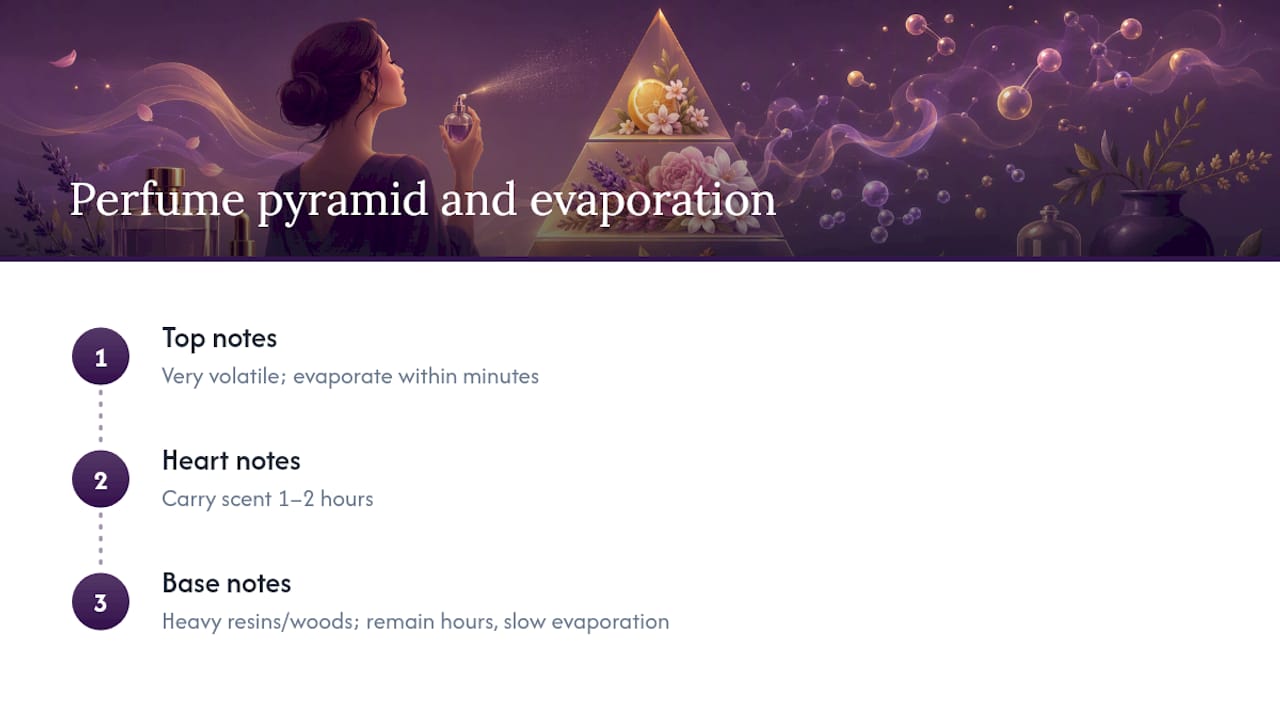
Fixatives work because of chemistry, not magic. Their molecules have higher boiling points and thicker, more viscous structures than citrus or floral top notes. That density slows evaporation and creates something like a scent film on the skin, holding lighter, more volatile molecules close instead of letting them drift off within minutes. Botanical resins and slow-evaporating woods act as effective natural fixatives precisely because of this molecular weight difference.
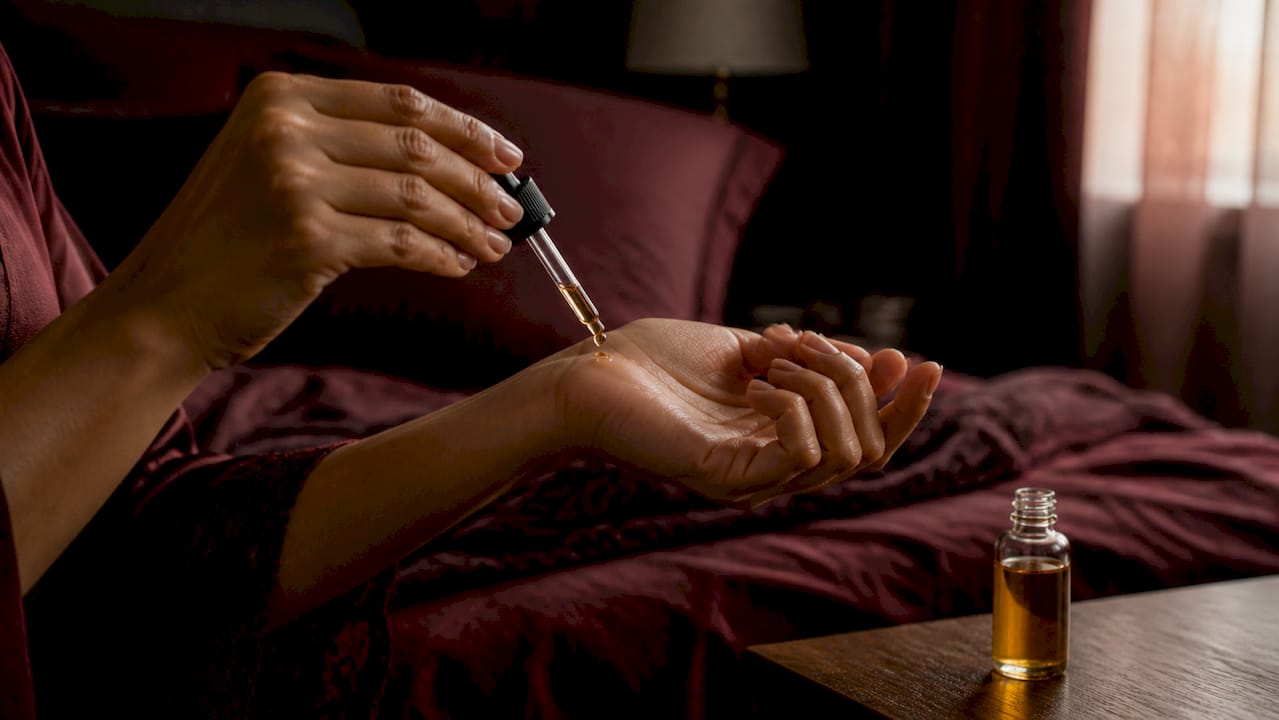
Your skin plays a role too. Drier skin evaporates fragrance faster than well-moisturized skin. Heat and humidity accelerate diffusion, which is why a natural perfume that lasts six hours in a cool room might fade in three during a summer afternoon. Oil-based formats generally outperform alcohol sprays for longevity, since alcohol evaporates almost instantly and takes some of the lighter aromatic molecules with it. A well-constructed natural eau de parfum can last 6 to 12 hours under favorable conditions, though it will rarely out-endure a synthetic-heavy formula built for maximum projection. Curious about the deeper mechanics? Our piece on how perfume longevity works naturally on your skin goes further into this.
Which Natural Fixatives Should You Actually Use?
Not every fixative behaves the same way, and choosing the wrong one can muddy a blend you spent weeks perfecting. Here’s how the most common materials break down:
- Benzoin — A vanilla-like resin with moderate fixing strength. Warms up florals and softens sharp top notes without overpowering them.
- Labdanum — One of the strongest natural fixatives available. Leathery, ambery, slightly animalic. Use sparingly; it dominates a blend fast.
- Myrrh — Smoky and slightly medicinal, excellent for anchoring incense-forward compositions.
- Frankincense (olibanum) — Lighter than myrrh, with a resinous, almost citrus-tinged smoke. Good fixing power without heaviness.
- Sandalwood — Creamy and soft, one of the gentlest fixatives, blends well with nearly everything.
- Vetiver — Earthy, smoky-green, thick in viscosity, and a workhorse for grounding fresh or aquatic top notes.
- Patchouli — Deep, damp-earth character. Small doses fix beautifully; too much reads as dated or heavy.
- Tonka bean — Rich in natural vanillin, contributes sweetness and considerable staying power.
A few additional notes worth knowing before you formulate:
- Oakmoss offers excellent fixing power but carries regulatory restrictions due to allergen concerns, so use it cautiously and in small percentages.
- Vanilla absolute functions similarly to tonka, adding warmth and vanillin-driven longevity.
- Choose jojoba or another light vegetable oil as your carrier when you want slow release and skin-hugging projection.
- Choose a perfumer’s alcohol base when you want brighter top-note clarity and faster initial diffusion, accepting a shorter overall lifespan.
Eden Botanicals’ guide to fixatives is a solid reference if you want to go deeper on blending compatibility between these materials.
What’s the Best Technique to Make a Natural Perfume Last?
Fixing a natural perfume comes down to four moves: concentration, maceration, application, and format. Get these right and the difference is dramatic.
- Set your concentration correctly. Colognes typically run 2 to 5% aromatic compounds, eau de parfums run 15 to 20%, and extraits push past 20%. Higher concentration means more base-note material present, which means longer wear.
- Add fixatives at 1 to 5% of your total blend, adjusting downward for potent materials like labdanum or oakmoss resinoid, and upward for gentler ones like sandalwood.
- Let it macerate. Rest your finished blend in a cool, dark place for several weeks. This isn’t optional if you want real longevity. Resting a blend allows the molecules to harmonize, smoothing out harsh edges and deepening the base note’s grip on the skin.
- Moisturize before you spray. Dab, don’t rub. Rubbing breaks down the fragrance’s molecular structure and disperses it unevenly.
- Layer strategically. Apply to pulse points (wrists, neck, inner elbows) and let a light mist settle on clothing, which holds scent longer than skin alone.
- Carry a travel-size roller made from a concentrated base-note blend in jojoba oil for a midday refresh without needing to reapply the full formula.
Pro Tip: A solid perfume balm made with beeswax and base-note oils will almost always outlast a spray, because the wax itself acts as a secondary fixative, slowing release even further.
For more on the maceration step specifically, our guide to artisanal perfume maceration methods walks through timing and troubleshooting in detail.
Starter Recipes You Can Test at Home
These are safe starting points, not finished formulas. Adjust in small increments and always let the blend rest before judging it.
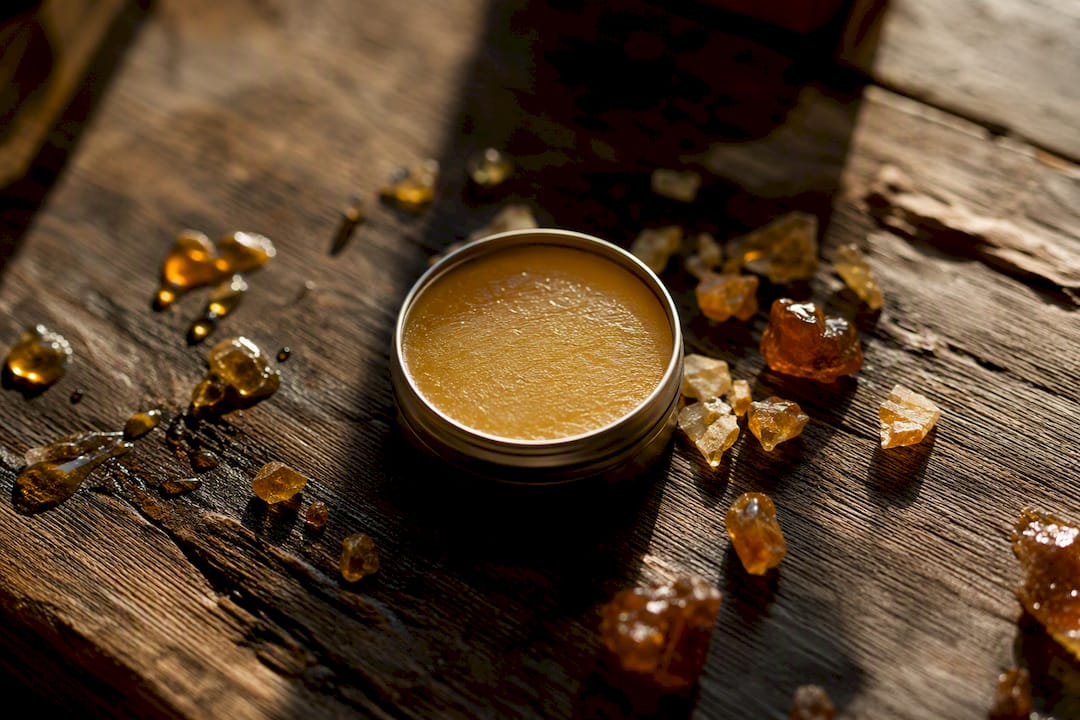
Oil-based solid parfum: Combine 10% total essential oils and absolutes with 85% jojoba oil and 5% labdanum or benzoin as your fixative. Melt into a small amount of beeswax if you want a balm format. Expect 4 to 6 hours of close, skin-hugging wear, ideal for daily use.
Alcohol-based eau de parfum: Blend 18% aromatic compounds into perfumer’s alcohol, with benzoin or labdanum making up roughly 3% of that total as your primary fixative. Macerate for 6 weeks before evaluating. This structure, built on a strong base note foundation, is what allows a natural EDP to reach 6 to 12 hours of wear in good conditions.
Travel booster roller:
Source your materials carefully. Avoid agarwood and sandalwood from unverified suppliers, since both are vulnerable to unsustainable harvesting. Prefer vendors who publish clear origin and sourcing information, a practice that also supports the growing preference for botanical alternatives among conscious consumers concerned about what goes into their fragrances.
Is It Safe to Use Concentrated Natural Fixatives on Skin?
Patch test everything before wearing it on pulse points. Dilute a small amount of your finished blend, apply it to the inner forearm, and wait 24 to 48 hours before judging your skin’s reaction.
Some natural materials carry real allergen or phototoxic risk, so treat them with the same caution regardless of how “natural” they sound:
- Balsam of Peru is a common sensitizer and a frequent culprit in fragrance allergies.
- Bergamot and other citrus oils containing bergaptenes can cause phototoxic reactions in sunlight, even at low doses.
- Oakmoss is restricted under most fragrance safety guidance due to allergen concerns.
- Botanical fixatives like benzoin, myrrh, and copaiba balsam are generally well tolerated but still require dosing within reasonable limits and individual testing.
Some of the most prized fixatives, like true agarwood and certain wild-harvested sandalwoods, come from species under real ecological pressure. Sourcing from verified, ethical suppliers isn’t a nice-to-have footnote. It’s part of doing this responsibly.
Store finished perfumes and raw fixatives away from heat and direct light. Resins in particular can oxidize and lose potency within a year or two if kept in warm conditions.
How Maison Voyageur Approaches Long-Lasting Natural Scent
Every formula rests through a full maceration period before it’s considered finished, the same slow process any careful home creator would use.
A few things guide how we choose and balance materials:
- Resins are selected for character first, strength second. A base note has to feel right before it’s asked to anchor anything.
- Base and heart notes are weighted heavily in the composition, not treated as an afterthought once the top notes are decided.
- We encourage sampling before committing to a full bottle. Skin chemistry varies enough that testing matters more than reading a description.
For readers who want to see how these choices show up in finished fragrances, our notes on base-note selection offer concrete examples.
What Most Guides Get Wrong About Fixing Natural Perfume
Most advice on this topic treats fixing a perfume like a shopping list problem. Buy the right resin, add it, done. That’s not how it works. The blends that actually last are the ones where the maker was patient enough to let the formula rest, sometimes for two months, before deciding it needed anything more.
The conventional wisdom overweights ingredient selection and underweights time. You can choose the best labdanum on the market and still end up with a perfume that fades by lunch if you skip maceration or apply it to dry skin under a alcohol-heavy formula. Longevity is a system, not a single ingredient.
If you’re starting out, prioritize application habits before you touch your formula at all. Moisturize first. Dab, don’t rub. Test on pulse points. Those three habits alone will extend wear time more than swapping one resin for another. Once that’s second nature, then start experimenting with base-note ratios and rest periods. The order matters more than people assume.
Try Maison Voyageur Before You Commit to a Full Bottle
If formulating your own blend isn’t where you want to spend your weekends, Maison Voyageur offers a more direct route to the same goal: a natural fragrance built to last, with the maceration and base-note work already done.

We offer sample sets and travel sizes specifically so you can test how a fragrance evolves on your own skin, in your own climate, before deciding on a full-size bottle. That’s the same principle behind patch testing and maceration, applied to the buying decision itself. Rather than guessing from a description, you get days of real wear to judge longevity, projection, and how the base notes settle once the top notes fade. Explore The Inner Trip collection to see the current scents built around this seven-archetypes approach, and start with a sample set if you want to test staying power before committing to a full bottle.
Sources
- How to make a perfume last longer — Karen Gilbert
- Fixatives and their function in natural perfumery — Eden Botanicals
Recommended
- How Perfume Longevity Works Naturally on Your Skin – Maison Voyageur
- Why Fragrance Fades on Skin: Keep Your Scent Present – Maison Voyageur
- Why Natural Perfume Smells Complex: The Real Science – Maison Voyageur
- How to Choose a Natural Perfume That Fits Your Personality – Maison Voyageur
Les sept fragrances Maison Voyageur
- Manifesting · unisexe (69,99 €)
- Intuition · femme (69,99 €)
- Certainty · femme (69,99 €)
- Expansion · femme (69,99 €)
- Release · homme (69,99 €)
- Presence · homme (69,99 €)
- Inner Fire · homme (69,99 €)
Nouvelle ici ? Commence par le Discovery Set · les 7 fragrances en format voyage (40 €).