
Sensitive Skin Buyers: 98% Natural Small Batch Approach to Gentle Perfumes
Perfumes suaves naturales are lighter, lower-irritation fragrances built from botanical extracts or gentle bases instead of heavy synthetic loads. The single most important move for sensitive skin: check the full ingredient list before you buy, and lean toward oils or low-alcohol formats. Expect softer sillage and shorter wear time than conventional perfumes. That trade is the whole point.
TL;DR:
- Checking the full ingredient list, especially for synthetic additives like phthalates, nitro musks, and synthetic dyes, is essential as “natural” claims are unregulated.
- Certification from organizations like Ecocert or EWG ratings can help verify the safety and natural origin of the perfume, but still require close review of ingredient disclosures.
- Perfume oils, especially those built on carrier oils, are the gentlest on sensitive skin, offering close, slow-release scent without alcohol or irritants.
- Testing a new fragrance on your skin over 24 to 48 hours with a patch test is crucial before full application, with a preference for samples or travel sizes.
- Small-batch, slow-crafted perfumes using mainly natural ingredients tend to develop more nuanced scents and offer greater transparency compared to mass-market options.
Table of Contents
- What to Look for in Natural Soft Fragrances
- Which Formulation Is Gentlest on Sensitive Skin?
- How Do You Safely Test a Natural Perfume?
- What Does Authentic Small-Batch Perfumery Look Like?
- Botanical Purity or Clean Synthetics: How Should You Choose?
- Try Maison Voyageur’s Artisanal Approach
- Sources
- FAQ
What to Look for in Natural Soft Fragrances
Start with the label. Not the marketing copy on the front. The ingredient list on the back.
“Natural” carries no legal definition in perfumery. A bottle can say natural and still contain functional synthetic ingredients, because nothing stops it. That gap is exactly why reading the INCI list matters more than trusting a claim printed on glass.
INCI stands for International Nomenclature of Cosmetic Ingredients. It’s the standardized list required on packaging, and it’s the only place a brand can’t hide behind poetry. If a label says only “fragrance” or “parfum” with nothing beneath it, that single word can conceal dozens of unlisted synthetic compounds, some of them allergenic. A perfumer with nothing to hide writes the whole list out.
A few ingredients deserve a hard pass if your skin reacts easily:
- Phthalates — plasticizers sometimes used to stabilize scent, linked to endocrine concerns and skin sensitization.
- Nitro musks — older synthetic musks flagged for irritation and environmental persistence; most reputable brands phased them out years ago, but budget fragrances still slip them in.
- Synthetic dyes — added purely for bottle color, contributing zero to scent and adding unnecessary allergen exposure.
- Denatured alcohol at high concentration — not dangerous, but the driver behind that dry, stinging sensation on compromised skin.
Certifications help narrow the field, though none of them are a magic shield. Ecocert verifies a defined percentage of natural or organic origin under an audited standard. EWG ratings flag ingredient-level hazard concerns so you can compare formulas quickly. Membership in the Natural Perfumers Guild signals a maker works with a community held to botanical-sourcing standards, rather than the vague “clean” language stamped on anything with a leaf on the box.
Pro Tip: Search the brand’s site for the word “INCI” before you add anything to your cart. If you can’t find a full ingredient list within two clicks, that absence is the answer.
Build a five-point checklist before you buy:
- Does the brand publish a complete INCI list, not just a marketing description?
- Are phthalates, nitro musks, and synthetic dyes explicitly excluded?
- Is there a certification or guild membership backing the natural claim?
- Can you get a sample or travel size before committing to a full bottle?
- Does the product page mention patch-test guidance?
Shoppers increasingly weigh sourcing transparency and environmental responsibility as part of what luxury even means now, not as an afterthought bolted onto the packaging. That shift shows up in how consumer expectations for sustainable personal care have moved: traceability itself has become a quality signal, not just an ethical one.
Which Formulation Is Gentlest on Sensitive Skin?
The format matters almost as much as the ingredient list. Here’s how each behaves against reactive skin, ranked from gentlest to most assertive.
- Perfume oils. Built on a carrier like jojoba or fractionated coconut oil, with no alcohol to evaporate and pull moisture from skin. Oils sit close to the body, release scent slowly, and tend to be the safest starting point if you’ve reacted to sprays before. Expect intimate, skin-hugging longevity rather than a scent that fills a room.
- Low-alcohol sprays. A step up in projection, with moderate irritation risk depending on how much denatured ethanol the formula uses. Look for “low-alcohol” or a specific percentage on the label; anything unlabeled is worth skipping if you’re reactive.
- Solid perfumes and balms. Wax or butter-based, applied with a fingertip, offering minimal sillage and low irritation risk. These work best for office wear, travel, or anyone who wants scent for themselves rather than for a room full of strangers.
- Hydrosols and eau fraiche. The mildest option in the entire category, essentially botanical waters with a whisper of aromatic content. Layer a hydrosol mist over a solid balm and you get gentle depth without stacking alcohol on alcohol.
Concentration changes gentleness too. An eau de toilette (EDT) carries less fragrance oil and more alcohol than an eau de parfum (EDP), which sounds like it should be gentler but often isn’t, since a thinner formula sometimes leans on more alcohol to carry the same scent load. A perfume oil bypasses that trade-off entirely by skipping alcohol altogether. Many eco-conscious brands blend natural extracts with a small amount of safe synthetic fixatives specifically to stretch wear time without loading up on alcohol, which is a reasonable compromise if the brand discloses it plainly.
How Do You Safely Test a Natural Perfume?
Never trust a first impression from the bottle. Skin chemistry changes everything, and the only real test happens on your own arm, over time.
Follow this sequence before any new fragrance earns a spot on your vanity:
- Request a sample or buy a travel size before committing to a full 100ml bottle.
- Do a scented-card test first: spray or dab onto paper, wait ten minutes, and see how the top notes settle.
- Apply a small dot to the inside of your elbow, an area less exposed than wrists or neck.
- Wait 24 to 48 hours and watch for redness, itching, or bumps before applying anywhere near your face or décolletage.
- If skin stays clear, move to a proper wear test: hair, clothing, or a less reactive patch of skin, worn through a full day.
Pro Tip: Test one new fragrance at a time. Layering two unknowns during a patch test means you won’t know which one caused a reaction if something goes wrong.
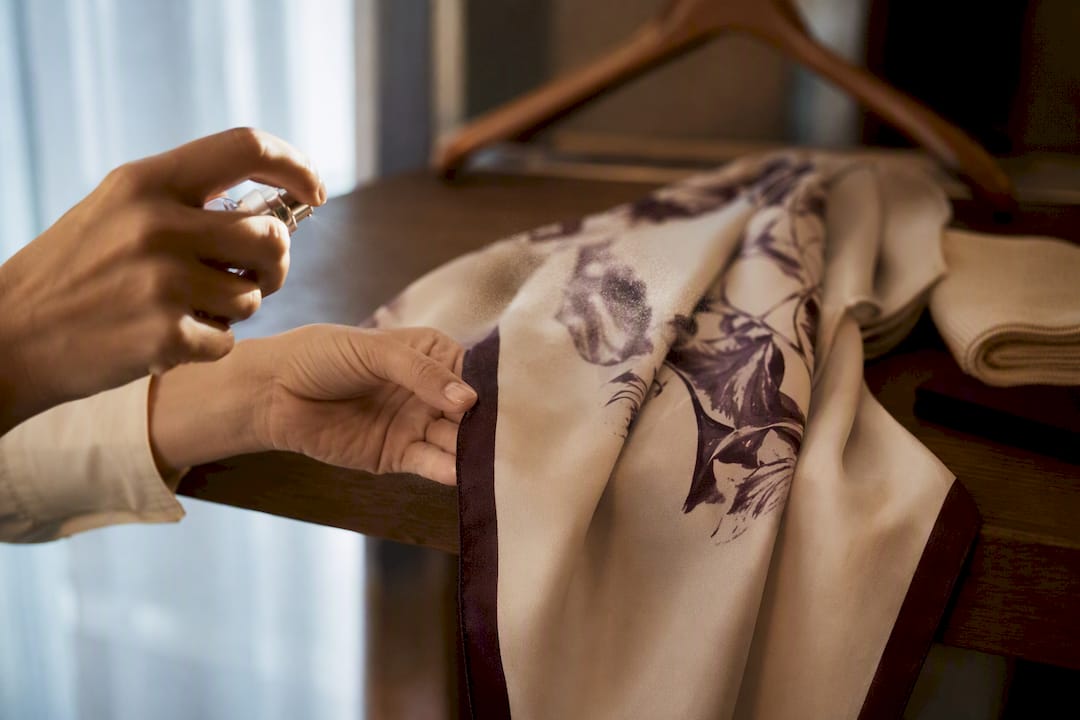
Once a scent passes the patch test, apply with restraint. Less product on warm pulse points goes further than a heavy hand on cold skin. If wrists or neck have reacted to fragrance before, redirect application to hair ends or the hem of a scarf, where scent still radiates without direct skin contact. Reapply lightly midday rather than dousing yourself once in the morning; natural formulas tend to fade gently rather than announce their departure, and a light second pass preserves that softness instead of overwhelming it.
What Does Authentic Small-Batch Perfumery Look Like?
Slow composition changes what a fragrance feels like against skin. When a perfumer works in small batches rather than mass production runs, notes have room to settle and interact before bottling, producing a scent that evolves quietly over hours instead of announcing itself in one loud opening.
Maisonvoyageurparfum composes each fragrance in Madrid this way, with 98% natural ingredients as the foundation of every blend. That figure means something specific: it acknowledges the small remainder often carries safe, stabilizing components that help a botanical-heavy formula hold its shape over the course of a day, rather than pretending absolute purity is realistic at scale. The honesty in stating a number, rather than an unverifiable “all natural” claim, is itself a form of ingredient transparency.
A fragrance built slowly, from ingredients you can name and trace, becomes something closer to a memory than a product. That is the quiet luxury we compose toward, one small batch at a time.
What should you expect from a trustworthy artisan perfumer, beyond the percentage on the label? A full INCI list available without digging. Sourcing notes that explain where botanical extracts originate. Travel and sample sizes so you can test before committing to a full bottle. Clear patch-test guidance instead of silence on the safety question. These are the transparency signals that separate an artisan house from a brand simply borrowing the language of naturalness.
Botanical Purity or Clean Synthetics: How Should You Choose?
Pure botanical formulas offer authenticity you can trace back to a specific plant, harvest, or region, but they trade away some stability and durability. Clean formulas that include a small percentage of safe synthetics tend to hold their shape longer and perform more consistently bottle to bottle, though they ask you to trust a brand’s judgment about what “safe” actually means.
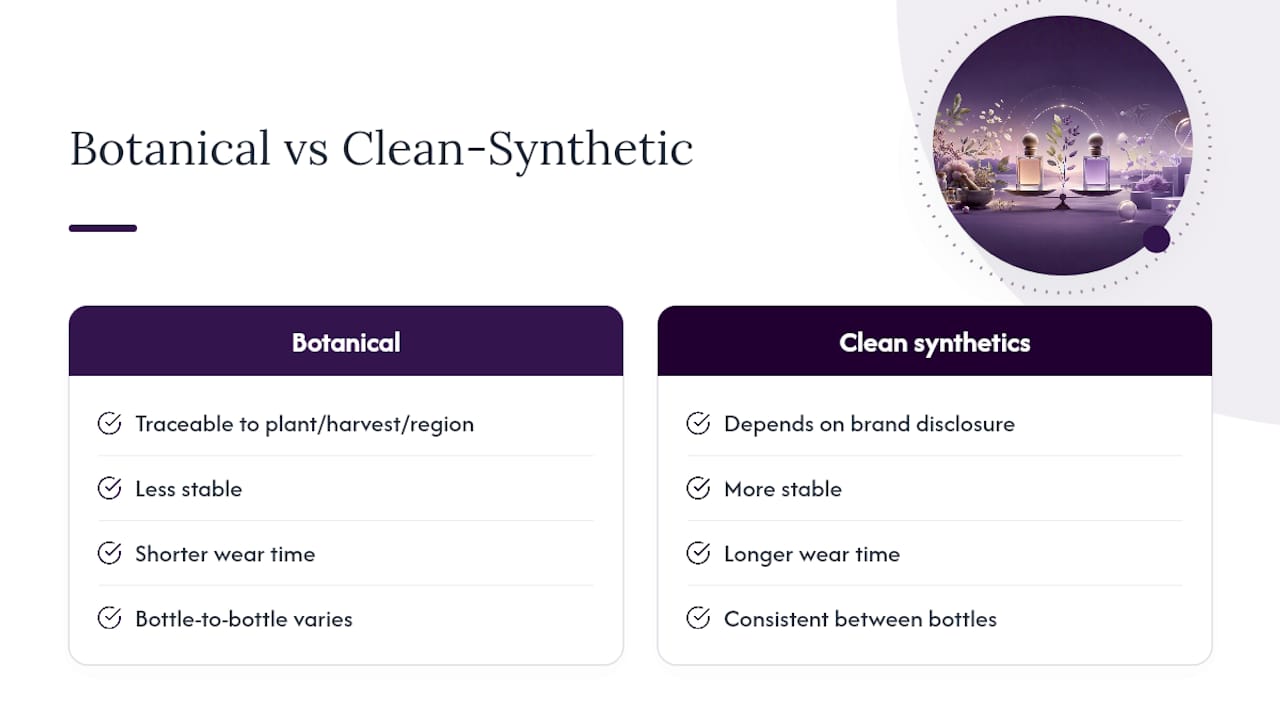
Neither path is wrong. If skin sensitivity and ingredient purity sit at the top of your priority list, choose botanical-first formulas and accept shorter wear time as the cost of that purity. If a signature scent that lasts through a long day matters more to you than an unbroken natural claim, a well-disclosed clean-synthetic blend is a reasonable, often more practical choice.
What matters regardless of which side you land on: demand transparency, and always patch-test before you commit. A brand willing to show its full ingredient list has already told you most of what you need to know.
— Celeste
Try Maison Voyageur’s Artisanal Approach
Maisonvoyageurparfum is the alternative to mass-market natural perfume lines for readers who want an artisan formula composed with visible ingredient care rather than a vague “clean” label. Each fragrance is composed slowly in Madrid using 98% natural ingredients, in small batches designed for personal introspection rather than mass appeal.

Some artisanal perfume brands follow transparent practices such as providing full ingredient disclosure, travel sizes for sampling, and patch-test guidance built into the buying experience. This is a fragrance house that treats a scent as a lived moment, not a product engineered for maximum shelf appeal.
If the criteria in this guide, transparency, gentleness, small-batch care, sound like what you have been searching for, explore the Full-Size 100ml Perfumes collection and find the composition that fits your own quiet introspection.
Sources
For deeper reading on the science and industry context behind this guide, the clinical review on fragranced consumer products and exposure risks covers which ingredients raise safety concerns. Broader consumer trends toward transparency explain why brands increasingly disclose sourcing. For consumer-facing comparisons of natural and clean formulas, see this eco-friendly perfume brand roundup and this non-toxic perfume guide.
- Fragranced consumer products: sources, exposures, effects and risks — PMCID PMC9163252
- 20 Eco-Friendly Perfume Brands for a Sustainable Scent — Conscious Life & Style
FAQ
What Makes a Perfume “Gentle” or Soft?
A gentle perfume typically uses botanical extracts, low or no alcohol, and excludes known irritants like phthalates and nitro musks, producing a softer scent that sits close to skin rather than filling a room.
Are Natural Perfumes Safe During Pregnancy or for Sensitive Skin?
Formulas free of phthalates, nitro musks, and synthetic dyes generally carry lower irritation risk, but “natural” alone isn’t a safety guarantee since the term is unregulated; always patch-test and check with a doctor during pregnancy for any new product.
How Should You Apply a Natural Perfume for Best Results?
Apply lightly to pulse points if skin tolerates it, or to hair and clothing if you’ve reacted to fragrance before, and reapply in small amounts midday rather than using a heavy hand once in the morning.
Are Natural Perfumes Long-Lasting?
Most natural and gentle formulas wear closer to the skin and fade faster than heavily synthetic fragrances, though blends that include a small percentage of safe synthetics tend to hold their shape longer than fully botanical versions.
How Much Does a Maison Voyageur Perfume Cost?
The Full-Size 100ml Perfumes collection is priced at $69.99 per bottle, available directly through the Maisonvoyageurparfum collection page.