
Using Perfume as a Mirror to the Soul: 2026 Guide
Perfume is the most intimate expression of identity: a scent you wear on your skin reveals who you are before you utter a single word. Using perfume as a mirror to the soul is not a poetic metaphor. It is a conscious act backed by the neurobiology of smell and centuries of artisanal perfumery. When you choose a fragrance aligned with your essence, you don't just smell good. You communicate your emotional state, reinforce your presence, and build a deep connection with your inner self. This guide shows you how to do it with precision.
How does perfume connect with the soul and emotions?
Smell is the only sense that connects directly to the limbic system, the region of the brain that processes memory and emotions. This explains why a scent can transport you in seconds to a childhood memory or change your mood without you anticipating it. No other sense has such direct access to the emotional core of the brain.
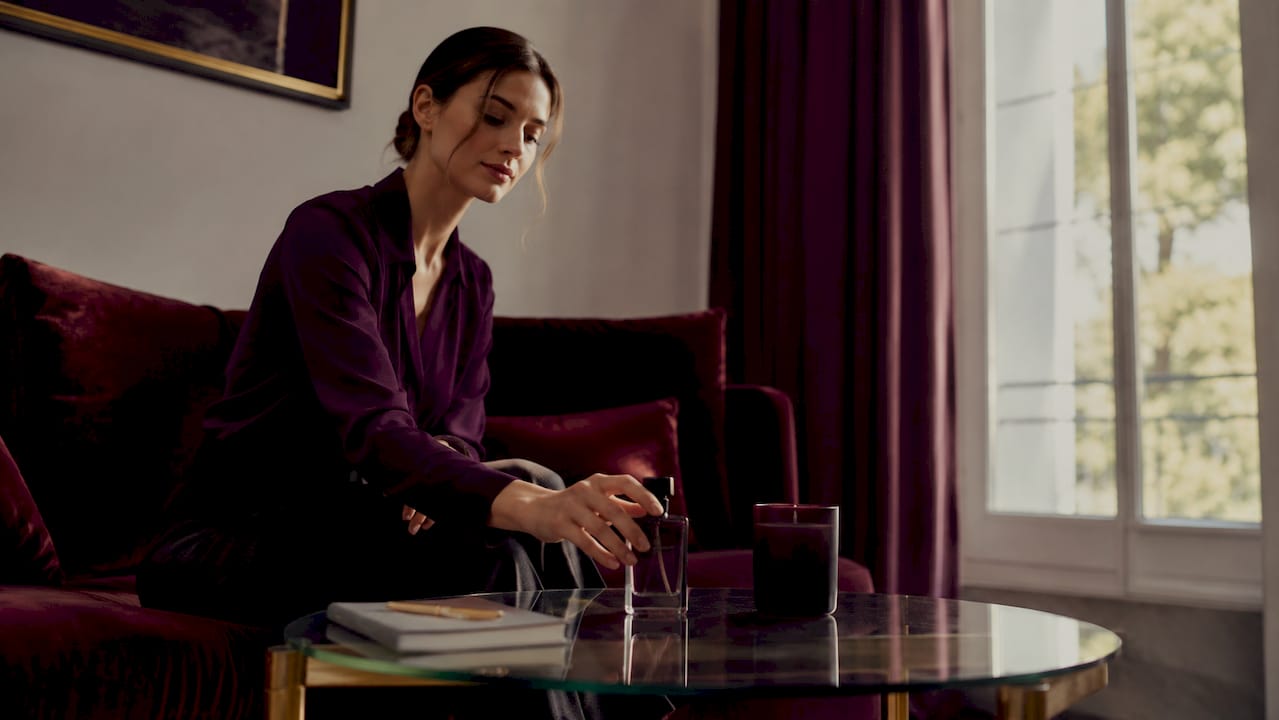
This connection turns perfume into a real emotional anchor. When you associate a fragrance with a moment of calm, confidence, or joy, your brain learns to reproduce that state every time you smell it. Master perfumers work with this premise: formulas with memories or identities require complex architectures that evolve on the skin to generate that deep connection.
The evolution of perfume on the skin is part of its language. Top notes are the first thing you perceive, lively and volatile. Heart notes emerge after 20–30 minutes and define the central character. Base notes, such as sandalwood, amber, or moss, remain for hours and blend with your body chemistry. This olfactory architecture is what makes the same perfume smell different on everyone.
"Perfume is more than scent; it is a social and affective extension that conveys presence and empathy." Source
Professional tip: Before judging a perfume, let it sit on your skin for at least 20 minutes. The top notes are just the prologue.
How to choose a fragrance that reflects your personality?
Choosing a perfume should start by identifying what emotion or facet of yourself you want to express. The intention behind the choice is as important as the scent itself. A perfume chosen without intention is just a product. Chosen with awareness, it becomes an extension of your identity.
Olfactory families offer a clear map to guide that choice:
- Florals: Evoke sensuality, femininity, and emotional openness. Roses, jasmine, and peony are their most representative notes.
- Citrus: Project energy, mental clarity, and freshness. Yuzu, bergamot, and lemon are ideal for active moments or warm weather.
- Woody: Convey depth, grounding, and confidence. Sandalwood, cedar, and vetiver are their pillars.
- Orientals: Communicate mystery, warmth, and intense presence. Vanilla, amber, and spices define this territory.
- Gourmand: Express warmth, nostalgia, and closeness. Notes of cocoa, caramel, or coffee create an enveloping and personal aura.
Fragrance and personality align when the choice arises from an honest question: How do I want to feel today? There is no wrong answer. There is your answer.
Application is also part of the message. Applying perfume to pulse points like wrists, neck, and inner elbows activates body heat to enhance diffusion. Perfume is not rubbed. It is allowed to settle. Rubbing it breaks down aromatic molecules and alters the natural evolution of the notes.
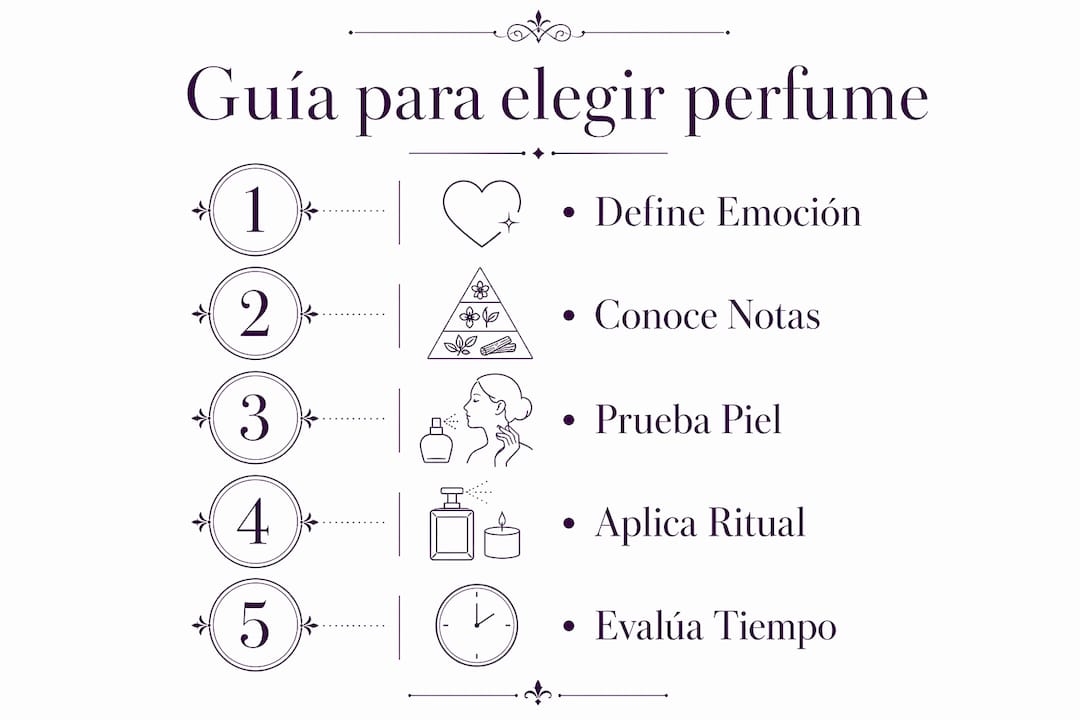
Professional tip: Explore the connection between perfume and introspection before buying. Knowing what emotions you seek greatly simplifies the choice.
What rituals turn perfume into a tool for self-knowledge?
Perfume as a tool for self-knowledge requires conscious, not automatic, use. Transforming the daily perfume routine into a ritual amplifies its meaning and reinforces the emotional bond with your essence. The difference between putting on perfume and using it with intention is the same as between eating and savoring.
Fragrance layering is the most powerful technique for creating a unique olfactory identity. It involves combining several fragrances in layers to build a scent that does not exist in any bottle. Applied with awareness, it becomes an unparalleled ritual of self-expression.
How to practice the conscious ritual step by step
- Prepare the base. Apply a neutral or unscented body cream. Hydrated skin retains scent better and prolongs its duration.
- Choose your intention. Before opening the bottle, ask yourself how you want to feel. That intention guides the day's choice.
- Start with an earthy or woody note. These notes ground and create the emotional base of the ritual. Vetiver or sandalwood work well as a starting point.
- Add a fresh or floral note. Layer a lighter fragrance over the base to elevate energy and add nuance.
- Apply to pulse points calmly. Wrists, neck, and behind the ears. Without rubbing. With presence.
- Close the ritual with a moment of silence. Inhale deeply. Let the scent settle. That moment anchors the intention.
Common mistakes that break the connection
- Buying a perfume based solely on the top note. Perfume needs 1–2 hours to show its true character on your skin.
- Rubbing wrists after application. This gesture destroys the molecules of the heart notes.
- Using too many fragrances at once without olfactory coherence. Layering requires harmony, not accumulation.
- Ignoring how the perfume reacts with your body chemistry. What smells good on paper may evolve differently on you.
How does context influence perfume choice?
The environment modifies how a perfume is perceived and experienced. Temperature, humidity, social setting, and time of day affect both the diffusion of the scent and its emotional impact. Adapting the fragrance to the context is not superficiality. It is sensory coherence.
| Context | Recommended fragrance type | Example notes |
|---|---|---|
| Summer or warm climate | Citrus, aquatic, or green | Yuzu, bergamot, green tea |
| Winter or cold climate | Woody, oriental, or spicy | Sandalwood, amber, cinnamon |
| Professional environment | Fresh, clean, or gently floral | Cedar, iris, white musk |
| Night or social event | Deep, sensual, or gourmand | Vanilla, oud, dark rose |
| Moment of introspection | Earthy, resinous, or woody | Vetiver, incense, patchouli |
The most common mistake when using perfume is not adapting to the season. In warm weather, citrus fragrances like yuzu offer greater freshness because their molecules are more volatile and disperse quickly. In cold weather, enveloping and deep notes expand slowly and create a more lasting presence.
The social environment also matters. Fragrances for work environments should be versatile and non-invasive, enhancing confidence without saturating shared spaces. For intimate or reflective moments, denser and more personal notes allow a more genuine connection with one's inner self.
Commercial perfumery often saturates the environment with synthetic aromas that cause olfactory fatigue. Balanced botanical formulas, on the other hand, allow the perfume to smell like the person and not just the brand. That difference is what separates an accessory from an extension of the soul.
Key points
Using perfume as a mirror to the soul requires intention, knowledge of olfactory families, and a conscious ritual of application that connects the scent with your true identity.
| Point | Details |
|---|---|
| Neurobiological basis | Smell connects directly with the limbic system, making scent an emotional anchor. |
| Intentional choice | Identifying the emotion you want to express before choosing a fragrance defines its authenticity. |
| Olfactory families as a map | Florals, woody, oriental, and citrus correspond to different emotional states and contexts. |
| Conscious ritual | Applying calmly to pulse points and practicing layering transforms perfume into a tool for self-knowledge. |
| Context adaptation | Temperature, social environment, and time of day determine which fragrance best expresses your essence at any given moment. |
Perfume as an act of presence: What I learned from stopping choosing by inertia
For years, I chose perfumes impulsively, attracted by the bottle or by what someone else was wearing. The result was always the same: a fragrance that smelled good in the store and that, after two hours, I didn't recognize as my own. The change came when I started asking myself, before opening any bottle, what I wanted to feel that day.
What I discovered is that perfume doesn't lie. When you choose out of haste or imitation, the scent reflects it: generic, without history, without presence. When you choose from self-knowledge, perfume becomes something different. It becomes yours in a way that cannot be fully explained, only felt.
Changing fragrance according to mood is not inconsistency. Perfume is a personal narrative, and there is no contradiction in exploring multiple facets of being through different scents. That is precisely what artisanal perfume does: it gives you olfactory vocabulary to name what you feel.
My most honest advice: stop looking for the perfect perfume and start looking for the true perfume. The one that smells like you, not the brand. The one that reminds you who you are when you need it. That is using perfume as a mirror to the soul.
— Celeste
Discover your fragrance at Maisonvoyageurparfum
Maisonvoyageurparfum is an artisanal Mediterranean perfumery based in Madrid that crafts each fragrance slowly, with 98% natural ingredients and a focus on personal introspection. Their collections are not products. They are olfactory narratives designed to connect with the wearer.

If you are looking for a fragrance that reflects your essence, Maisonvoyageurparfum's Seven Archetypes collection starts from personal archetypes to guide the choice from the inside out. Each scent is designed to accompany a state of being, not to impose itself on it. Explore also the slow luxury philosophy that defines each creation: time, calm, and authenticity in every bottle.
Frequently Asked Questions
What does it mean to use perfume as a mirror to the soul?
It means choosing fragrances that consciously express your identity and emotional state, turning scent into an extension of your inner self rather than just an accessory.
Why does perfume evoke such intense memories and emotions?
Smell connects directly with the limbic system, the brain region that manages memory and emotions. No other sense has such immediate access to the affective core of the brain.
How long should I wait to evaluate a perfume on my skin?
Ideally, you should wait between 1 and 2 hours. The perfume needs that time to evolve and show its heart and base notes, which are what define its true character on your body chemistry.
Which olfactory family is best suited for introspection?
Woody and earthy notes, such as vetiver, sandalwood, and incense, favor states of calm and reflection. They are most recommended for self-knowledge rituals or moments of inner silence.
Is it correct to change perfume according to your mood?
Yes. Changing fragrance based on how you feel is not inconsistency. It allows you to explore different facets of your identity and strengthens the connection between the scent and your emotional experience of the moment.