
The Role of Scent in Ritual: A Science-Backed Guide
Scent is defined as the most direct sensory pathway to human emotion, memory, and physiological state. The role of scent in ritual is not symbolic decoration. It is a neurological mechanism. 75% of human emotional responses are influenced by scent, making it the most powerful sensory tool available for shaping how a ritual feels and what it means. Across every major culture and spiritual tradition, fragrance has been used not as an accessory but as the invisible architecture of sacred experience. Understanding why this works changes how you approach every ritual you build.
How does scent influence the brain and body during rituals?
The olfactory system is the only sensory system that bypasses the thalamus entirely, connecting directly to the limbic system. That means scent reaches the amygdala and hippocampus before your conscious mind has processed anything. These two structures govern emotional regulation and memory recall. No other sense has this direct access.
The practical result is striking. A conditioned scent can trigger physiological changes in seconds, faster than breathwork, which typically requires 2–4 minutes to shift heart rate variability. You inhale, and your nervous system responds before you decide to relax. Muscle tension drops. Pulse slows. The body moves into a ritual state almost automatically.
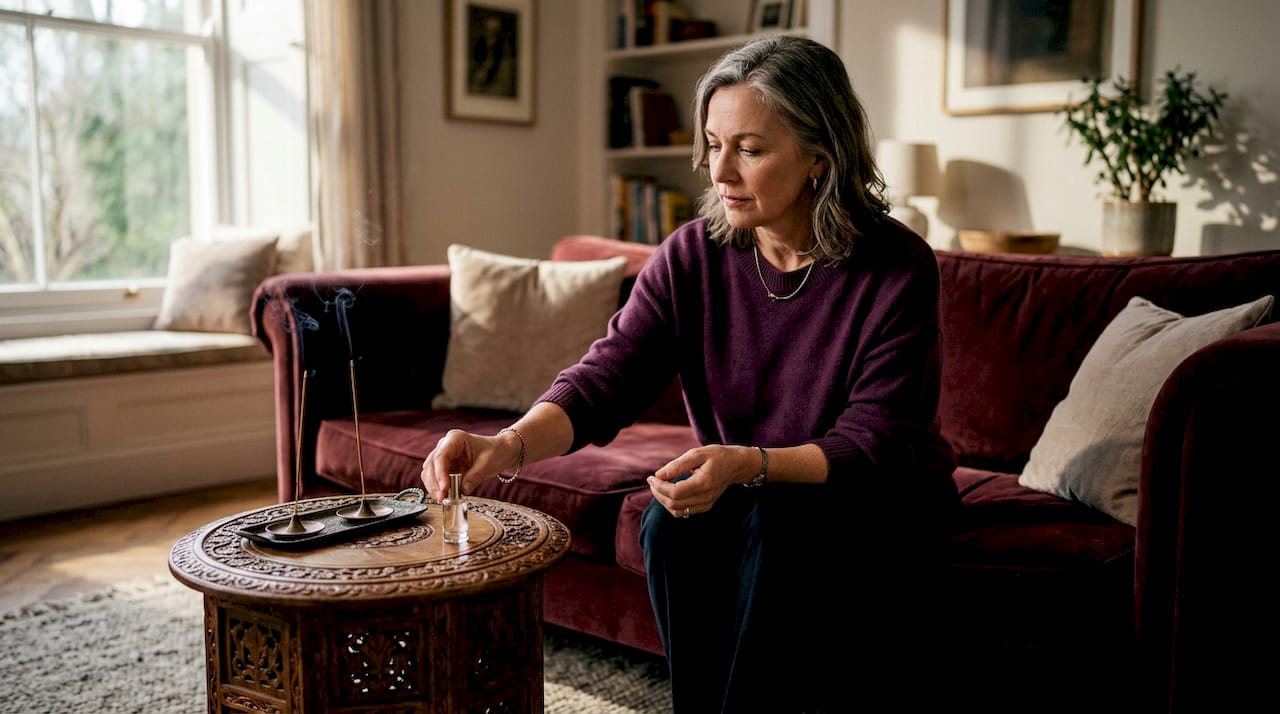
This is why fragrance works as a ritual anchor in a way that visual or auditory cues cannot fully replicate. Sound and sight travel through the thalamus first, adding a processing step. Scent skips that step entirely. The emotional response arrives first, and meaning follows.
Pro Tip: Choose a scent you associate with nothing else in your daily life. The cleaner the neural slate, the faster and stronger the ritual association builds.
| Physiological effect | What it means for ritual |
|---|---|
| Reduced muscle tension | Body enters receptive state faster |
| Slower pulse | Nervous system shifts toward calm |
| Faster onset than breathwork | Ritual begins before conscious effort |
| Direct limbic access | Emotional recall is immediate and strong |
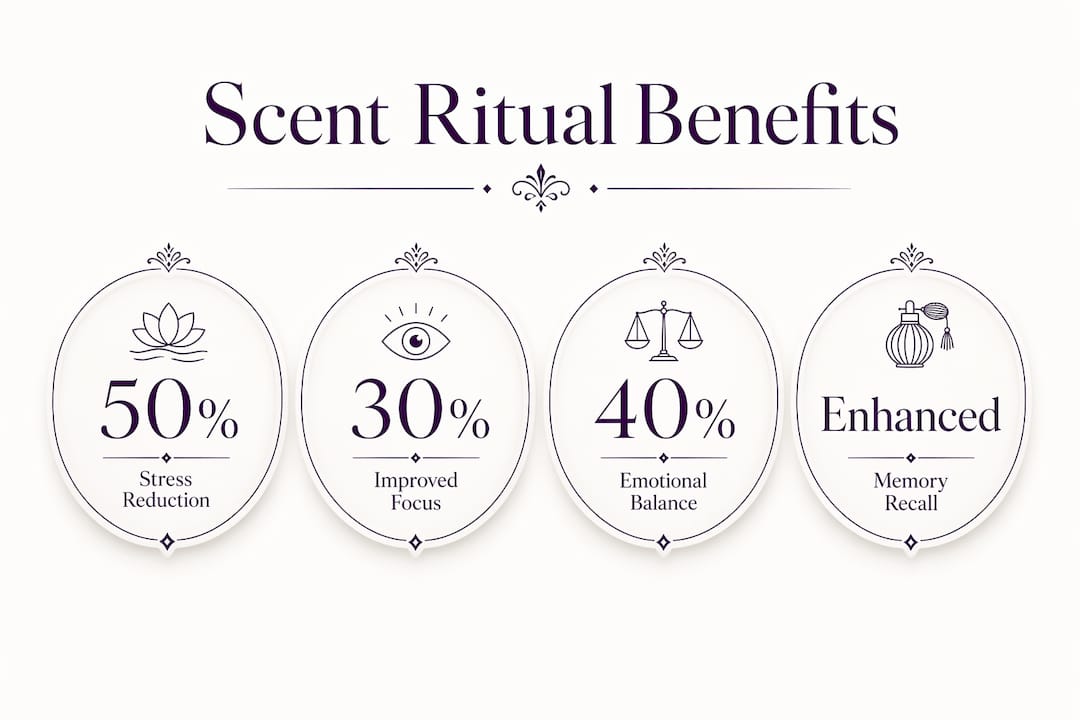
To learn more about fragrance and introspection, the neuroscience behind this connection runs deeper than most people realize.
What is the cultural and spiritual significance of scent symbolism in rituals?
Scent has carried symbolic weight across civilizations for thousands of years. The Hebrew Bible depicts Yahweh’s sanctuary filled with luxurious scents marking divine presence, kingship, and masculine authority. Incense and myrrh did not simply smell pleasant. They announced the sacred. They marked a threshold between ordinary and holy space.
Romano Guardini, the liturgical theologian, described incense burning as a generous and beautiful rite, a prodigal sacrifice of love with no practical utility. That framing matters. Incense was not burned because it was useful. It was burned because beauty and sacrifice together create a fragrant sphere that separates sacred time from ordinary time.
“Incense is like music and beauty in ritual: it serves no practical purpose, and that is precisely its power.” — Romano Guardini
Ancient civilizations understood something that modern practitioners are rediscovering. Consistent scent environments during ceremonies strengthened emotional bonds and created shared sensory experience. Scent acted as a silent language of connection, not a personal style choice.
The cross-cultural pattern is consistent:
- Egyptian temples burned kyphi, a compound resin, at sunset to mark the transition from day to sacred night.
- Japanese kōdō ceremonies treat incense appreciation as a meditative discipline, not a sensory pleasure.
- Catholic and Orthodox liturgies use frankincense to signal the presence of the divine and the elevation of prayer.
- Indigenous sweat lodge ceremonies use cedar and sage to purify space and prepare participants for spiritual work.
Each tradition uses scent not as decoration but as a marker of sacred space, a boundary between what is ordinary and what is set apart.
How to create effective scent rituals for personal growth
Building a scent ritual that actually works requires one non-negotiable principle: occasion-specificity. Using a unique scent exclusively for ritual builds a predictive neural association in the nervous system. Your brain learns that this scent means this state. The more exclusively you protect that pairing, the faster and more reliably the state arrives.
The most common mistake is using a ritual fragrance throughout the day. Overuse dilutes the conditioning. The nervous system stops treating the scent as a signal and starts treating it as background noise.
Follow these steps to build a scent ritual that holds:
- Choose a dedicated fragrance. Select a scent you do not wear or use at any other time. Artisanal or niche fragrances work well here because they are less likely to appear in everyday environments.
- Pair it with a physiological anchor. Combine the scent with a specific breathing pattern, posture, or hand position. Pairing scent with physical anchors conditions the nervous system to initiate calm or focus even before conscious engagement begins.
- Set a fixed ritual moment. Morning focus rituals benefit from citrus and bergamot notes. Evening calm rituals respond well to lavender, vetiver, and cedar. Match the scent profile to the intended state.
- Keep the ritual short and consistent. Five minutes of consistent practice builds stronger associations than thirty minutes of irregular use. Repetition is the mechanism.
- Protect the scent. Do not wear your ritual fragrance to social events, work meetings, or casual settings. Guard the association.
Pro Tip: Start with a scent ritual practice that takes under five minutes. Complexity is the enemy of consistency, and consistency is what builds the neural pathway.
What are the emotional and behavioral benefits of scent in daily rituals?
Scent rituals produce measurable changes in the body and mind over time. Fragrant rituals reduce blood pressure, pulse, and muscle tension, creating a physiological baseline that supports both focus and calm. These are not subtle effects. They are the same markers clinicians use to assess stress load.
The emotional benefits build through repetition. Each time you pair a scent with a calm or focused state, the association deepens. Over weeks, the scent alone begins to prepare the brain for that state before the ritual formally begins. The fragrance becomes a sensory anchor, a reliable cue that shifts your internal environment.
Specific scent profiles produce distinct emotional responses:
- Lavender reduces anxiety and supports sleep onset. It is the most studied fragrance in clinical relaxation research.
- Citrus and bergamot increase alertness and lift mood. They are well suited for morning rituals or creative work sessions.
- Cedar and vetiver ground and stabilize. They work well in evening rituals or practices centered on reflection.
- Frankincense and myrrh slow breathing naturally and have been used in contemplative traditions for centuries.
Shared scent environments add another dimension. When a group practices ritual together in a consistent fragrant space, the scent becomes a shared memory anchor. Communities that share scent environments build stronger emotional bonds and collective recall. This is why the smell of a particular incense can return a person to a childhood place of worship with complete emotional fidelity.
The behavioral benefit is habit durability. Rituals anchored by scent are more likely to persist because the olfactory cue lowers the activation energy required to begin. You smell the fragrance, and the state begins to arrive. The ritual becomes easier to enter each time you practice it.
Key takeaways
Scent is the fastest and most direct sensory tool for shaping emotional state, and consistent fragrance rituals build neural associations that make every practice more reliable and more meaningful.
| Point | Details |
|---|---|
| Direct limbic access | Scent bypasses the thalamus and reaches emotional centers faster than any other sense. |
| Occasion-specificity | Reserve your ritual scent exclusively for ritual use to build a strong neural trigger. |
| Physiological impact | Fragrant rituals measurably reduce blood pressure, pulse, and muscle tension. |
| Cultural universality | Every major spiritual tradition uses scent to mark sacred space and deepen communal bonds. |
| Consistency over complexity | Short, repeated scent rituals build stronger associations than long, irregular ones. |
What I have learned about scent rituals that most guides miss
Most people approach scent rituals the way they approach a new playlist: they pick something they already love and expect it to work. That is the first mistake. The fragrances you wear every day are already loaded with associations. Your brain has filed them under “Tuesday morning” or “that dinner party.” They cannot do double duty as sacred anchors.
The rituals that have stayed with me are the ones built around a scent I had never encountered before. Something unfamiliar. Something that had no prior meaning. That blank slate is where the real conditioning happens. Within two weeks of consistent pairing, the scent stopped being just a smell and started being a state. The body recognized it before the mind did.
The second thing most guides miss is the value of restraint. A ritual does not need candles, breathwork, journaling, and a specific playlist to be effective. One scent, one posture, three minutes. That is enough. Complexity creates friction, and friction kills consistency. The simplest rituals I have maintained the longest.
Scent also does something that no other ritual element does quietly. It works even when you are distracted, tired, or resistant. You light the candle, the fragrance reaches you, and something in the body begins to settle before you have decided to participate. That is not magic. That is neuroscience. And once you understand it, you stop treating fragrance as a finishing touch and start treating it as the foundation.
— Celeste
Maisonvoyageurparfum: fragrances crafted for ritual
Maisonvoyageurparfum was built around exactly this understanding. Each fragrance is slowly made with 98% natural ingredients, designed not for mass appeal but for personal depth.

The Manifesting Eau de Parfum opens with bright bergamot citrus, making it well suited for morning focus rituals. The Release Eau de Parfum, built on lavender, vetiver, and cedar, supports evening calm and reflection. For those who want a tangible ritual object, the personalized soy candle brings Mediterranean fragrance into a fixed, place-based ritual. These are not decorative products. They are sensory anchors, made to be used with intention.
FAQ
What is the role of scent in ritual?
Scent functions as a neurological anchor in ritual by triggering emotional and physiological states through direct access to the limbic system. This makes fragrance the fastest sensory tool for shifting mental and bodily state during practice.
Why does smell matter in spiritual ceremonies?
Smell matters in spiritual ceremonies because it marks sacred space and creates shared emotional memory among participants. Every major tradition, from Catholic liturgy to Japanese kōdō, uses consistent scent to separate sacred time from ordinary experience.
How do I choose a scent for my personal ritual?
Choose a fragrance you do not use in any other context, then pair it with a specific physical anchor like a breathing pattern or posture. Occasion-specificity is the single most important factor in building a reliable neural association.
Can scent rituals reduce stress?
Fragrant rituals produce measurable reductions in blood pressure, pulse, and muscle tension. These physiological changes occur within seconds of inhaling a conditioned scent, making scent one of the fastest available tools for stress regulation.
How long does it take to build a scent ritual association?
Consistent daily pairing of a scent with a specific state typically builds a recognizable neural association within two to three weeks. Short, repeated sessions are more effective than longer, irregular ones.
Recommended
- Nature’s Role in Scent Therapy: A Science-Backed Guide – Maison Voyageur
- How Fragrance Promotes Introspection: A Science Guide – Maison Voyageur
- Scent Rituals for Self-Discovery: A Practical Guide – Maison Voyageur
- Inner Journey Through Scent: A Self-Discovery Guide – Maison Voyageur
Les sept fragrances Maison Voyageur
- Manifesting · unisexe (69,99 €)
- Intuition · femme (69,99 €)
- Certainty · femme (69,99 €)
- Expansion · femme (69,99 €)
- Release · homme (69,99 €)
- Presence · homme (69,99 €)
- Inner Fire · homme (69,99 €)
Nouvelle ici ? Commence par le Discovery Set · les 7 fragrances en format voyage (40 €).