
Recycle Perfume Bottles: 5 Reuse First Tips for Scent Lovers
Most perfume bottles are recyclable. Empty the bottle, remove the cap and pump where possible, rinse it clean, and place the glass in your glass recycling container. Crystal, gilded glass, and bottles with electronic components are common exceptions, so check local rules if you’re unsure. A little rinsing goes a long way, both for the recycling plant’s machinery and for the workers who sort it.
TL;DR:
- Most perfume bottles can be recycled if properly prepared, but crystal, gilded, or electronically embedded bottles often require special handling.
- Rinsing bottles thoroughly and removing caps and pumps ensures they do not contaminate the recycling stream and are sorted correctly.
- Crystal, gilded, and bottles with electronics usually need separate disposal or donation, as they are not accepted in standard glass recycling.
- Creative reuse options include turning bottles into diffusers, vases, travel atomizers, or jewelry holders, with resale recommended for rare or collectible designs.
- Some retailers offer takeback programs, making it easier to recycle or reuse bottles, and supporting sustainable practices in fragrance consumption.
Table of Contents
- Step by Step: How to Prepare and Recycle an Empty Perfume Bottle
- How to Clean and Disassemble Pumps, Nozzles, and Glued Parts Safely
- Which Bin? Glass, Crystal, and Common Municipal Exceptions
- Creative Ways to Reuse and Resell Decorative Perfume Bottles
- Retailer Takeback and Municipal Alternatives
- Maison Voyageur’s Practical Tips for Conscious Scent Lovers
- Why We Care About What Happens After the Bottle Is Empty
- A Quieter Way to Carry Your Scent
- Sources
Step by Step: How to Prepare and Recycle an Empty Perfume Bottle
A near-empty bottle still holding a little liquid needs handling before it touches your recycling bin. Fragrance oils are concentrated and often alcohol-based, so treat the last few drops with care rather than tossing the whole bottle in as is.
- Finish or transfer the remaining perfume. Wear it out, decant it into a small inert glass vial to save, or if it’s truly unusable, pour it down the sink followed by a full flush of water. Never pour it near an open flame.
- Remove the cap and spray pump. Most caps twist or pull off. Pumps usually lift out with steady, even pressure. Set both aside.
- Rinse the bottle in hot water. A drop of dish soap breaks down oily perfume residue. For stubborn film, a short vinegar soak loosens what soap alone won’t touch, then let the bottle air dry fully before recycling.
- Sort the parts. The glass body goes in the glass container. Plastic caps and pumps typically go in the packaging (yellow) bin when your municipality accepts them; otherwise, they follow your local mixed-waste guidance.
- Deal with stuck pumps. If a pump won’t budge, don’t force it and risk cracking the neck. Try again after a warm water soak, or set the bottle aside for donation instead of pushing your luck with a screwdriver.
Pro Tip: Keep a small dish by your bathroom sink for empty bottles as they finish. Batch-cleaning five or six at once beats doing this one bottle at a time on trash day.
How to Clean and Disassemble Pumps, Nozzles, and Glued Parts Safely
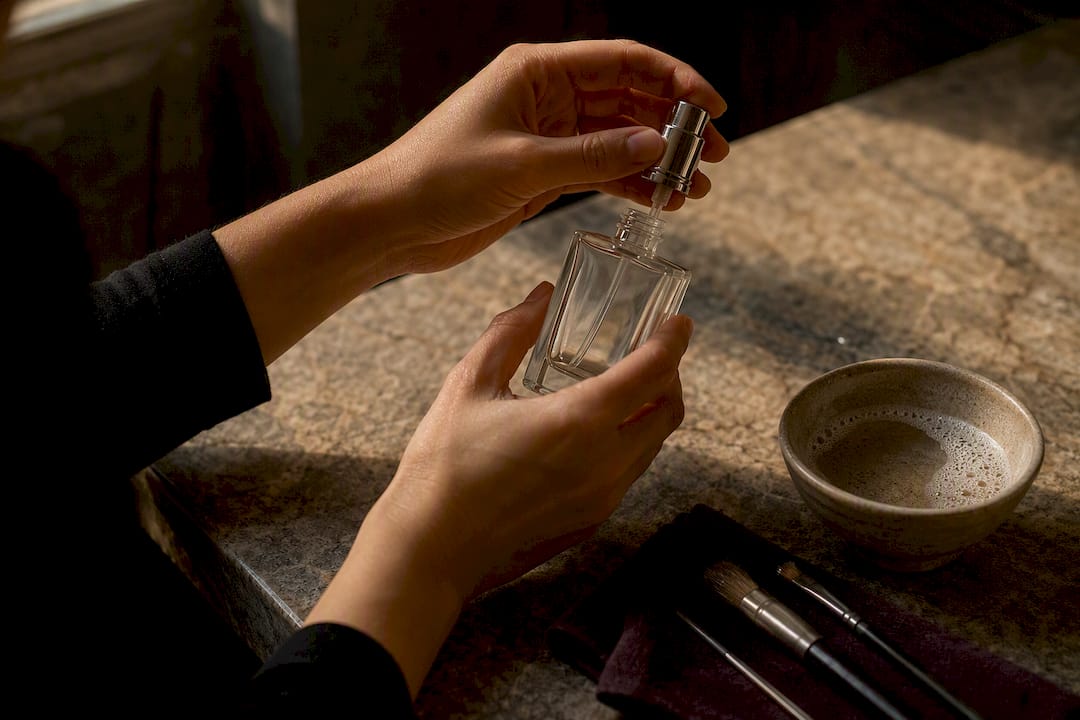
Perfume pumps are small, but they’re often the trickiest part of the whole process. Some are held on with adhesive, and glass necks chip easily if you’re impatient with them.
Keep these on hand before you start:
- A pair of pliers for gripping metal inserts without slipping.
- Rubber gloves to protect your hands from glass edges and leftover concentrate.
- A small flathead screwdriver to gently pry beneath stuck caps.
- Scissors for cutting through any plastic security seals.
Work slowly. Grip the pump collar with pliers and rock it side to side rather than yanking straight up. Metal atomizer inserts sometimes twist counterclockwise like a tiny screw. If a piece resists after two or three gentle attempts, stop. A cracked bottle neck is a safety hazard, not a shortcut.
Once everything is separated, run the glass under hot water, add a few drops of dish soap, and let it soak for a couple of minutes to lift the alcohol-based film. For bottles with heavier residue, a ten-minute vinegar soak works well before a final rinse. Let every piece air dry completely. Any leftover moisture can mildew inside a sealed bin.
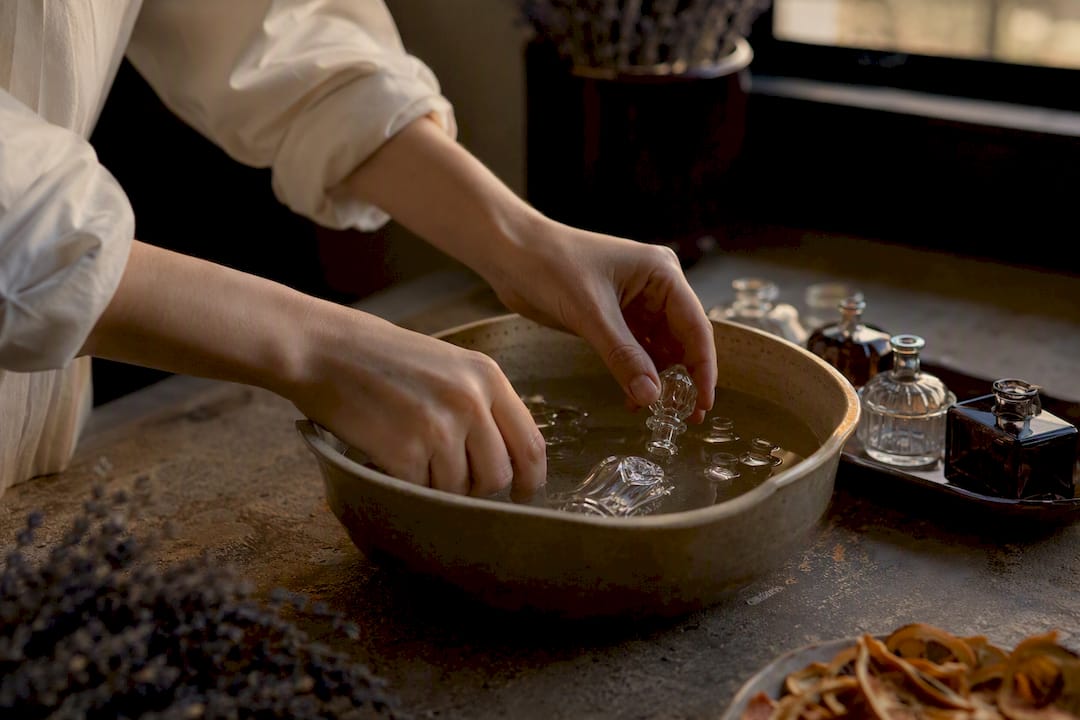
Skip disassembly entirely on antique, crystal, or heavily gilded bottles. These belong in donation piles or specialist glass recycling, not in a DIY teardown.
Pro Tip: If the nozzle is glued rather than pressed, don’t fight it. A bottle with a permanently fixed pump can usually still go in glass recycling as a single unit once it’s rinsed.
Which Bin? Glass, Crystal, and Common Municipal Exceptions
The default rule is simple: clean glass perfume bottles go in the glass recycling container, the same green igloo or municipal glass stream used for jars and wine bottles. Caps and pumps, if plastic, usually belong in the packaging stream instead.
A few exceptions trip people up regularly:
- Crystal isn’t standard glass. It often contains lead or other additives that contaminate the glass recycling stream, so many programs exclude it.
- Gilded or heavily painted glass sometimes falls outside standard collection too, depending on your local facility’s sorting equipment.
- Bottles with embedded electronics, like light-up limited editions, need separate handling and never belong with regular glass.
- When in doubt, check first. Your municipal website, waste-collection app, or a quick call to customer service settles it faster than guessing.
Rinsing before you toss the bottle isn’t just tidiness. Municipal guidance consistently points to removing caps and rinsing as a way to avoid contaminating the whole batch and to protect the people who sort it by hand.
Creative Ways to Reuse and Resell Decorative Perfume Bottles
A beautifully shaped bottle deserves more than a trip to the glass bin, especially if it’s the kind of design you’d never see twice. Once it’s fully cleaned and dry, a handful of straightforward projects give it a second life.
- Reed diffuser. Fill the clean bottle with a diffuser base oil and reed sticks. This works especially well with wide-mouthed bottles.
- Bud vase. Small, narrow-necked bottles hold a single stem beautifully on a windowsill or nightstand.
- Travel atomizer. If the spray mechanism still works, refill it with a different scent for your bag.
- Jewelry or brush holder. Taller bottles double as a stand for rings, brushes, or small trinkets.
If the bottle is a rare shape, a discontinued design, or part of a limited run, resale often makes more sense than recycling or crafting. Photograph it clean, in good light, and note the brand and edition where you know it. Collector groups and craft marketplaces both attract buyers who value distinctive bottle design as much as what was originally inside it. Local maker groups and upcycling workshops are also worth checking. Someone building a signature home scent setup may want exactly the bottle you’re about to toss.
Retailer Takeback and Municipal Alternatives
Before you assume everything has to go through the household recycling stream, check whether your usual beauty retailer runs a takeback program. Several major chains now accept empty packaging in store as an alternative to curbside bins.
- Call or check online first to confirm which brands and container types they accept.
- Bring separated materials. A small bag with glass, plastic, and metal already sorted moves faster at the counter.
- Ask about perks. Some in-store programs offer small rewards or loyalty points for returning empties.
- Look into municipal hazardous or bulky-item collection days for anything your usual bin won’t take.
- If nothing local exists, donation or resale remains a better outcome than sending an otherwise reusable bottle to general waste.
Maison Voyageur’s Practical Tips for Conscious Scent Lovers
At Maisonvoyageurparfum, we think about what happens after the bottle is empty, too. A quick rinse, a short air dry, and the glass is ready for its next life. Choosing refill and travel-size formats naturally means less packaging waste per bottle over time, a small habit that adds up quietly.
Why We Care About What Happens After the Bottle Is Empty
Every bottle we craft slowly, from Madrid, carries intention from the first drop to the last. That same care doesn’t end when the scent does. Recycling that glass, or giving it a second purpose on a shelf, is part of the same quiet respect. Empty it, clean it, and give it somewhere to go.
— Celeste
A Quieter Way to Carry Your Scent
Maisonvoyageurparfum is the alternative to buying a full bottle you’ll only half use before it turns. Our travel sizes and refill options mean less leftover fragrance sitting unused, and less glass and plastic to think about disposing of later. It’s a smaller footprint from the start, not just a cleanup step at the end.

If you’re ready to explore a format that fits how you actually wear scent, from a compact travel size to a refill for a bottle you already love, visit the Maison Voyageur collection and find the size that matches your rhythm.
Sources
- Dónde tirar los frascos de perfume vacíos
- How to recycle perfume bottles (WikiHow)
- Reciclar productos de belleza - Sephora Spain
Les sept fragrances Maison Voyageur
- Manifesting · unisexe (69,99 €)
- Intuition · femme (69,99 €)
- Certainty · femme (69,99 €)
- Expansion · femme (69,99 €)
- Release · homme (69,99 €)
- Presence · homme (69,99 €)
- Inner Fire · homme (69,99 €)
Nouvelle ici ? Commence par le Discovery Set · les 7 fragrances en format voyage (40 €).