
Run Two Finders First: Choose Perfume Online and Sample Before You Buy
You can choose a perfume online with real confidence by running a quiz or discovery tool to build a shortlist, decoding the note pyramid and concentration on each product page, then sampling before committing to a full bottle. This sequence, in that order, is what separates a scent you wear for years from one that sits in a drawer. Below, we walk through each step, including where an artisanal option like Maison Voyageur fits into the process.
TL;DR:
- Using multiple independent perfume finders and comparing their overlap helps identify more reliable scent recommendations.
- Understanding the note pyramid and concentration ensures the fragrance will behave as expected over time and suit your preferences.
- Sampling through discovery sets and testing on skin for at least a day reduces the risk of disappointment before making a full purchase.
- Matching scents to occasions or personality traits simplifies selection, favoring lighter notes for daytime and heavier scents for evening or colder months.
- Choosing artisanal perfumes like Maison Voyageur offers greater ingredient transparency and curated storytelling, aiding more informed decisions offline or online.
Table of Contents
- What Discovery Tools and Quizzes Actually Do
- How Do You Read a Perfume’s Notes and Concentration?
- How Do You Sample Perfume Before Committing to a Full Bottle?
- Matching Scent to Your Personality and the Occasion
- A Checklist Before You Click Buy
- What Sets an Artisanal Option Like Maison Voyageur Apart
- A Personal Note on Choosing Scent From a Screen
- Try Before You Commit, the Maison Voyageur Way
- Sources
What Discovery Tools and Quizzes Actually Do
Perfume finders work by pattern matching. You tell the tool what you already love, and it scans shared notes and accords to suggest fragrances with a similar structure. Fragrantica’s note search lets you add favorites and exclude notes you cannot stand, which matters more than most shoppers realize. Excluding a note (patchouli, for instance, or heavy vanilla) narrows results far faster than adding more favorites does.
Community-driven finders add another layer. Fragrantica’s broader database pairs algorithmic matching with a huge library of user reviews, so a recommendation is not just theoretical. It has been worn, described, and argued about by thousands of people.
Here is a sequence that works better than clicking through one quiz and buying whatever comes up first:
- Run two different finders using the same two or three favorite scents as your input.
- Save any fragrance that shows up on both lists. Overlap is a stronger signal than a single high match score.
- Read the note breakdown for each overlap candidate before you read any marketing copy.
- Skip anything recommended by only one source with no supporting reviews.
Avoid trusting a brand’s own description of “fresh and sophisticated.” Every brand says that. What you want is convergence across independent tools and independent reviewers, not adjectives from a product page.
How Do You Read a Perfume’s Notes and Concentration?
A fragrance is not one smell. It is three layers unfolding over time, and understanding that structure predicts how a scent will behave on your skin long before it arrives in the mail.
- Top notes hit first and fade within 15 to 30 minutes. Citrus, light fruits, and aromatic herbs usually sit here.
- Middle notes (the heart) emerge as the top fades and can last a few hours. Florals, spices, and soft woods live in this layer.
- Base notes are what remains hours later: musk, amber, vanilla, sandalwood. This is the scent your clothes carry home.
Fragrance families give you a shortcut for matching mood to moment. Citrus and aquatic families read light and work well for daytime or warm weather. Oriental and gourmand families carry weight, often better suited to evening. Woody families sit comfortably in cooler months, when a heavier base note doesn’t feel out of place.
Concentration is the other variable shoppers skip past. Higher concentration generally means longer wear and closer projection, but the label is a starting point, not a guarantee. Formulation varies enough between houses that identical concentration labels can perform very differently. Perfume that confirming performance through wear-focused reviews matters more than trusting the letters after the name.
Pro Tip: If a product page lists concentration but has zero reviews mentioning longevity, treat that as a gap, not a green light.
How Do You Sample Perfume Before Committing to a Full Bottle?
Sampling is the cheapest insurance policy in the entire process. Discovery sets, travel sizes, subscription boxes, and retailer sample vials all give you a way to live with a scent before spending on a full bottle. Sampling programs and improved online reviews have made confident blind buying far more realistic since 2020, which is a meaningful shift from a decade ago when online perfume shopping was mostly guesswork.
When the sample arrives, test it properly:
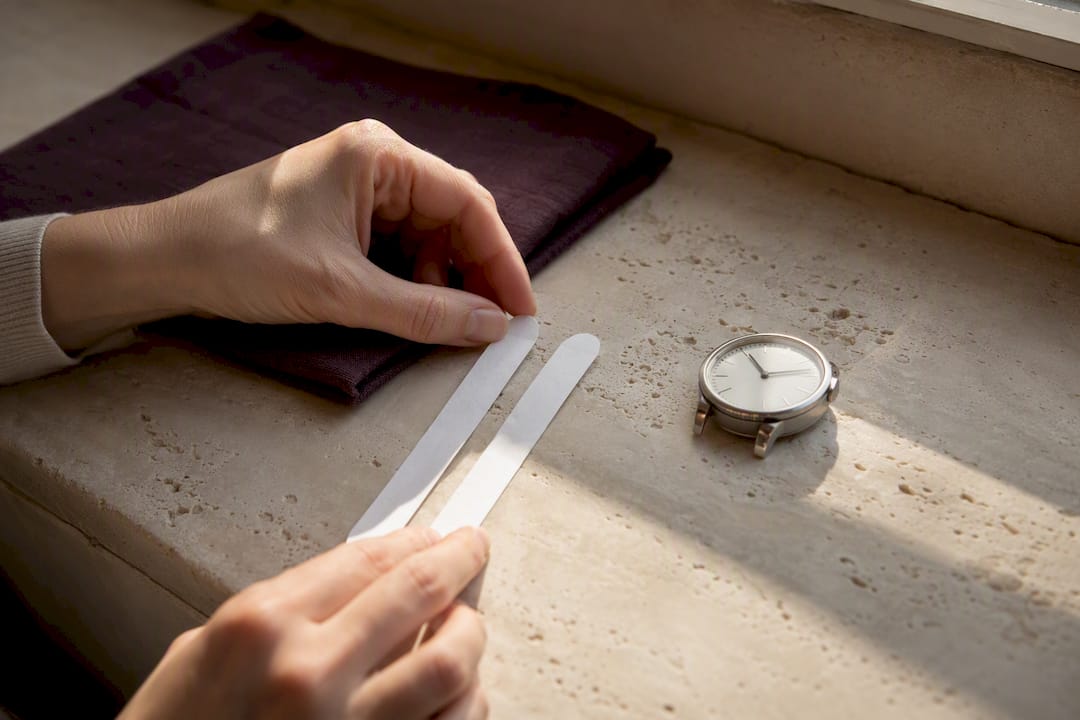
- Apply to skin, not just a paper strip. Skin chemistry changes how notes develop.
- Wear it alone for a full day. No competing lotion, no other fragrance layered underneath.
- Check in at the one hour mark, the four hour mark, and before bed. That’s where the dry down tells the truth.
- Avoid judging a fragrance in the first ten minutes. Top notes lie.
Before you order, check the seller’s sample and return policy. Some retailers let you apply a sample’s cost toward a future full-size purchase. Others offer no return window at all once a bottle is opened.
Pro Tip: Note the exact time you applied the sample. Comparing two scents side by side only works if you’re comparing them at the same stage of development.
Matching Scent to Your Personality and the Occasion
Fragrance choice gets simpler once you stop thinking about “the best perfume” and start thinking about “the right perfume for this moment.”
- Fresh citrus and aquatic scents suit daytime wear, warm weather, and situations where you want to feel clean rather than commanding.
- Woody and oriental scents suit evenings, cooler seasons, and moments where you want presence in a room.
- Gourmand and soft floral scents suit personal, everyday wear, especially when you want a scent that feels like part of your identity rather than a costume.
Gift buying calls for a different rule than personal buying. When choosing for yourself, adventurous is fine. A scent that’s a little polarizing on first wear can become a favorite once it settles. When buying for someone else, go safer: a well-reviewed classic in a widely liked family beats a niche gamble almost every time.
If a scent you love leans heavily on one note, say bergamot or sandalwood, search for other fragrances built around that same note rather than staying loyal to a single family. Sometimes the more useful shortcut is identifying the perfumer behind a scent you already love. Perfumers develop recognizable signatures across the different houses they work with, so tracing that name can lead you to fragrances with a similar hand even outside the family you’d normally search.
A Checklist Before You Click Buy
Run through this before finalizing any online perfume order, especially a first-time purchase from a brand you haven’t worn before.
- Confirm the note pyramid lists top, middle, and base clearly. Vague or missing notes is a red flag.
- Read at least three reviews that specifically mention longevity and sillage, not just “smells nice.”
- Check the concentration (EDT, EDP, parfum) and cross-reference it against those same reviews.
- Verify the seller’s sample and return policy before you commit to a full bottle.
- Look for ingredient transparency, particularly if the listing claims “natural” or “artisanal.” Vague claims with no percentage or sourcing detail deserve skepticism.
- Decide sample-first versus direct buy based on price. A $200 niche bottle deserves a sample. A $35 mass-market EDT is a lower-stakes gamble.
Good product pages make this checklist easy to complete in under five minutes. If a listing forces you to hunt for basic information like concentration or note breakdown, that’s worth noticing on its own.
What Sets an Artisanal Option Like Maison Voyageur Apart
Mass-market perfume pages often lean on mood boards and adjectives. An artisanal listing should give you something more concrete to work with.
Maison Voyageur composes each fragrance in Madrid using 98% natural ingredients, and the product pages are built around narrative cues rather than generic marketing language. That distinction matters when you’re trying to predict how a scent will actually feel on you, not just how it’s supposed to make you feel in theory.
- Curated discovery tools guide you toward a scent based on mood and memory, not just a note checklist.
- Sample sets let you test the Mediterranean-inspired compositions at home before buying full size.
- Ingredient transparency is stated upfront rather than buried in a footnote.
Pro Tip: When comparing an artisanal listing to a mass-market one, check whether the brand explains why a note was chosen, not just that it’s present. That explanation is usually the clearest signal of real craftsmanship.
A Personal Note on Choosing Scent From a Screen
Choosing a fragrance without smelling it first still makes people nervous, and that hesitation is fair. What changes the outcome is treating the process like research instead of impulse. Running a quiz, cross-checking the results against independent reviews, then ordering a sample before the full bottle removes most of the risk that scares people away from buying online at all.
A guided discovery path, paired with an actual sample in hand, tends to outperform even the best-written product description. You’re no longer trusting a paragraph of adjectives. You’re trusting your own skin and a few quiet days of wearing something new. For readers who want that guided route from the start, Maison Voyageur’s discovery tools offer a place to begin.
— Celeste
Try Before You Commit, the Maison Voyageur Way
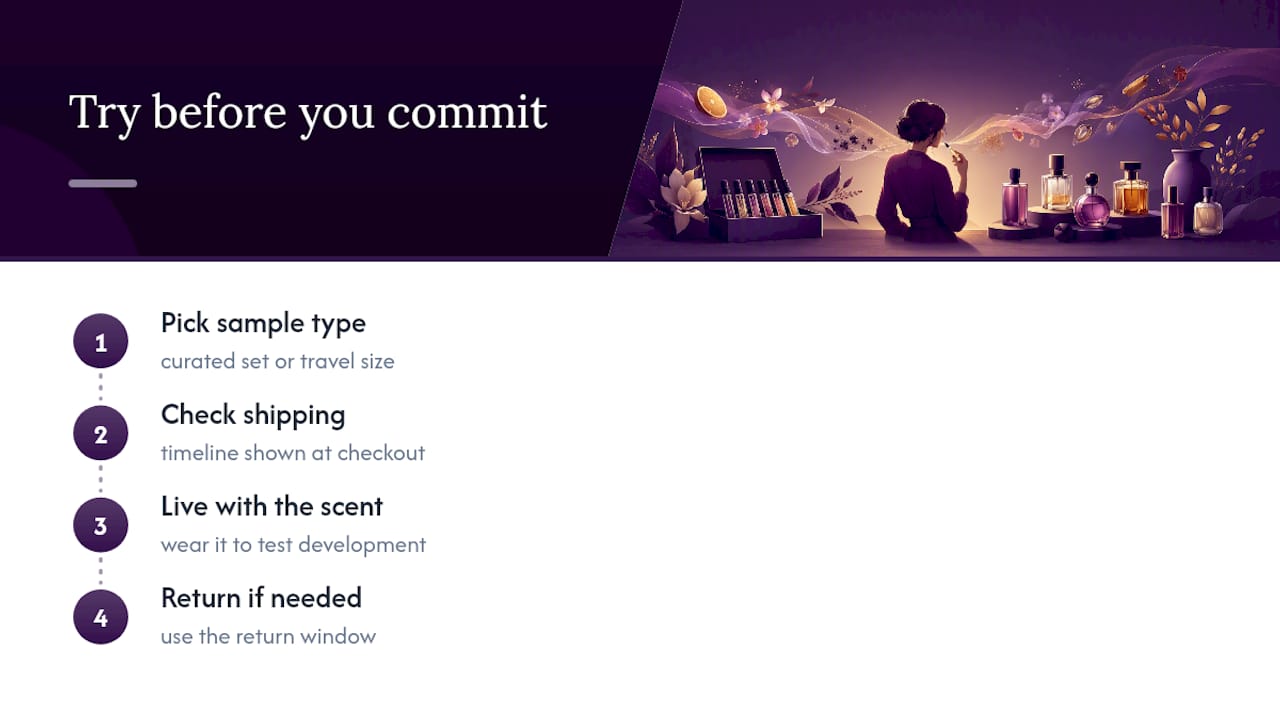
Blind buying a full bottle is the riskiest way to choose a scent online, and Maison Voyageur was built around avoiding exactly that risk. Rather than pushing a single full-size purchase, the site leads with curated sample sets and guided discovery tools so you can live with a composition before you commit to it.

Each fragrance is composed in Madrid with 98% natural ingredients, and every product page explains the reasoning behind the notes rather than leaning on vague mood language. Ordering a sample set is straightforward: choose a curated set or an individual travel size, check the shipping timeline at checkout, and use the return window if a scent doesn’t develop the way you hoped on your skin. Ingredient sourcing and concentration are listed clearly on every page, so you’re never guessing what you’re applying.
If you want a scent that connects to something personal rather than a bottle that just smells fine, start with a guided discovery set and decide from there.
Sources
A handful of tools and guides are worth returning to whenever you’re shopping for a new fragrance, not just this once.
- Fragrantica — búsqueda de notas / perfume finder
- How to Successfully Buy Perfume Online — The Kit
- Perfume
Les sept fragrances Maison Voyageur
- Manifesting · unisexe (69,99 €)
- Intuition · femme (69,99 €)
- Certainty · femme (69,99 €)
- Expansion · femme (69,99 €)
- Release · homme (69,99 €)
- Presence · homme (69,99 €)
- Inner Fire · homme (69,99 €)
Nouvelle ici ? Commence par le Discovery Set · les 7 fragrances en format voyage (40 €).