
Common Mistakes Buying Designer Fragrances to Avoid
The most common mistakes buying designer fragrances are testing only on paper strips, judging the first spray, blind buying without sampling, ignoring ingredient lists, and purchasing from unauthorized sellers. The fix is simpler than it sounds.
Before you read further, here is what to do right now:
- Test on clean, unscented skin, not paper strips
- Wait at least 30 minutes before deciding
- Request a sample or travel size before committing to a full bottle
- Check batch codes and confirm the seller is authorized
- Read the ingredient list and the return policy before checkout
Table of Contents
- Why testing on paper strips leads to the wrong purchase
- How sampling errors cause fragrance regret
- How to spot counterfeit fragrances before you buy
- Does concentration actually predict longevity and value?
- Why “natural” on the label is not the whole story
- Behavioral traps that lead to fragrance regret
- A step-by-step buying checklist for conscious shoppers
- Key Takeaways
- The case for slowing down
- How Maisonvoyageurparfum helps you buy with confidence
- Useful sources
Why testing on paper strips leads to the wrong purchase
Perfumers advise waiting at least 30 minutes to judge a fragrance’s drydown on skin. Paper strips capture only the opening burst. They tell you almost nothing about how a scent will actually live on your body.
Every fragrance moves through three phases. Top notes hit first and fade within minutes. Heart notes emerge next, shaping the character of the scent. Base notes, the ones that linger for hours, only reveal themselves after the fragrance has settled into your skin chemistry. Your skin’s pH, temperature, and natural oils all alter how those base notes develop. Two people wearing the same perfume can smell genuinely different.
Judging a fragrance in the first 60 seconds is like tasting a wine before it breathes. What you smell in that opening moment may be the least representative version of the scent. Surprising drydowns are common: a perfume that smells sharp or sweet at first can settle into something warm, woody, and deeply personal.
Pro Tip: In-store, spray one fragrance on your wrist and one on the inside of your elbow. Walk around for 30 minutes. Come back and smell both. That is the real perfume. Understanding how natural ingredients interact with skin makes this wait feel less like patience and more like discovery.
How sampling errors cause fragrance regret
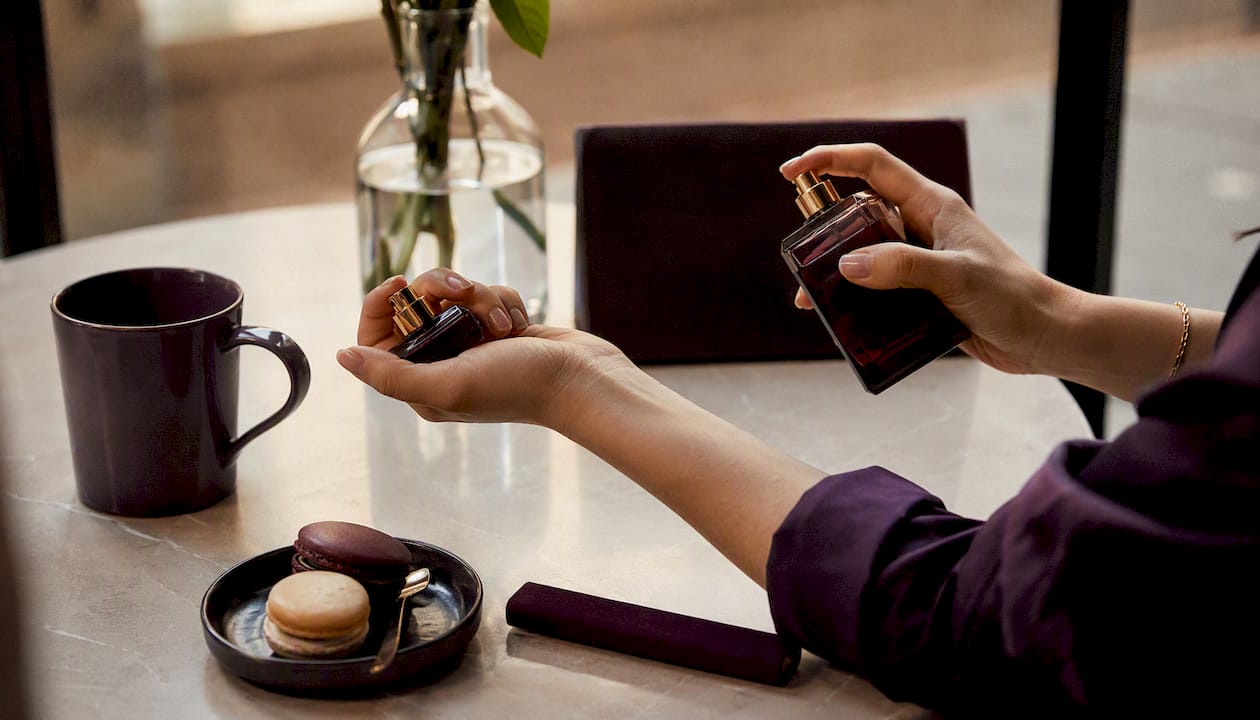
Limit your testing session to 2–3 scents on clean, unscented skin. That is the rule. Nose fatigue sets in quickly, and testing too many scents at once produces unreliable impressions.
The coffee-bean reset is a popular myth. Sniffing coffee beans between tests does not fully clear your olfactory palette. The better reset is fresh air, a slow walk outside, or simply waiting. Time is the most honest reset.
A mindful sampling session looks like this:
- Arrive with clean, unscented skin. Skip fragranced lotion and body wash that morning.
- Choose no more than 2–3 scents to test.
- Apply one to each wrist and, if testing a third, to the inner elbow.
- Wait 30 minutes before forming any opinion.
- Return to each spot at the 2-hour mark and note what changed.
- Repeat the test on a different day before buying.
Testing over fragranced clothing, after a heavy meal, or following alcohol skews results in ways that are hard to account for. Artisanal perfumes, especially those built on natural ingredients, are particularly sensitive to these variables. Give them a fair stage.
How to spot counterfeit fragrances before you buy
Buying from unauthorized sellers increases the risk of receiving a counterfeit or chemically unsafe formula. Kari Kammel of the Center for Anti-Counterfeiting and Product Protection at Michigan State University warns that counterfeit fragrances can introduce unregulated chemicals and pose health risks that go well beyond financial loss.
Red flags to watch for:
- Price that seems too good to be true for a luxury fragrance
- Wrinkled or loose cellophane, poor print quality, or blurry fonts on the box
- Batch codes that are missing, smudged, or don’t match between the bottle and box
- A sprayer that feels loose, sprays unevenly, or leaks
- Sellers with large inventories of expensive bottles and no verifiable history
Authentic packaging typically features tight machine-sealed cellophane, embossed or metallic printing, and batch codes that match exactly between the bottle and the outer box. Small deviations are common counterfeit indicators.
For online purchases, prefer listings sold directly by the brand or by the marketplace itself. Request batch code photos before paying. When the bottle arrives, inspect the sprayer and packaging before opening. Keep your receipt.
Does concentration actually predict longevity and value?
Concentration matters, but it is one filter, not the final verdict. An EDP that suits your skin chemistry may outlast a parfum that does not.
| Concentration | Typical oil % | Typical longevity |
|---|---|---|
| Parfum | 20% | 8 hours |
| Eau de Parfum (EDP) | 15% | 6–8+ hours |
| Eau de Toilette (EDT) | 5% | 3–5 hours |
Ranges sourced from fragrance buyer’s guides; individual results vary by skin and formula.
Price-per-ml is the clearest way to compare value across concentrations. Divide the bottle price by its volume in milliliters. A $120 EDP in a 50ml bottle costs $2.40/ml. A $90 EDT in a 100ml bottle costs $0.90/ml. The EDP may justify its higher per-ml cost if you use fewer sprays and it lasts all day. For a seasonal or casual scent, the EDT often makes more sense.
Higher concentration does not automatically mean better performance. Molecule size, formulation quality, and your own skin all shape how long a fragrance actually lasts.
Why “natural” on the label is not the whole story
Always check the ingredient list and patch-test before wearing a new fragrance. “Natural” marketing is not a guarantee of full natural composition or of safety for sensitive skin.
Terms like “natural accords” or “nature-inspired” can describe synthetic molecules that mimic natural materials. A fragrance claiming to be natural may still contain a small percentage of synthetic fixatives. The only way to know is to read the full ingredient list, which reputable brands publish openly. Maisonvoyageurparfum’s commitment to 98% natural ingredients and transparent labeling reflects what genuine ingredient honesty looks like.
Common allergen sources in fragrances include linalool, limonene, eugenol, and certain musks. These appear in both natural and synthetic formulas.
Pro Tip: Apply a small amount of the fragrance to the inner forearm and wait 24 hours before full wear. Redness, itching, or swelling within that window means the formula does not suit your skin, regardless of how beautiful it smells. Ask sellers for full ingredient disclosure or an IFRA compliance statement when in doubt.
Behavioral traps that lead to fragrance regret
Pause and sample before committing to a full bottle. Packaging, celebrity endorsements, and social media hype are powerful, and they are designed to be.
Common traps and how to sidestep them:
- Packaging bias: A beautiful bottle is not a beautiful scent. Treat the bottle as irrelevant to your decision.
- Celebrity or influencer endorsements: Someone else’s skin chemistry and lifestyle are not yours. Their favorite may smell nothing like what you expect on you.
- The “deal” mentality: A steep discount on a luxury fragrance from an unknown seller is a counterfeit risk, not a bargain.
- Social media hype: Viral fragrances are chosen for their broad appeal, not for your specific preferences or values.
Return policies often exclude opened or sprayed bottles, even when the site advertises easy returns. Read the fine print before you buy. Ask directly whether a sprayed bottle qualifies for a return. If it does not, a sample or travel size is your safety net.
Building a curated fragrance wardrobe slowly, with intention, produces far less regret than impulse buying.
A step-by-step buying checklist for conscious shoppers
Follow this sequence to avoid the most common fragrance purchase pitfalls, whether you are shopping online or in a store.
- Identify your preferred scent families before browsing (woody, floral, citrus, amber).
- Request a sample, decant, or travel size before considering a full bottle.
- Test on clean, unscented skin, not paper.
- Wait 30+ minutes, then return to the 2-hour mark.
- Repeat the test on a different day and at a different time of day.
- Verify the seller: confirm authorized status, check batch codes, request photos if buying online.
- Calculate price-per-ml and compare concentrations for the same scent.
- Read the return policy and confirm whether opened bottles are eligible.
- Check the ingredient list for known allergens and patch-test if sensitive.
- Buy a travel size or full bottle only after completing the steps above.
For online purchases specifically: favor listings sold directly by the brand, budget for a decant before the full bottle, and keep all transaction records.
Key Takeaways
Conscious fragrance buying requires slower testing, ingredient transparency, and verified sourcing — rushing any one of these steps is where most regret begins.
| Point | Details |
|---|---|
| Test on skin, not paper | Skin chemistry and pH shape how a fragrance truly smells; paper strips only show the opening burst. |
| Wait 30+ minutes | Top notes fade fast; base notes, which define the real scent, take time to develop fully. |
| Sample before committing | Decants and travel sizes reduce waste and the risk of expensive regret on a full bottle. |
| Verify seller and batch codes | Counterfeit fragrances carry unregulated chemicals; always buy from authorized sellers and confirm matching batch codes. |
| Maisonvoyageurparfum’s approach | Transparent ingredient lists, 98% natural formulas, and travel-size options let you test with confidence before committing. |
The case for slowing down
Most fragrance regret is not about choosing the wrong scent. It is about choosing too fast.
The conventional wisdom says: smell it, like it, buy it. That sequence skips the most important part, which is what the fragrance becomes after it has lived on your skin for an hour. Artisanal perfumes built on natural materials are especially dynamic. They shift, deepen, and sometimes surprise you. A scent that feels unremarkable in the first spray can become quietly extraordinary by the dry down.
There is also something worth saying about the “natural” label. It has become a marketing shorthand that means almost anything. The only honest version of natural is a full ingredient list you can read and verify. Brands that publish that list are telling you something true about their values. Brands that do not are asking you to trust a word.
Sampling is not just practical. For a conscious buyer, it is the ethical choice. One travel size tested properly produces less waste than three full bottles bought impulsively and left unused.
How Maisonvoyageurparfum helps you buy with confidence
Maisonvoyageurparfum was built for exactly the kind of buyer this guide describes: someone who wants to know what is in the bottle, how it was made, and whether it will truly resonate before committing.

Each fragrance is composed in Madrid with 98% natural ingredients, and the ingredient list is transparent by design. Travel sizes and curated discovery sets let you test on your own skin, in your own life, before deciding on a full bottle. There is no pressure to commit before you are ready.
If you are looking for a place to begin, the slow-luxury philosophy behind each scent explains why the brand is built around patience, natural materials, and emotional resonance rather than mass appeal. For a more guided path, the Seven Archetypes discovery method helps you identify which scent speaks to who you actually are. Start there.
Useful sources
- How to Choose a Perfume: Complete Buyer’s Guide — testing guidance, concentration ranges, and price-per-ml methodology
- Red Flags When Buying Perfume Online — counterfeit red flags, packaging checks, and Kari Kammel’s expert warning
- How to Shop Fragrance Online Without Regret — sampling strategies, decants, and discovery sets
- 5 Common Perfume Buying Mistakes — nose fatigue, session limits, and reset techniques
- Click with Confidence: A Shopper’s Checklist for Vetting Online — return policy fine print and online purchase verification