
60–90% Ethanol: When Alcohol Helps Small Batch Natural Perfumes
Plant-derived ethanol, usually denatured for legal sale, remains the standard solvent in most natural perfumes, including many marketed as artisanal or botanical as explained in finesse spiritueux : comment évaluer la qualité artisanale · Gin de Chimay. Alcohol-free formats — oils, balms, and aqueous emulsions — exist and change the entire experience of a scent, softening projection while often extending skin contact. The choice comes down to intent: alcohol for projection and a fragrance that evolves through the day, oil or balm for something quieter and more intimate.
TL;DR:
- Most natural perfumes rely on plant-derived ethanol, which is denatured with bitter agents like Bitrex to meet legal requirements, not for scent masking.
- Ethanol’s main role is to dissolve aromatic compounds and quickly evaporate, creating initial projection and structured fragrance stages.
- Alcohol-free formats like oils and emulsions yield closer, warmer scents with longer longevity but reduced projection compared to alcohol-based perfumes.
- Ethanol content in commercial fragrances generally ranges from 60% to 90%, affecting spray thinness and scent diffusion, depending on formulation and spraying hardware.
- For home blending, testing both alcohol and oil versions on the skin helps determine which format best suits the scent’s purpose and desired projection.
Table of Contents
- Alcohol En Perfumes Naturales: Which Types Actually Get Used
- What Does Alcohol Actually Do Inside a Perfume?
- Alcohol-Free Alternatives and What You Give Up
- Choosing and Using Alcohol in Your Own Natural Perfume
- The Maison Voyageur View on Alcohol and Intention
- An Artisanal Alternative: Ready-Made Natural Perfume
- Sources
- FAQ
Alcohol En Perfumes Naturales: Which Types Actually Get Used
Ask a supplier for “alcohol vegetal” and you will get more than one answer. Natural perfumery leans on plant-derived ethanol pulled from wheat, corn, grapes, or sugarcane, and it stays part of the formula because it dissolves aromatic material cleanly without masking it. That is the real meaning behind alcohol en perfumes naturales: not a synthetic shortcut, but an agricultural distillate doing a job oils cannot do alone.
Almost none of it reaches your bottle undenatured. Ethanol sold for cosmetic use is taxed at drinking-alcohol rates unless it is deliberately made unpalatable, which is why cosmetic suppliers add a denaturant before sale. Bitrex, or denatonium benzoate, is the one you will see most often on EU technical sheets, chosen because it registers as intensely bitter at tiny concentrations and barely interferes with the scent itself.
A few things worth knowing before you buy a liter:
- Plant-derived ethanol comes from fermented grain, grape, or sugarcane feedstocks and is the backbone of most natural formulas.
- Denatured ethanol (denat) is the same alcohol with a bittering agent added, almost always Bitrex, to satisfy excise law.
- Benzyl alcohol and related aromatic alcohols show up in absolutes and some naturals as preservatives or fixatives, which is why a bottle labeled “alcohol-free” can still list an alcohol on the ingredient panel.
- Commercial “alcohol vegetal bio” bases vary in purity, water content, and denaturant type, so the technical data sheet, not the marketing copy, tells you what you are actually working with.
If a listing calls itself organic or plant-derived but skips the denaturant name entirely, ask before you buy. Reputable suppliers list it because they have to.
What Does Alcohol Actually Do Inside a Perfume?
Alcohol’s first job is dissolving. Essential oils, absolutes, and concentrated fragrance compounds do not mix evenly into water, but they dissolve readily into ethanol, which lets a perfumer pack in a far higher concentration of aromatic material than an oil base comfortably allows.
Its second job is speed. Alcohol evaporates almost immediately after a spray, carrying the lightest top notes into the air fast and giving a fragrance the initial lift people associate with “projection.” As the alcohol clears the skin over the next several minutes, heavier middle and base notes take over, which is the mechanism behind a perfume’s classic top, heart, and base structure. Oil-based scents skip that staged reveal almost entirely. Without a fast-evaporating carrier, the notes tend to sit closer together and unfold in a flatter, more linear way.
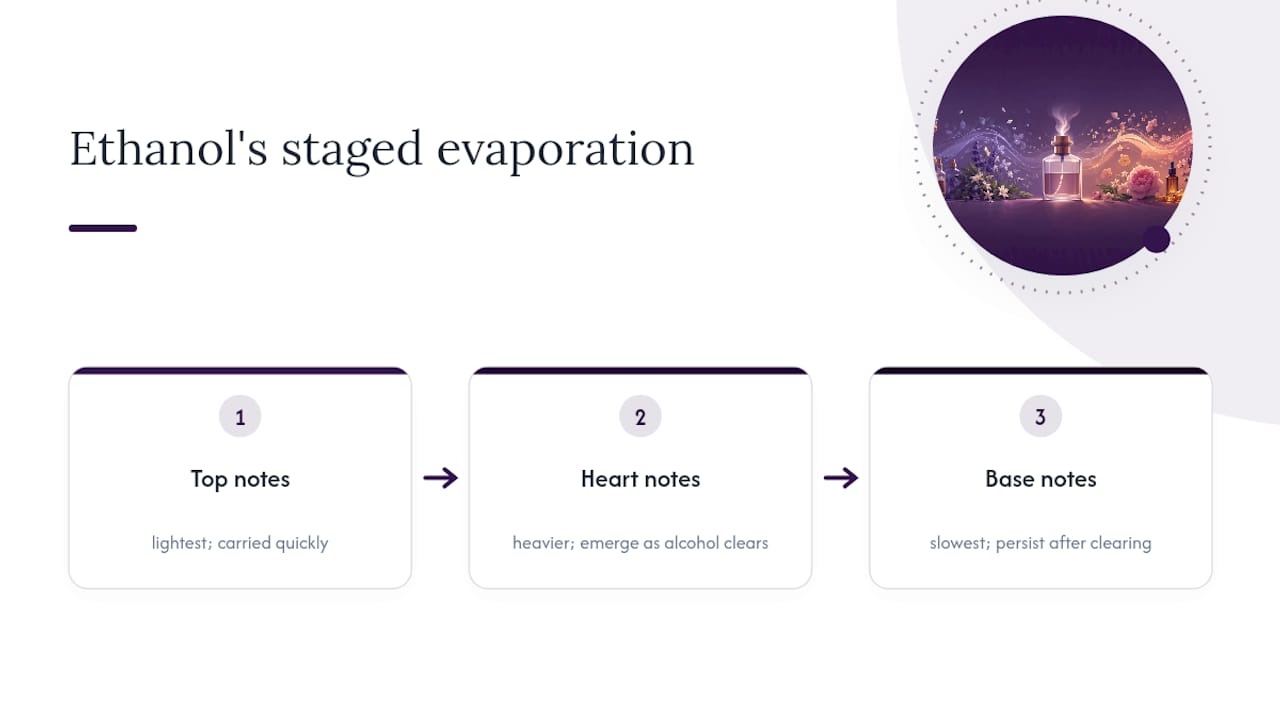
Most commercial fragrances run between 60% and 90% ethanol depending on category, with the rest split between fragrance oil, water, and minor additives. That range is not arbitrary. Higher alcohol content thins the mixture enough for a fine spray mist, while lower content thickens it toward a splash or cologne feel.
For DIY makers, this matters at the sprayer. A cheap atomizer paired with a high-alcohol dilution can produce a weak, alcohol-forward mist that reads as harsh rather than radiant, while the same juice through a quality fine-mist pump can feel considerably more polished. The formula matters, but so does the hardware pushing it out.
Alcohol-Free Alternatives and What You Give Up
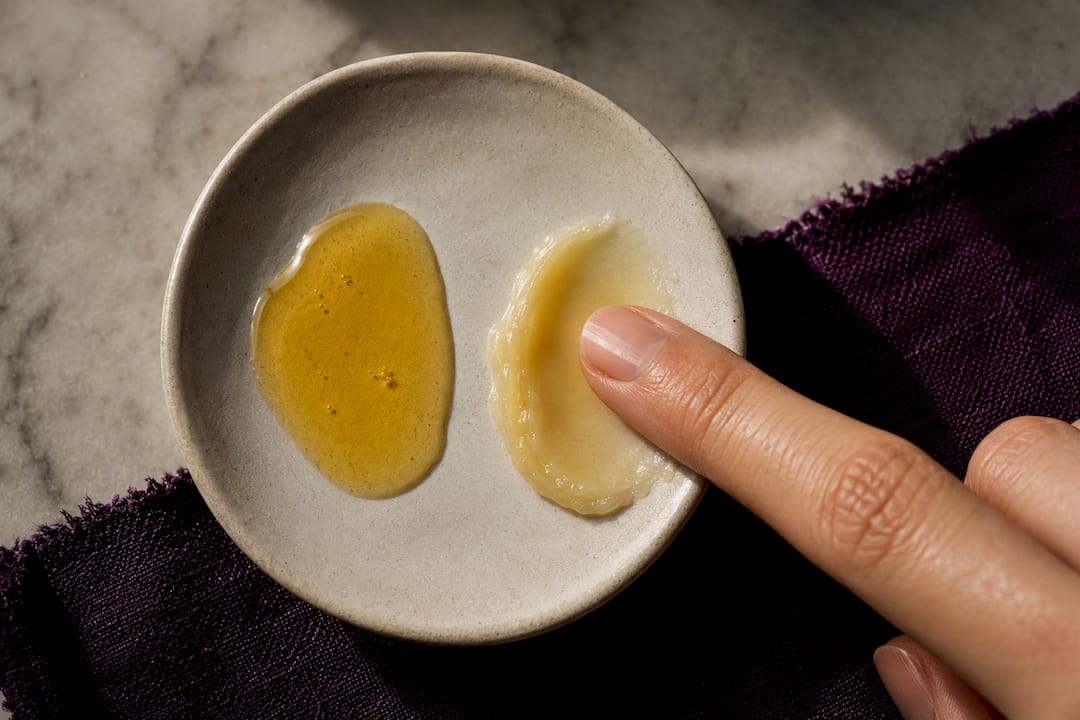
Oil and balm formats trade projection for closeness. Because there is no fast-evaporating carrier pulling molecules into the air, the scent stays closer to the skin and unfolds slowly, which makes oils a common choice for sensitive skin or for anyone who wants a fragrance that reads as personal rather than announced.
Aqueous and nano-emulsion technologies are the newer middle ground. By controlling droplet size at a microscopic level, formulators can suspend fragrance oil in a water-based carrier that approaches the diffusion and staying power of alcohol-based perfume without the sharp initial evaporation. This is the technology behind the recent wave of “skin-friendly” alcohol-free launches, and it is also part of a broader “skinification” push that blends fragrance with skincare actives, since a water-based carrier tolerates those ingredients better than ethanol does.
The tradeoffs run in both directions:
- Projection: alcohol-based formulas throw scent into the air around you; oils and most aqueous versions stay close to the skin.
- Longevity: alcohol evaporates and can fade faster in dry heat, while some oil and balm formats actually outlast alcohol on skin because nothing is evaporating away.
- Sensory character: alcohol delivers a crisper, more “designer” opening; oil delivers a warmer, rounder one from the first moment.
- Practical handling: alcohol-based perfume is classified as a hazardous material for shipping, while alcohol-free formats sidestep those restrictions, which matters if you are formulating for resale, not just personal use.
Pro Tip: If you are torn between formats, make both versions of the same blend in small test batches. Wear one on each wrist for a full day. The difference in how the story unfolds will tell you more than any spec sheet.
Choosing and Using Alcohol in Your Own Natural Perfume
Concentration ranges give you a starting map, not a rule. Home formulators frequently land somewhere in between depending on how strong the raw materials smell and how much projection they actually want, so treat these as a reasonable starting bracket rather than a fixed target.
Before you commit to a supplier, run through a short sourcing checklist:
- Confirm the alcohol is genuinely plant-derived, not just labeled that way, by asking for the feedstock (wheat, grape, sugarcane).
- Request the technical data sheet and check the denaturant listed. Bitrex is standard and considered cosmetic-safe at the low concentrations used.
- Verify purity percentage and water content, since a diluted base changes your dilution math without you realizing it.
- Ask whether the batch carries any organic or “bio” certification if that claim matters to your labeling.
Solubilizing stubborn concretes and thick absolutes takes patience more than technique. Building a micro-batch of 1 to 2 grams with a gradually increasing alcohol ratio lets you watch for clarity and phase separation before you commit a full batch. Once a blend looks clear, let it macerate for one to four weeks in a dark, cool spot. Maceration lets the raw, sometimes harsh top notes round out into something closer to the finished scent, and skipping this step is the most common reason a home-blended perfume smells “off” straight after mixing.
EU rules now require broader disclosure of allergenic fragrance ingredients on labels, with an update taking effect in 2026 that expands the list of substances brands must declare. That means checking your own raw materials against the current allergen list matters even for a one-bottle personal project, not just for anyone selling. Patch test any new blend on your inner forearm and wait 24 to 48 hours before wearing it more broadly.
The Maison Voyageur View on Alcohol and Intention
At Maisonvoyageurparfum, alcohol is never a default. It is a decision made for each scent, weighed against what that fragrance is meant to do for the person wearing it.
A composition meant to travel through a room, to announce itself, calls for the lift that plant-derived alcohol provides. A composition meant to sit close, to be discovered only by someone near enough to notice, often points toward oil.
There is a lesson in that for anyone blending at home. Do not ask “should I use alcohol.” Ask what the fragrance is for. Is it a signature you want others to notice, or a private ritual meant only for you? The answer decides the format before it decides the formula. Craft, at its best, follows intention rather than convention.
— Celeste
An Artisanal Alternative: Ready-Made Natural Perfume
Not every scent story needs to start in your own kitchen with pipettes and test strips.

That means no denaturant to verify, no supplier data sheet to cross-check, no maceration timeline to track on a calendar. What you get instead is a finished fragrance built as a moment of introspection rather than a lab project, priced as shown on the pricing page. If the process outlined above sounds like more chemistry than ritual, browse the full collection and let a finished scent do the work your own bench otherwise would.
Sources
Reporting from Marie Claire and Perfumer & Flavorist cover alcohol-free formulation technology and industry shifts. BioVidaSana details EU allergen labeling changes, while Såper and Botanicals address natural alcohol sourcing and technical specifications.
- Alcohol-Free Fragrance Trend: Expert Insights, Best Products | Marie Claire
- Skinification of Fragrance: The Rise of Alcohol-Free Perfumes | Perfumer & Flavorist
- Alcohol Vegetal BIO Base de Perfume (product page)
FAQ
What Alcohol Do They Put in Perfumes?
Most perfumes use ethanol, often plant-derived from wheat, grape, or sugarcane, and denatured with a bittering agent like Bitrex to meet cosmetic sale requirements. Ethanol typically makes up 60% to 90% of a finished fragrance depending on the concentration type.
Do Original Perfumes Contain Alcohol?
Yes, the overwhelming majority of designer and niche perfumes rely on ethanol as the primary carrier because it dissolves fragrance oil efficiently and drives projection. A genuine alcohol-free perfume is still the exception rather than the norm, though newer emulsion technology is narrowing that gap.
What Does Alcohol Do in Perfumes?
Alcohol dissolves concentrated fragrance oils and absolutes into an even solution, then evaporates quickly after application to lift the initial top notes and create projection. That evaporation is also what allows a perfume to move through its top, heart, and base stages over the course of wear.
What Is Vegetable Alcohol?
Vegetable alcohol, or “alcohol vegetal,” is ethanol distilled from agricultural sources like wheat, grape, or sugarcane rather than petroleum. For cosmetic sale it is almost always denatured, so checking the supplier’s technical sheet for denaturant type and purity matters more than the “vegetable” label alone.
What Does Maisonvoyageurparfum Charge for a Full-Size Perfume?
A full-size 100ml Maisonvoyageurparfum perfume is priced at $69.99 as a one-time purchase.